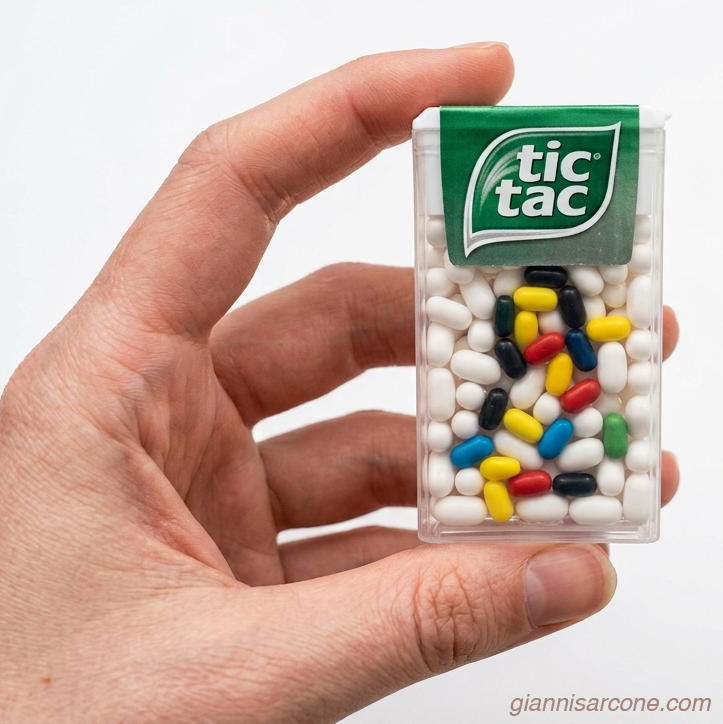
I like building iconic portraits from the smallest possible palette—here, just five colors of Tic Tac mints plus white. A stripped-down system that still manages to flirt with something Mondrian-like, and, almost against its will, echoes a Renaissance portrait.
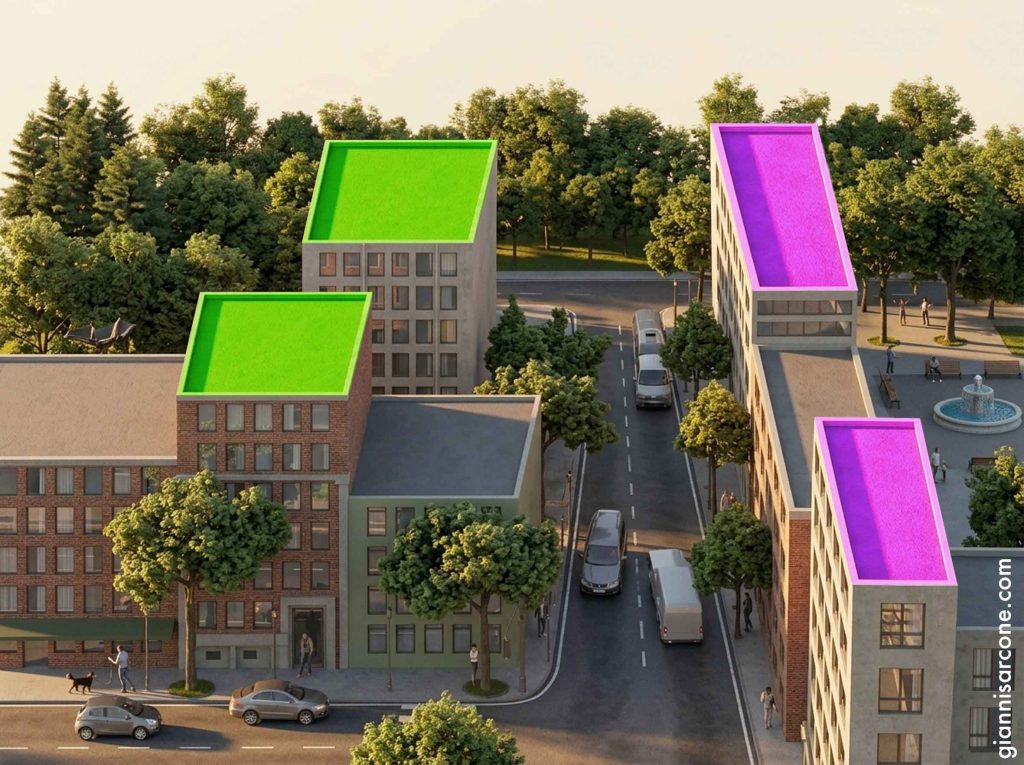
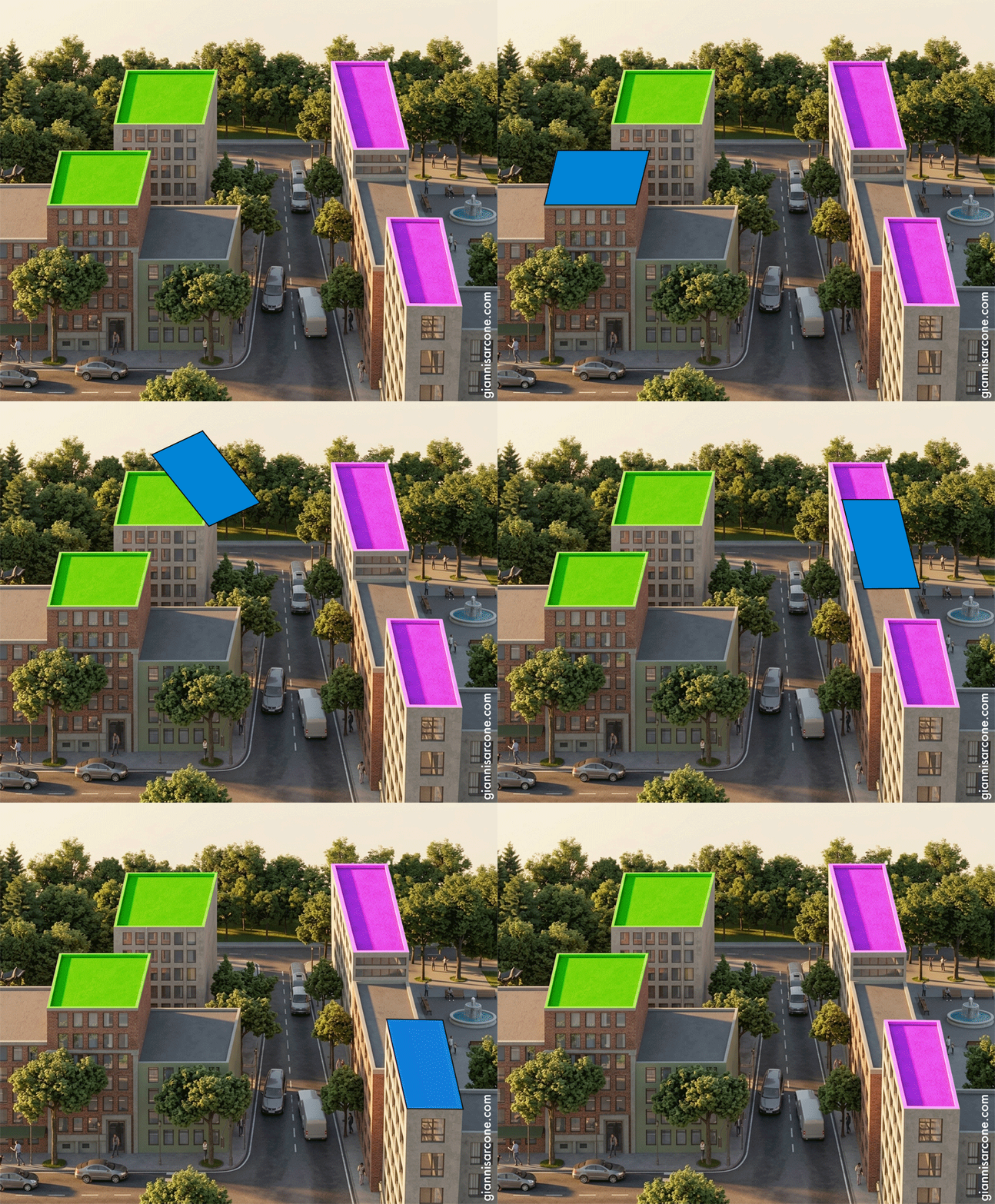
Believe it or not, the green and purple rooftops are congruent—identical in shape, size, and angles. What changes is not the geometry, but your perception of it. Perspective, orientation, and contextual cues lead your visual system to interpret the same form as two different structures.
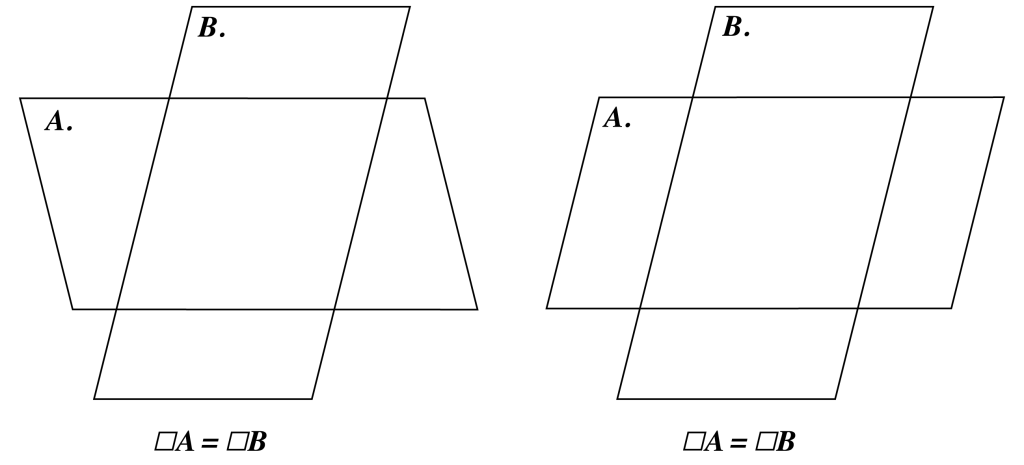
This effect is closely related to Shepard’s tabletop illusion and earlier studies in which identical parallelograms (A and B), when rotated (and superimposed), are perceived as different shapes, as the brain prioritizes interpretation over measurement.
Since some still insist these roofs are not congruent, I’ve put together a short animation that shows otherwise.
People often ask where my ideas come from. There is no single answer. They tend to surface quietly, shaped by places I’ve seen and cultures I’ve crossed.
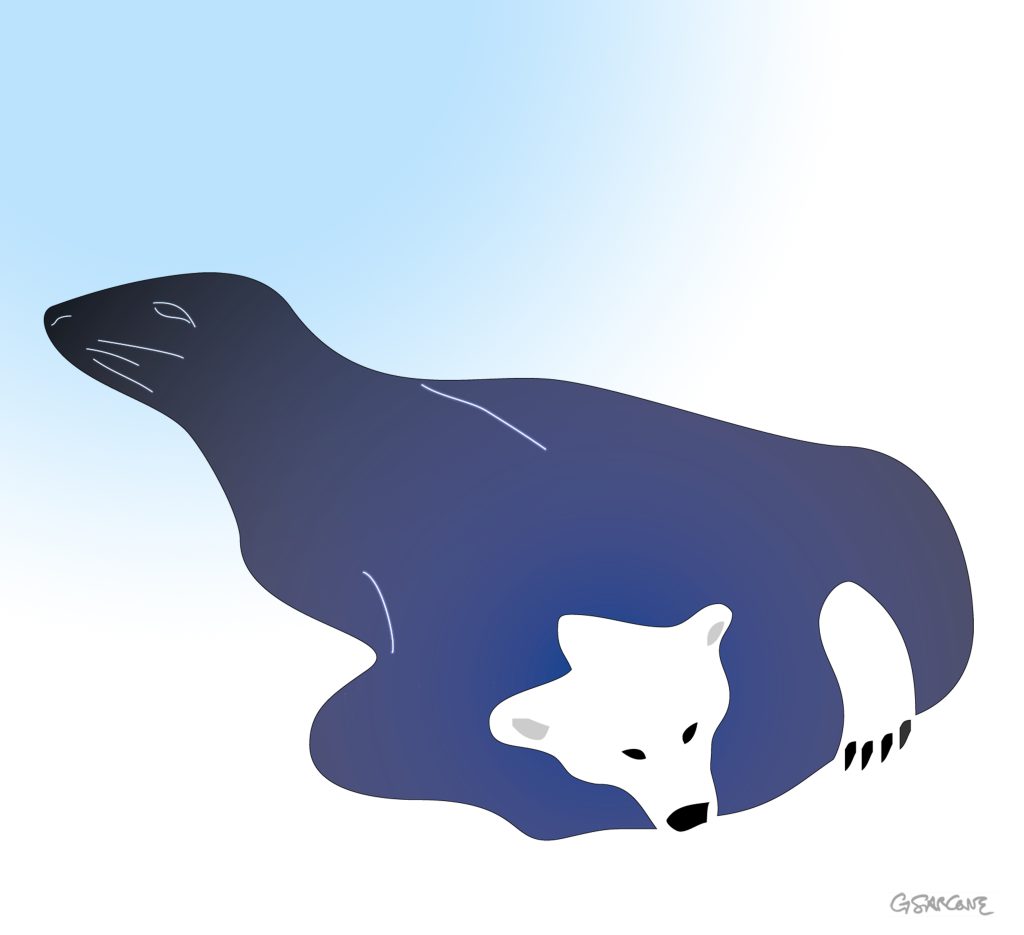
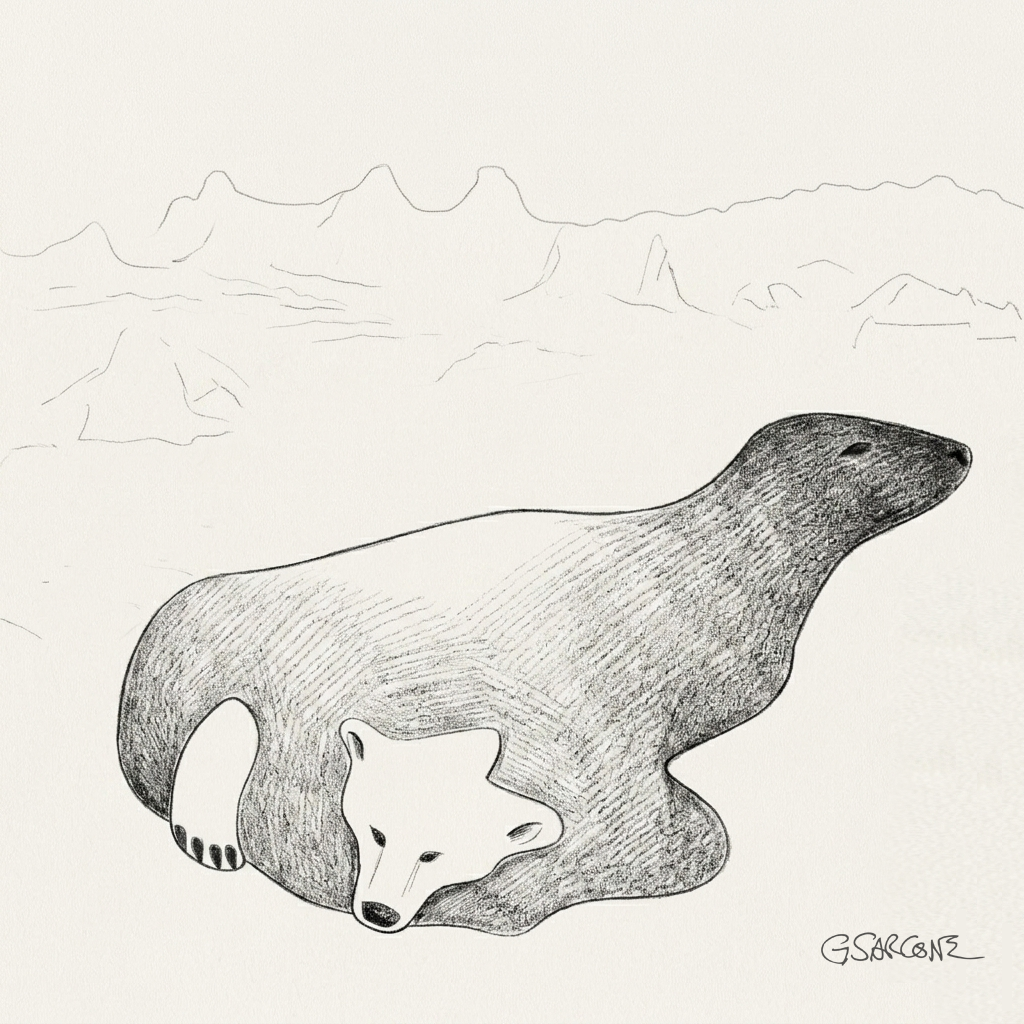
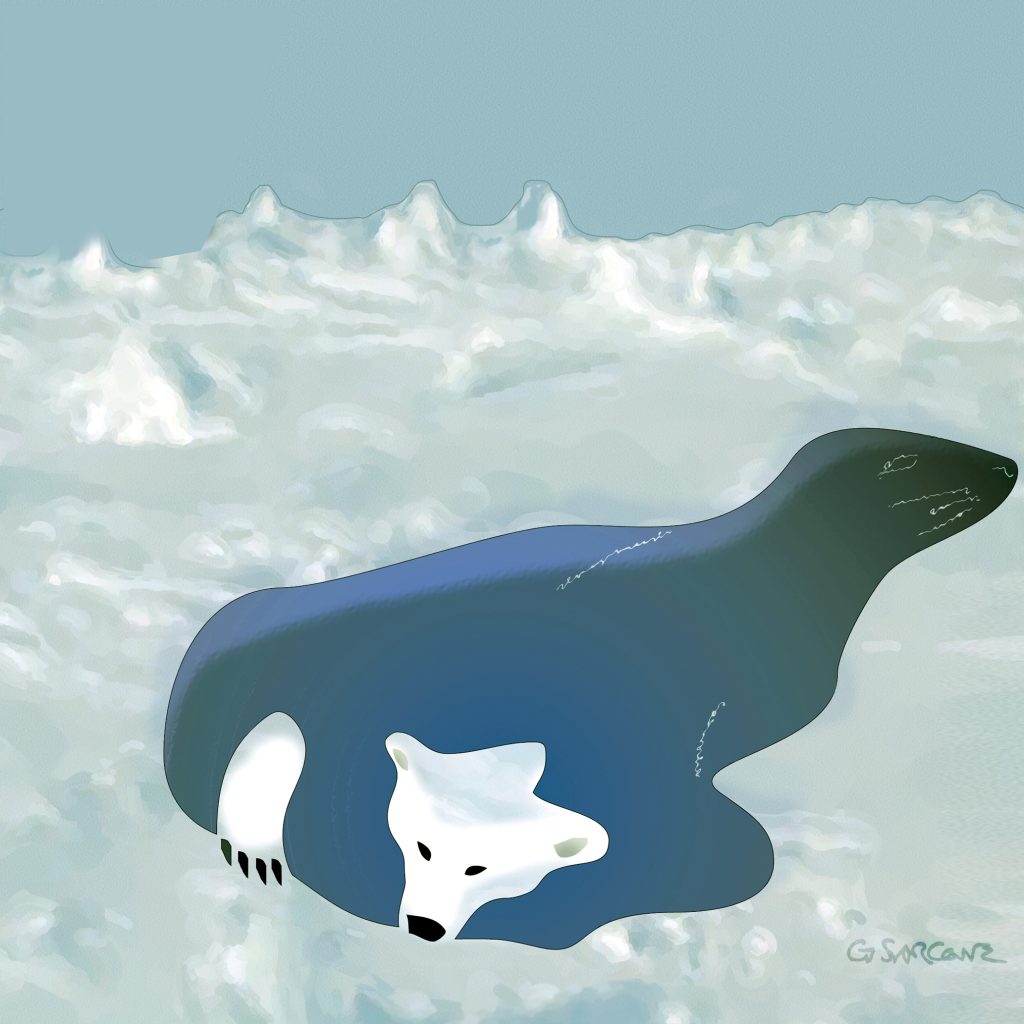
“Seal or Bear?” grew out of that kind of moment. An animal suspended in the vastness of a frozen world—emerging from an ice hole, yet refusing to settle into a single identity. Is it a polar bear? A seal? Or something that holds both readings at once?
The idea came to me while traveling through northern Canada, surrounded by the stillness of Arctic landscapes and the deep presence of Inuit traditions. That silence has a way of sharpening perception—of making ambiguity feel natural rather than puzzling.
First created in the 1990s, the illusion went on to become a reference point in visual perception studies and later found its way into textbooks.
More recently, the “Seal or Bear?” illusion will be featured by the NHK Educational Corporation as part of a 2026–2027 educational series on psychology and visual perception.
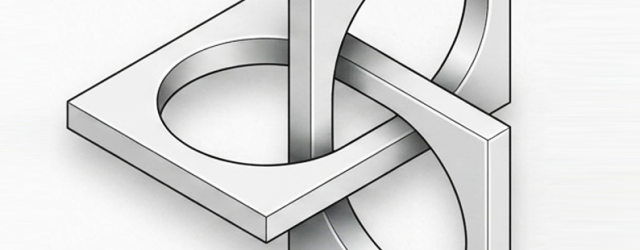
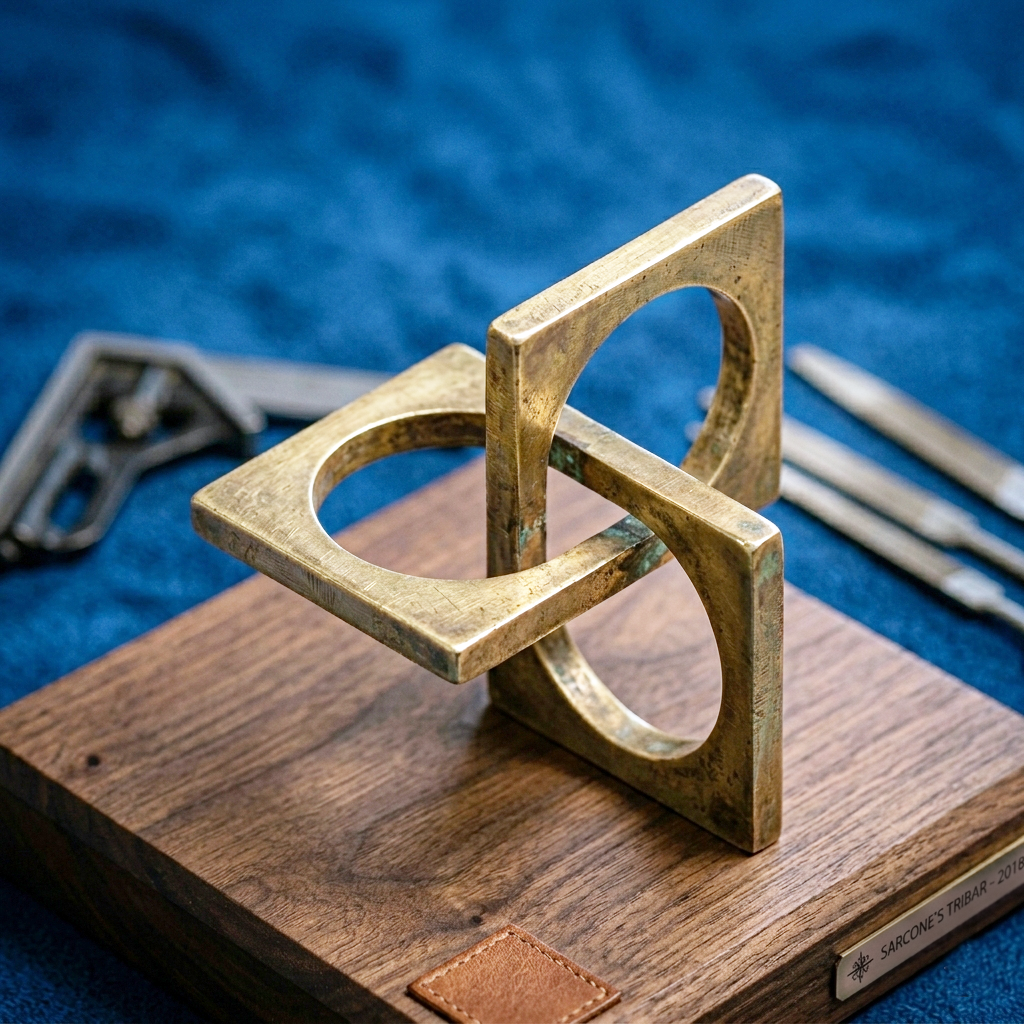
This form belongs to the family of impossible figures, more specifically to the Penrose triangle, or tribar.
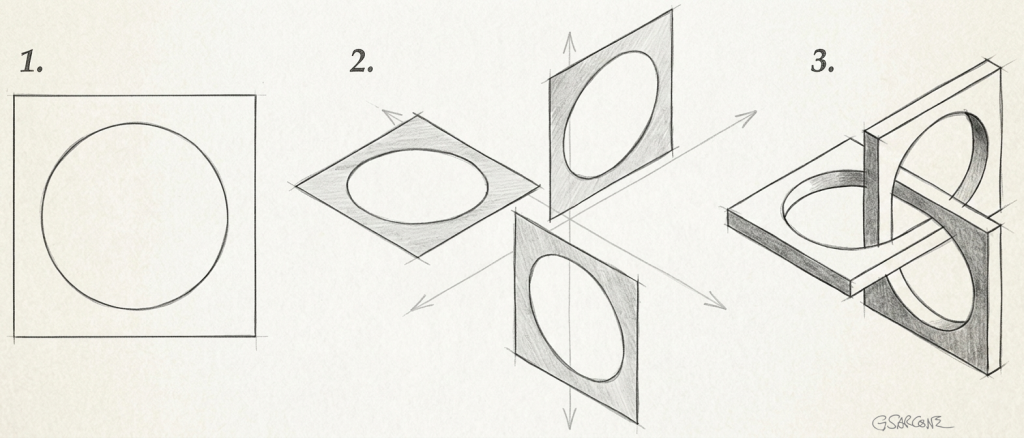
At first glance, it looks entirely manufacturable. The structure appears to be made from three identical square rings (Fig. 1), each pierced by a circular opening and arranged in three mutually perpendicular planes (Fig. 2). Together, they seem to interlock seamlessly, forming an impossible three-dimensional tribar that evokes a trefoil knot and its endless over-under weaving.
If this sculpture looks physically realizable to you, congratulations: your visual system has just accepted a geometric impossibility.
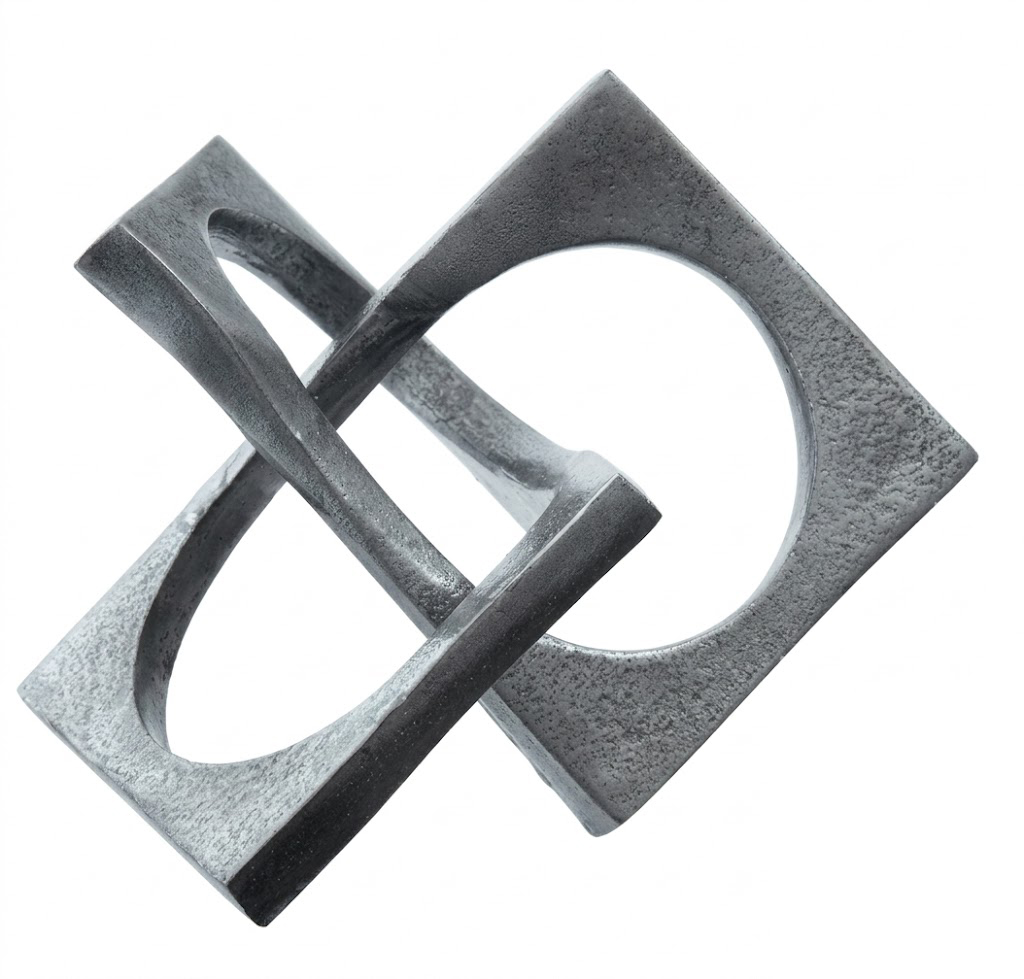
Could such an object be built? Not exactly. One solution would be to twist one of the junctions slightly, but that trick would be immediately noticeable here because some of the angles would no longer appear perfectly square (90°), as shown in the picture below. Another possibility would be to leave a small gap at one junction and view the sculpture from a carefully chosen angle, allowing perspective to hide the discontinuity.
This is how a real 3D Borromean Tribar would appear…
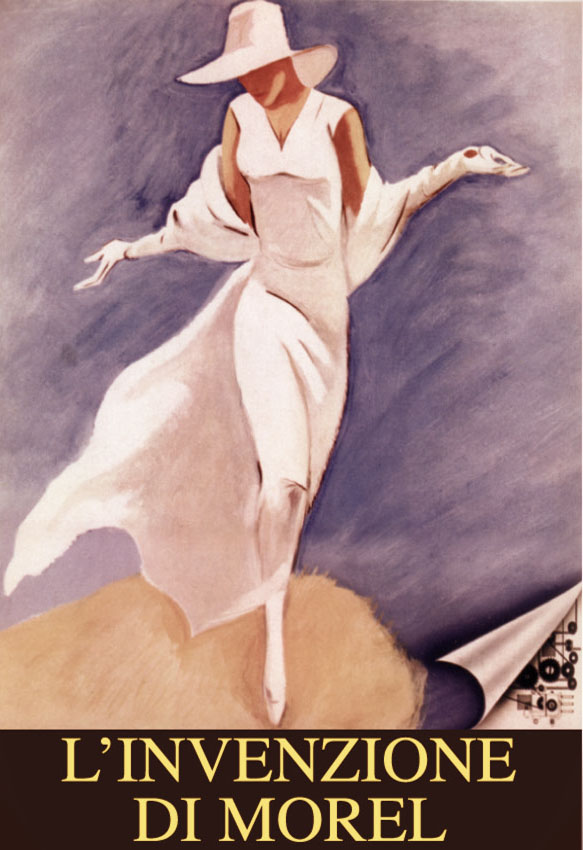
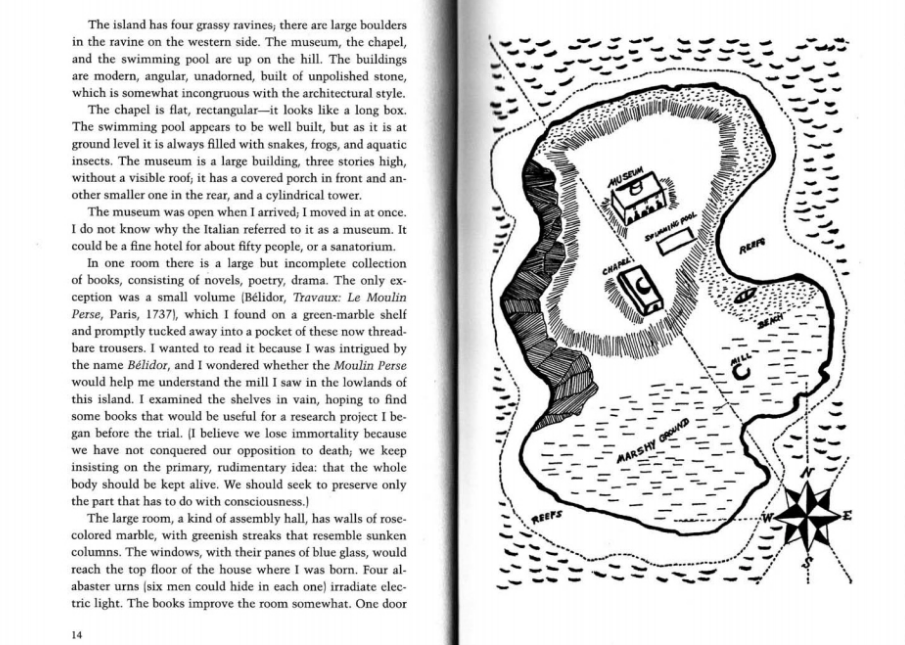
At times, I find myself resembling the shipwrecked man from The Invention of Morel, stranded on an island that at first appears deserted, almost welcoming in its deceptive silence. Yet something soon shifts. The people who inhabit it do not see him. He moves among them like a breath, a weightless trace, already slipping out of reality.
Gradually, he understands that his invisibility is not accidental. These bodies, these gestures, this frozen summer light… all obey another logic. A repetition. A projection. Life here has become mechanical memory, the reconstruction of vanished moments, orchestrated by a machine born of obsession.
And in the face of this unsettling truth, a decisive turn emerges: remain outside, intact and separate, or step into the image, accept dissolution within the cycle at the cost of one’s own substance.
The story leaves behind an unnameable imprint—a nostalgia without object, as if something within us recognized a scene already lived elsewhere. It opens a fissure in what we call reality: its fragility, its occasional nature as stable illusion, and the strange condition of the individual who must vanish in order to fully belong to what he contemplates.
A film worth seeking out, or even better, the novel by Adolfo Bioy Casares on which it is based—brief in form, but long-lasting in its quiet afterlife within memory.
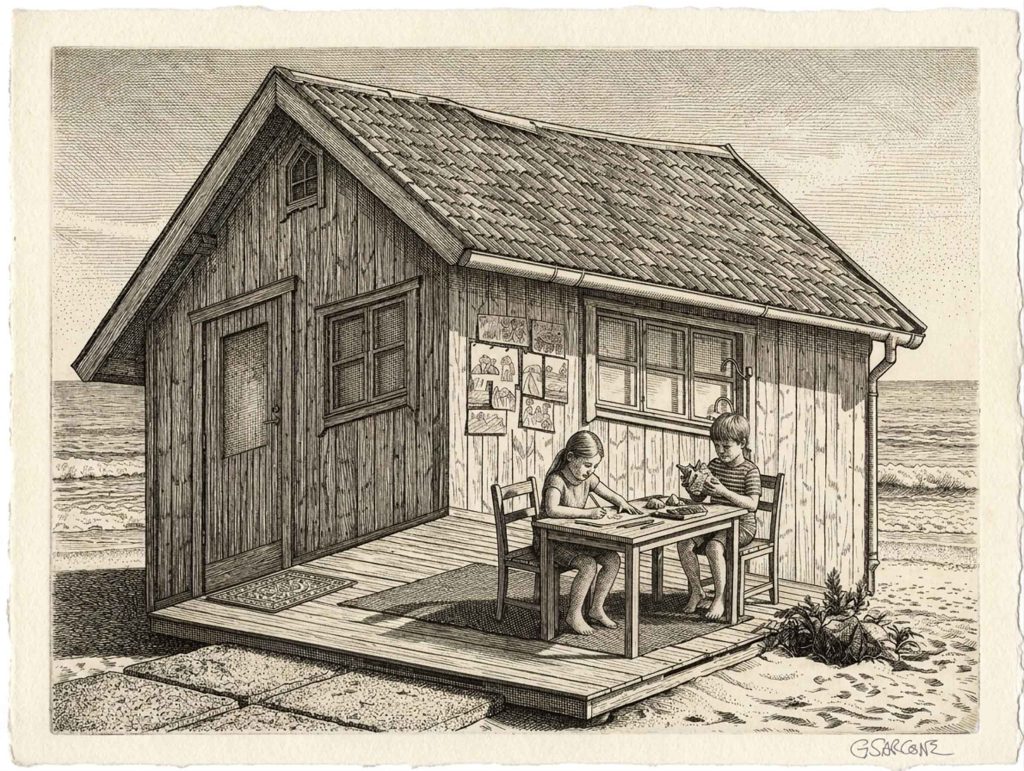
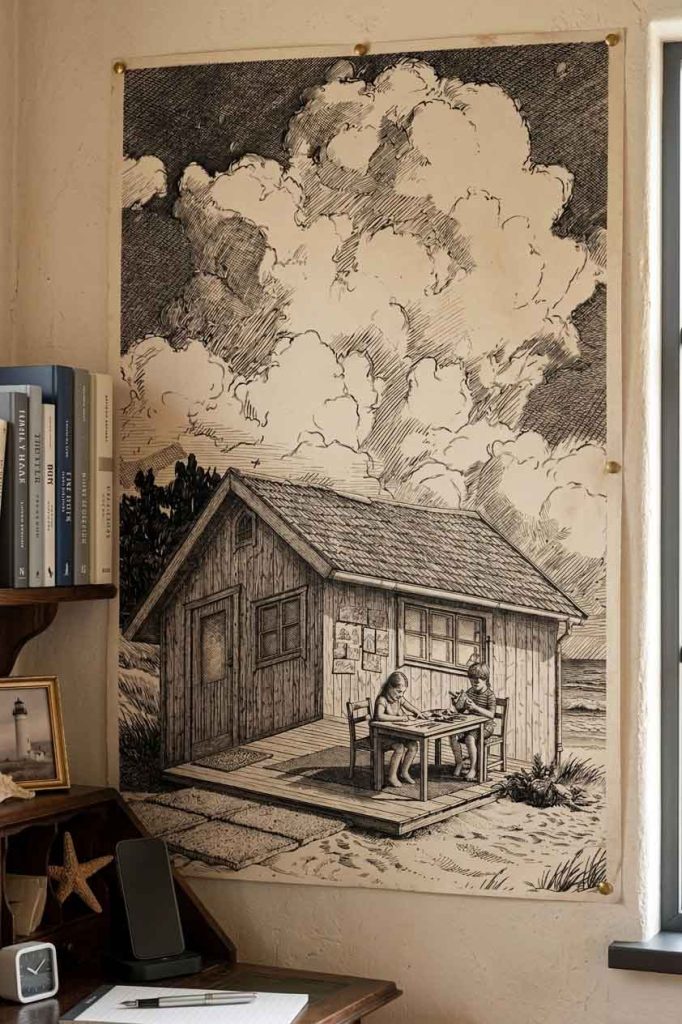
With summer just around the corner, I find myself drifting back to the shores of time, to this delightfully impossible little structure perched on the beach.
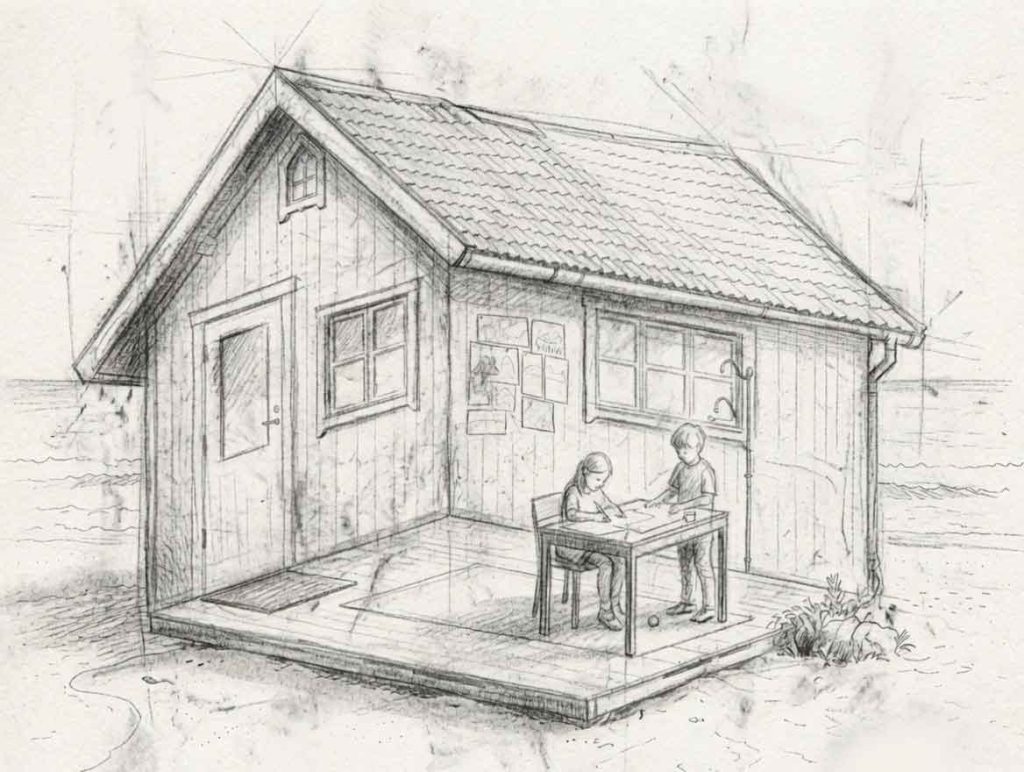
A drawing concept created for a children’s coloring book on optical illusions. Over the years, I’ve explored this theme through many curious and playful variations.
Are the kids engaging in creative activities inside the cabin or outside it?
The roof insists we’re looking at the exterior, while the floor pulls us firmly indoors. Both readings feel correct, yet they cancel each other out. So, there’s no clean resolution here—just a quiet visual paradox.
Curious to see more of my optical illusion book concepts, impossible worlds, and mind-bending creations? Take a stroll through my author page.
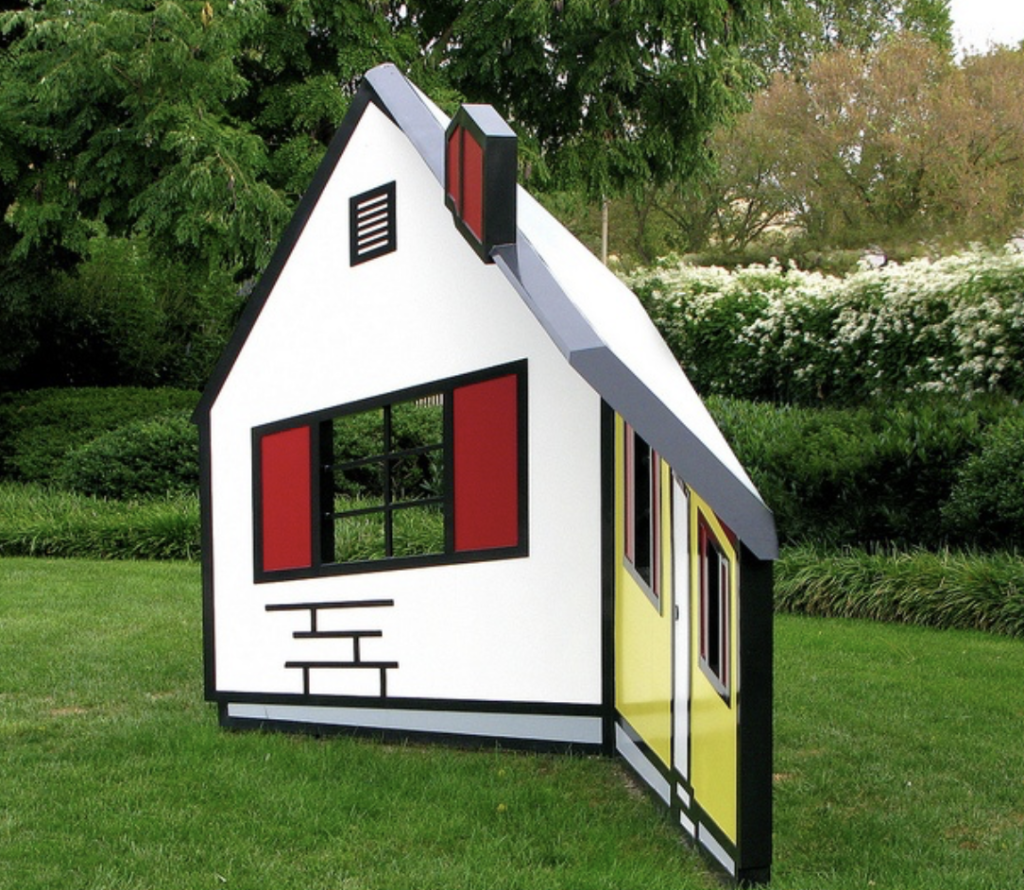
The idea itself is far from new and has inspired countless artists, architects, and photographers. It even exists in three dimensions. A notable example is Roy Lichtenstein‘s House I (1996), an ingenious sculpture that appears to be a solid house but is actually a concave construction made of angled steel planes. As viewers move around it, the structure seems to rotate and reshape itself, turning perception into part of the artwork.
Edo, under the Tokugawa shogunate. Merchants wealthy enough to unsettle the hierarchy, yet still ranked below the samurai. Power without status—watched closely, dressed carefully.
Sumptuary laws did the rest: no gold, no loud silk, no bright declarations. Only browns, greys, indigo. A forced muting of visibility.
Constraint rarely suppresses imagination. It concentrates it.
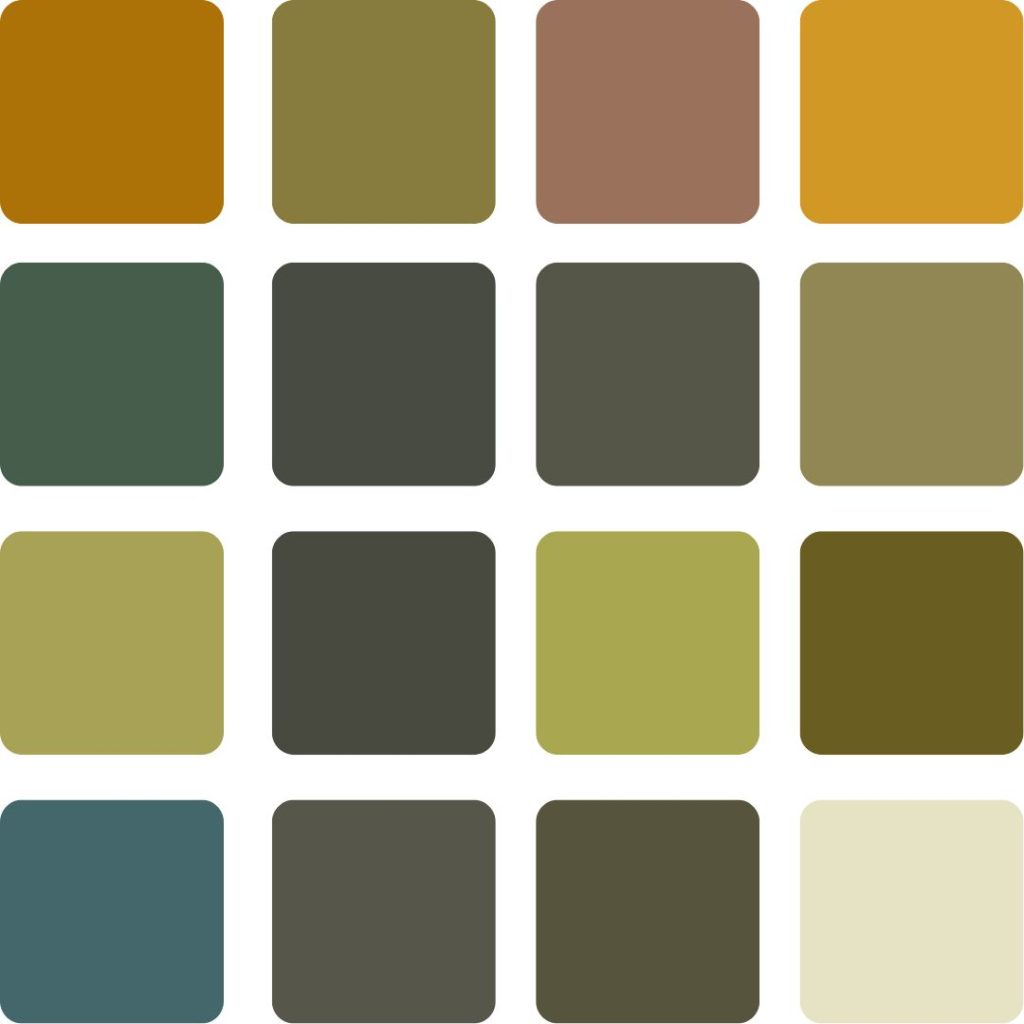
From this narrow register emerged a refined spectrum known as Shijuhattcha Hyakunezumi (四十八茶百鼠)—“48 browns, 100 greys.” Not literal numbers, but a cultural way of naming excess within restraint: an almost infinite sensitivity to difference inside what first appears uniform.
Fashion became a coded language. Subtle shifts in tone, legible only to trained eyes. Outside, discipline. Inside, excess held in reserve. A lining of rare fabric. A color hidden against the skin. A private flash revealed only when a sleeve turns in the wind.
This is iki: elegance that refuses emphasis. Presence without display. A form of refinement that collapses the moment it is named.
Its opposite is yabo (野暮): excess, insistence, the compulsion to be seen. Not morality—measure. Or the lack of it.
Today, the direction has inverted. Visibility has become currency. Those who do not perform disappear; those who do not declare are not counted. What was once failure has become strategy.
And yet the counter-move remains simple.
Lower the volume. Leave gaps. Let meaning breathe in what is not shown.
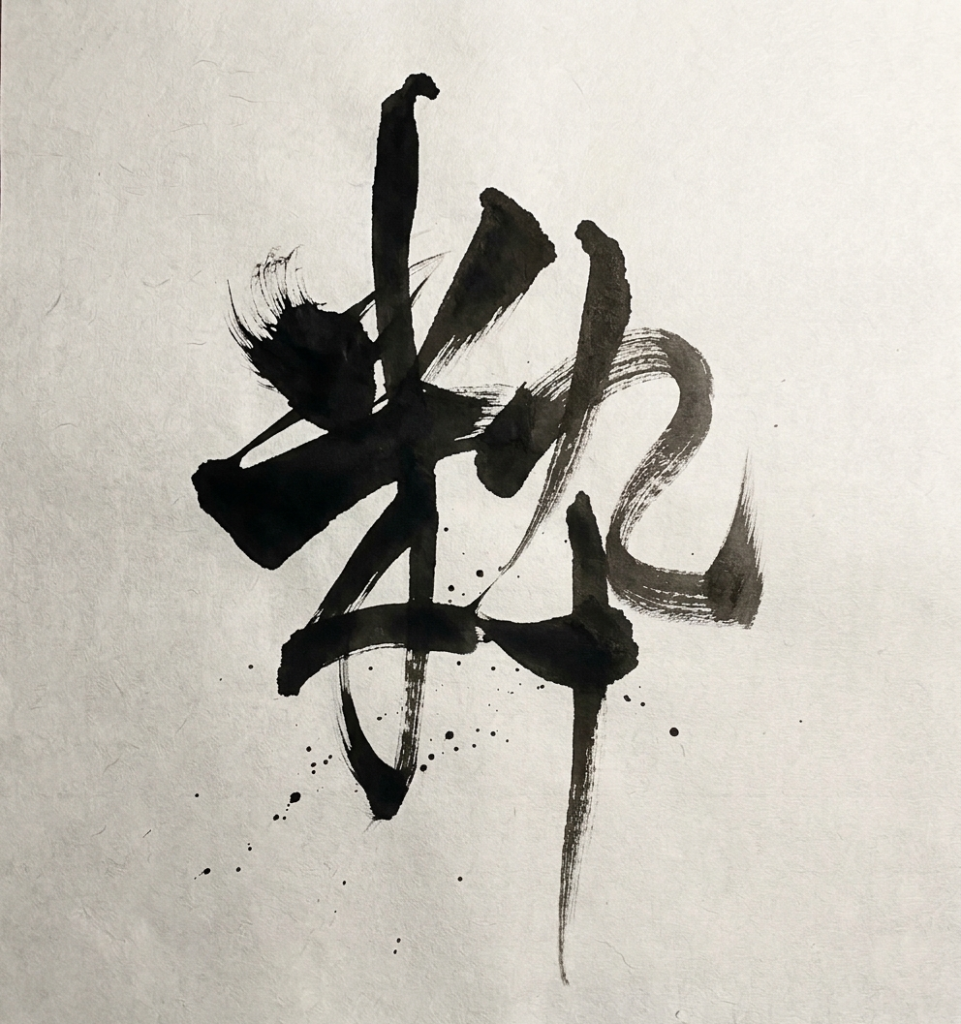
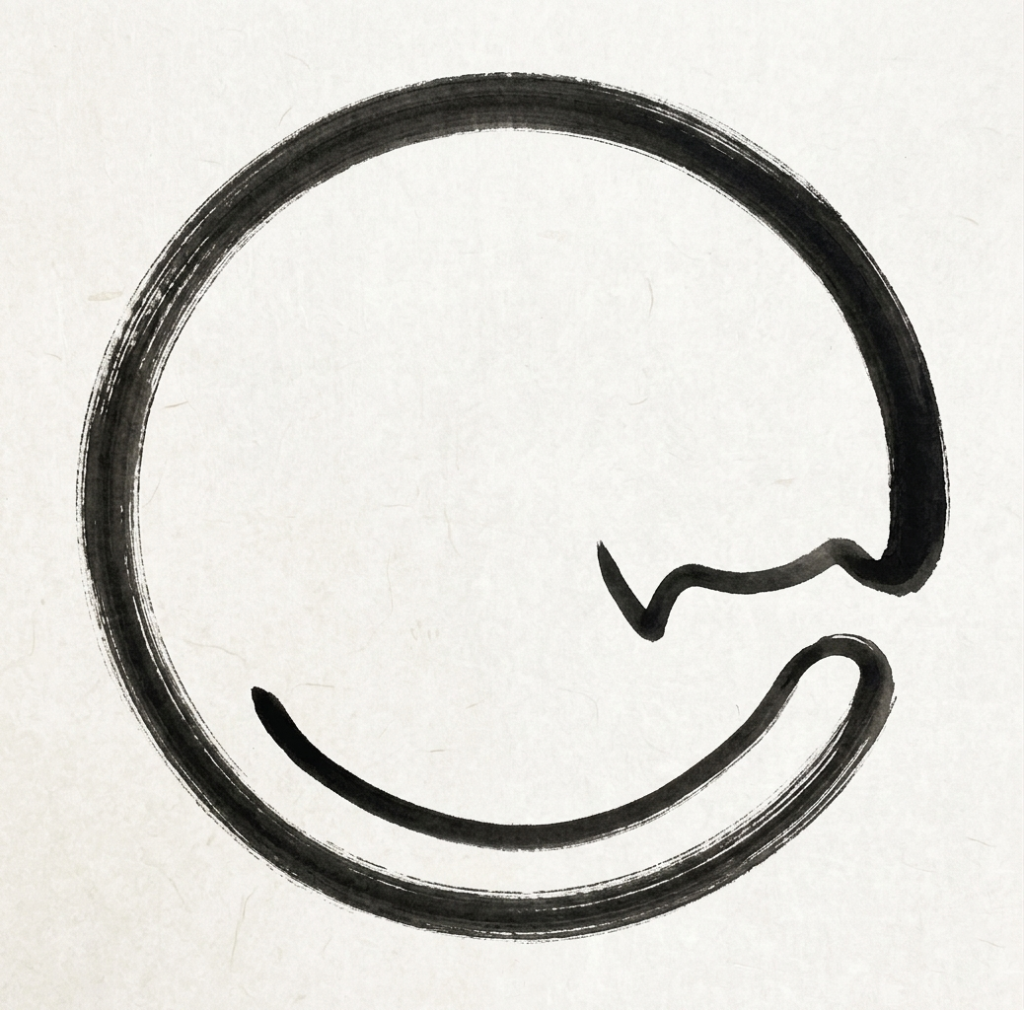
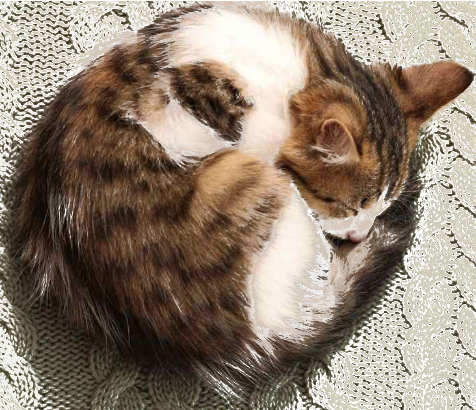
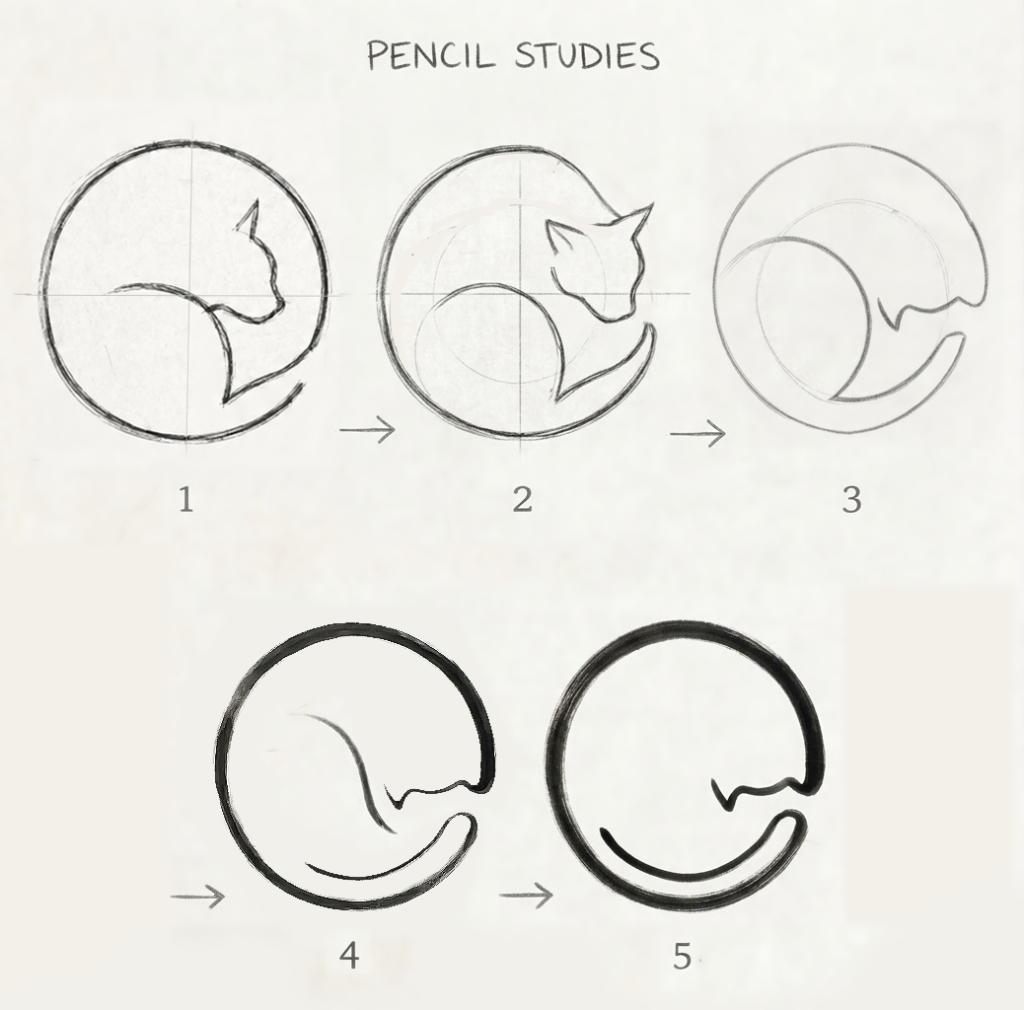
A Zen-inspired sumi-eunicursal brushstroke that gently evokes the silhouette of a sleeping cat.
A single brushstroke, almost nothing… and yet the mind completes the rest. This Zen-inspired sumi-e line suggests the presence of a sleeping cat, as the brain instinctively searches for form, balance, memory, and meaning within this minimal stroke. A curve becomes a back, a pause becomes a head, and empty space turns into stillness—peace, quietude itself. Strangely, this allegorical curve echoes the Japanese symbol ensō (円相; “circular form”), often drawn in calligraphy as a gesture that holds completeness and imperfection in the same breath.
Minimal drawing works because perception is never passive. We do not simply “see” the world; we continuously reconstruct it from fragments. A few essential marks are enough for the imagination to awaken and project life into absence. The unfinished image invites the viewer to participate in its creation.
This is one of the quiet powers of strict minimalism: removing detail does not always diminish reality — sometimes it amplifies it. In sumi-e, what is omitted matters as much as what is painted. The void is not empty; it breathes. Perhaps that is why a simple unicursal stroke can feel strangely alive.
Art begins precisely there: at the threshold where perception, imagination, and silence meet.
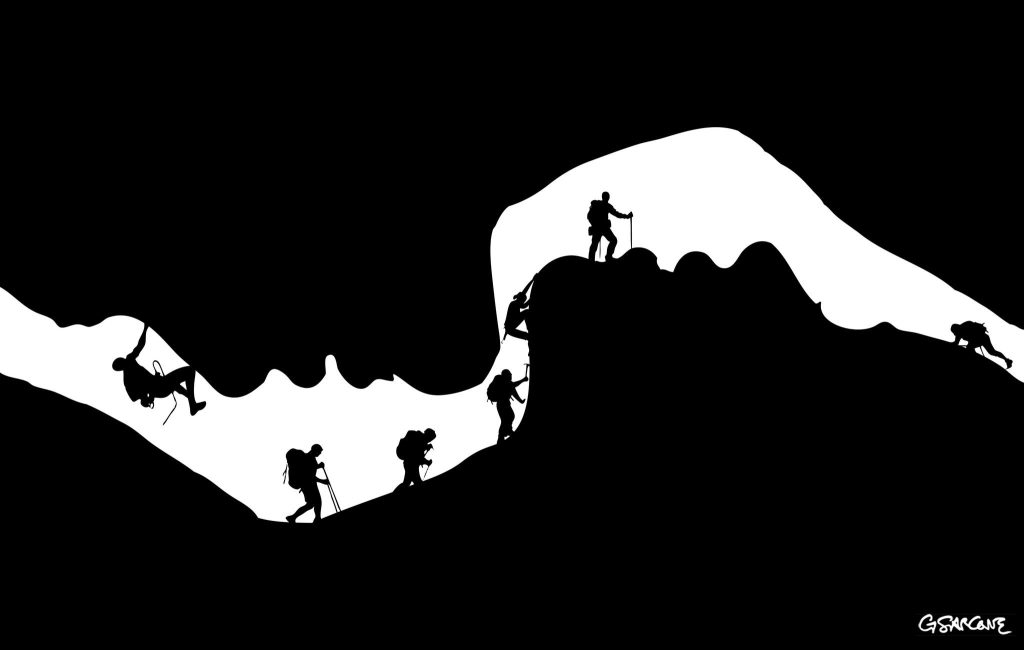
An illusion carved in emotion—can you spot the hidden lovers within?
I created this illustration for a commissioned series examining the underlying strata of interpersonal intimacy.
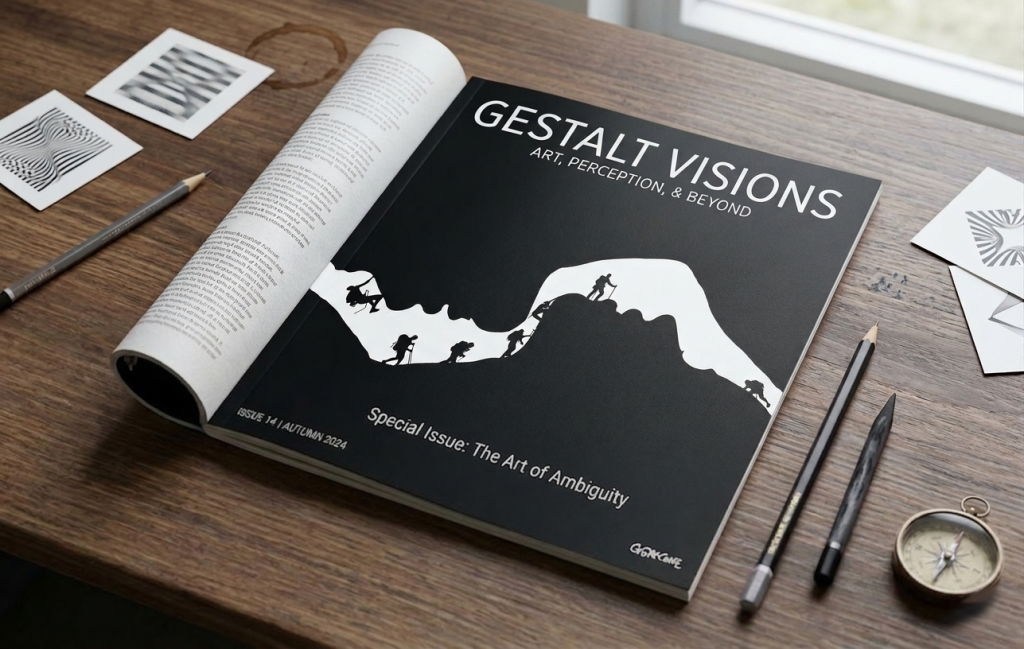
This black-and-white composition plays on figure–ground reversal. At first glance, it reads as a cave opening with a line of climbers moving along a rugged ridge. Look again, and the void resolves into the soft profile of two faces, suspended in the instant before a kiss.
Interested in commissioning my work to illustrate your next editorial project or conceptual series? Let’s discuss how we can bring your vision to light.
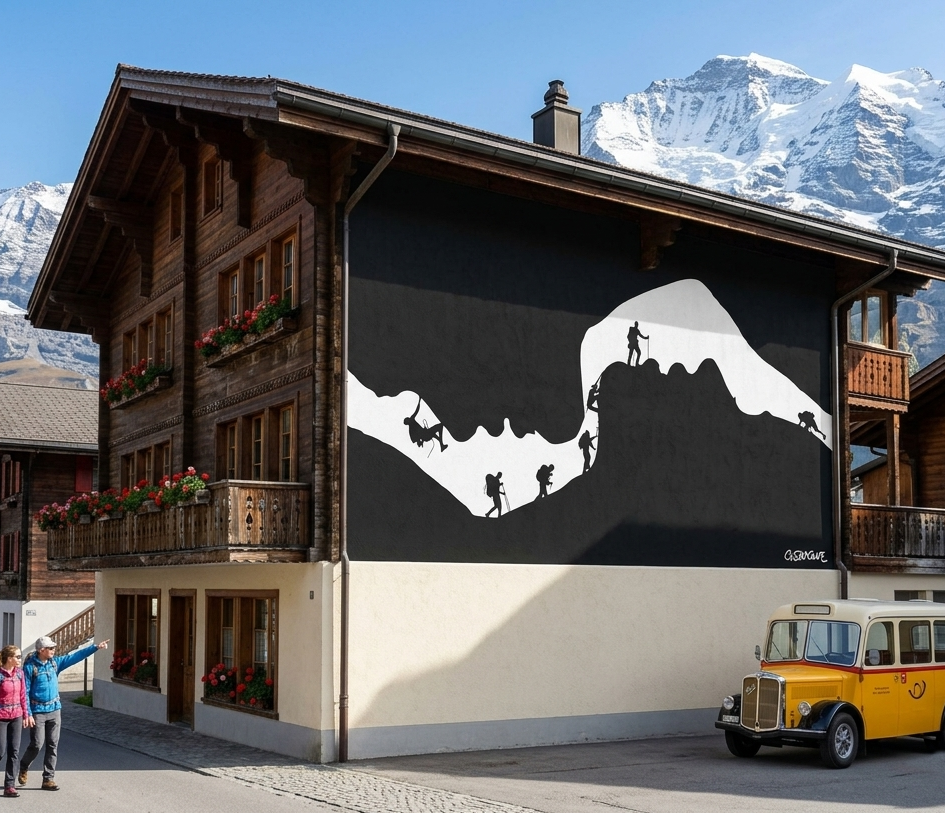
The stark contrast and clean silhouettes lend themselves naturally to large-scale applications. On a façade, the image finds a natural home as a mural in a Swiss village, where the alpine setting mirrors the climbers’ ascent.
Explore My World of Art, Books, and Creative Concepts