The Eternal Return

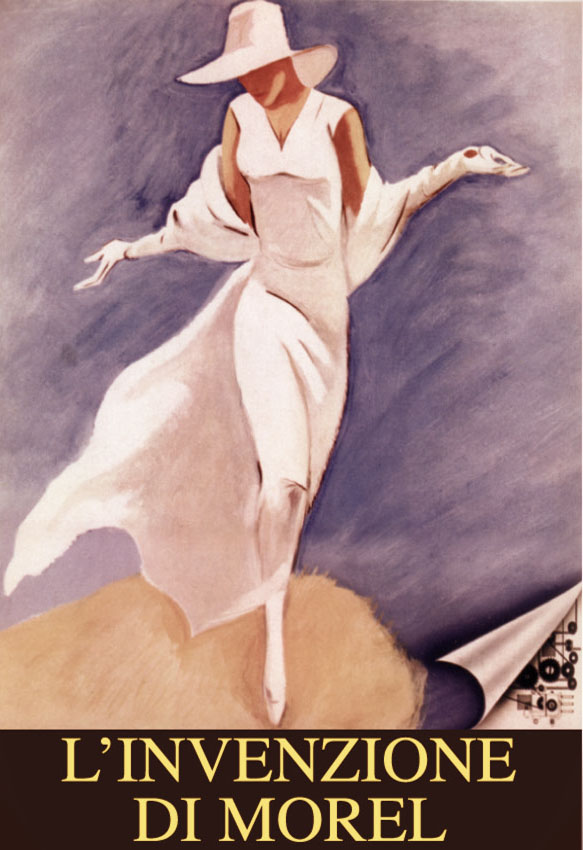
At times, I find myself resembling the shipwrecked man from The Invention of Morel, stranded on an island that at first appears deserted, almost welcoming in its deceptive silence. Yet something soon shifts. The people who inhabit it do not see him. He moves among them like a breath, a weightless trace, already slipping out of reality.

Gradually, he understands that his invisibility is not accidental. These bodies, these gestures, this frozen summer light… all obey another logic. A repetition. A projection. Life here has become mechanical memory, the reconstruction of vanished moments, orchestrated by a machine born of obsession.

And in the face of this unsettling truth, a decisive turn emerges: remain outside, intact and separate, or step into the image, accept dissolution within the cycle at the cost of one’s own substance.

The story leaves behind an unnameable imprint—a nostalgia without object, as if something within us recognized a scene already lived elsewhere. It opens a fissure in what we call reality: its fragility, its occasional nature as stable illusion, and the strange condition of the individual who must vanish in order to fully belong to what he contemplates.

A film worth seeking out, or even better, the novel by Adolfo Bioy Casares on which it is based—brief in form, but long-lasting in its quiet afterlife within memory.

l'invenzione di Morel
Immortality, Love & Loneliness
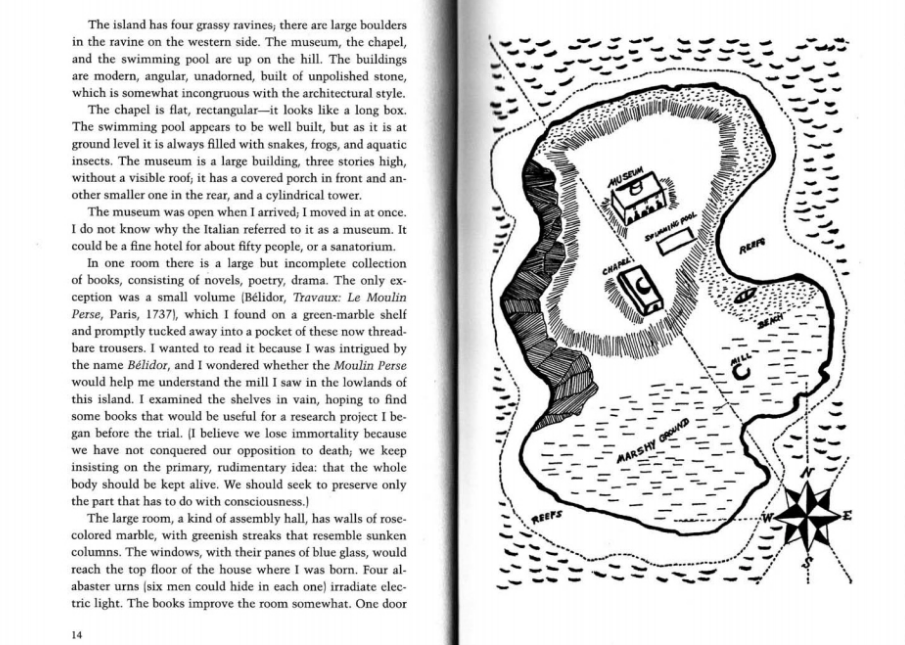
the island
The island as described by Adolfo Bioy Casares

The Soul of Books: A Journey from Bark to Pages

I must have been born in a library, for the love I hold for books is immeasurable. A book awakens all the senses in me: the visual pleasure, the tactile warmth, the scent of cinnamon or vanilla from old pages, the soft rustle of turning leaves, and even the taste… To me, no digital book will ever replace the presence of a real one, with its soul and essence.

But the journey from tablet to scroll, to codex, and finally to the modern book spans millennia. The codex, the direct ancestor of today’s book, introduced a revolutionary format—pages bound along one edge—laying the foundation for how we read and store knowledge today.

Books, as we recognize them, became widespread during the Middle Ages, largely due to Gutenberg’s invention of the printing press. However, the codex itself dates back much further. It was made of sheets folded multiple times, often twice, to form a bifolio. These bifolia were sewn together into gatherings, allowing for binding and, when needed, rebinding. The most common structure consisted of four bifolia—eight sheets, totaling sixteen pages—known in Latin as quaternio. This term later gave rise to quaderno in Italian, cahier in French, and quire in English. Interestingly, the Latin word codex originally meant a block of wood, a nod to the materials once used for writing.

Even the word book has deep roots—its Old English form, bōc, likely stems from the Germanic root bōk-, meaning beech. This isn’t just a linguistic coincidence; early writings may have been carved into beech wood. In Slavic languages, the word for “letter,” буква (bukva), shares this origin. In Russian, Serbian, and Macedonian, букварь (bukvar’) or буквар (bukvar) refers to a child’s first reading textbook.

Similarly, the Latin word liber, which gave rise to libro in Italian and livre in French, originally meant “bark,” reinforcing the deep connection between books and trees. The Greek root biblio, is believed to be derived from βύβλος (búblos), meaning “papyrus,” named after the ancient Phoenician city of Byblos, a major hub of the papyrus trade.

From carved wood and tree bark to bound pages and printed volumes, books have always been deeply rooted in nature—both in language and in form.

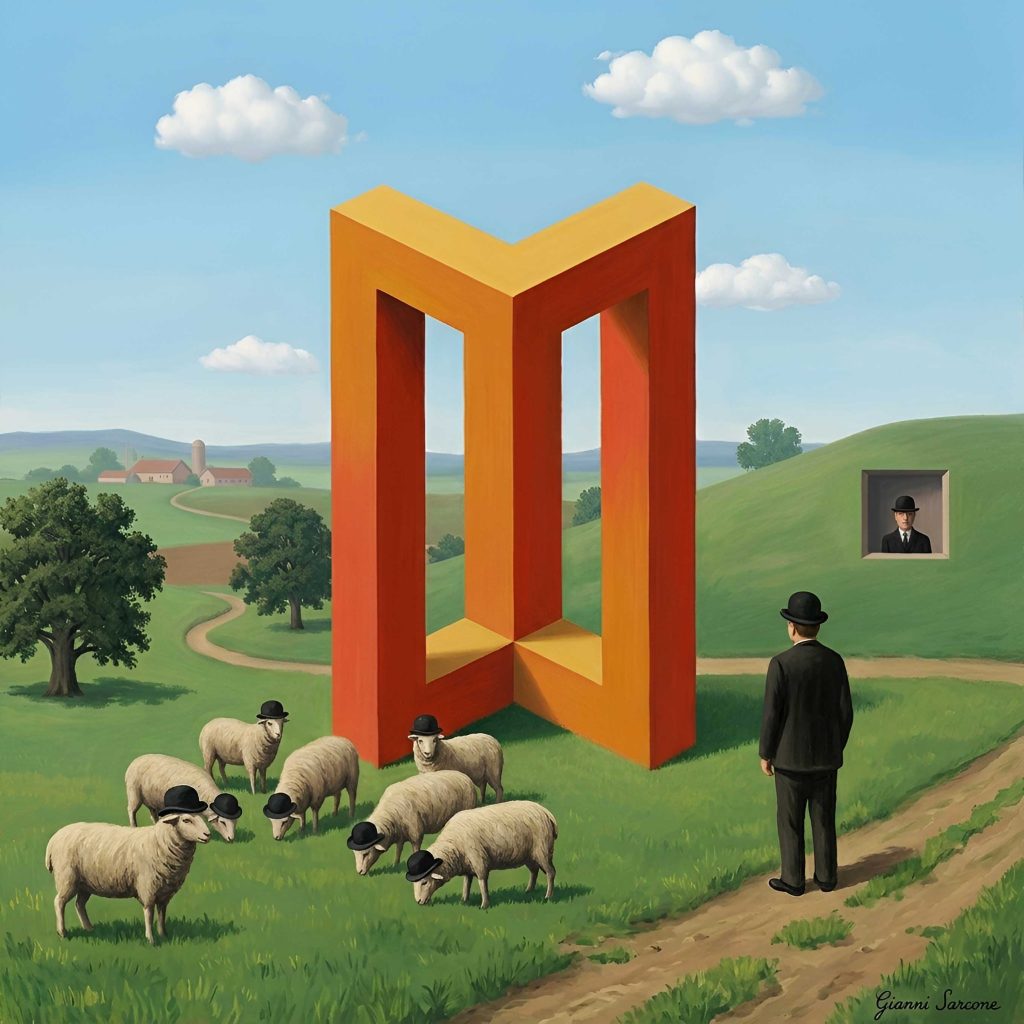
Bamboozle your mind with illusions

Bamboozle your mind with Super Optical Illusions – my book of brain boggling artworks is a clever gift for curious-minded children. Find hearts that beat in the middle of the page and snail shells that spiral off into infinity. Enjoy a preview of my eye popping illustrations below and look for many more in Super Optical Illusions – available now!

As an author, designer, and researcher in the field of visual perception and creative thinking, I like to combine art, psychology, cognitive sciences, and recreational logic to test people’s ingenuity.

I have created or adapted most of the illusions contained in my books. Many were created and perfected during my workshops which are held for the benefit of children and adults alike (more information at: http://www.archimedes-lab.org/prospatelier.html).

Try to solve the optical illusion puzzles below without looking at the answers.

The Football

The Football

Continue Reading

Super Optical Illusions

The outside world is mediated through our sense organs, so what we perceive and feel are just representations of reality. The only things we cannot doubt are our inner emotions: we cannot doubt that we are happy, sad, in love, or in grief, when such states apply. The only other thing we cannot doubt is… to doubt!

Super Optical Illusions (aka Xtreme Illusions 2) is a children book project I enjoyed to make three years ago for the publishers “Carlton Books” [amazon.co.uk], “National Geographic Kids” [amazon.com] and “Ça m’intéresse” [amazon.fr]. It looks really fantastic and my pictures are large to enjoy the details! It is a family book that will encourage the young reader to explore the mysteries that lie right inside our own minds (including the key scientific concepts of perspective and perception).

Super Optical Illusion

Book Cover

Continue Reading