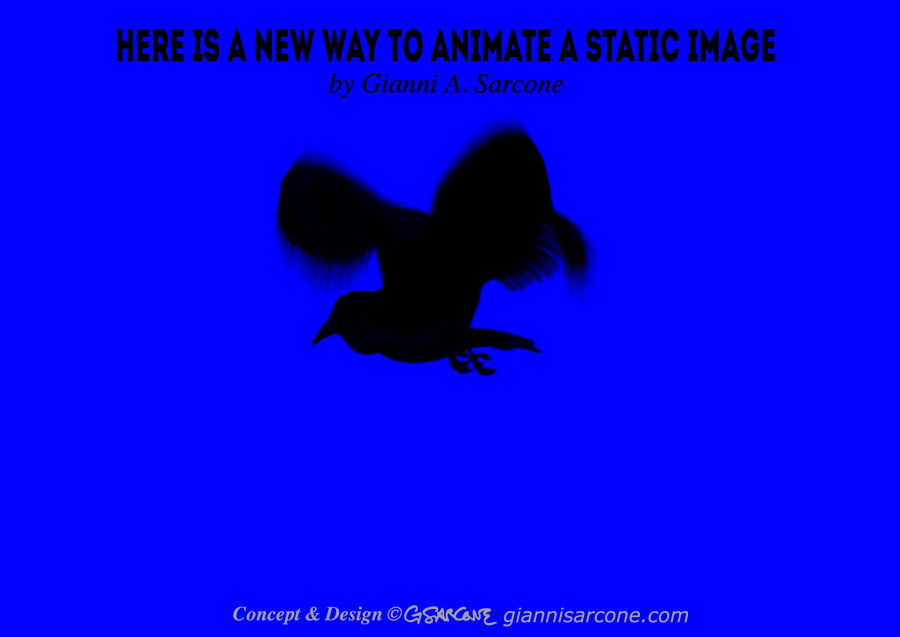
Kinechromatics (patent pending) is a method of my invention for animating static images through retinal persistence and controlled interactions between additive and subtractive color systems. It produces apparent motion by sequential color filtering across layered chromatic structures, rather than relying on conventional frame-by-frame animation.
The static image above is made of 3 layers having each a different subtractive primary color (magenta, yellow, or cyan) blended in ‘multiply mode’…
What happens if we alternately overlay this image with transparent colored acetate sheets, each carrying an additive primary color (red, green, and blue)?
Kinechromatics: red filter
When viewed through a red acetate sheet, the magenta and yellow components are largely absorbed, while the cyan layer remains visible, appearing black.
Kinechromatics: green filter
Through a green acetate sheet, the cyan and yellow components are suppressed, revealing the magenta layer in black.
Kinechromatics: blue filter
Through a blue acetate sheet, the magenta and cyan components are reduced, allowing the yellow layer to emerge but appear black due to its lack of transmission in the blue range.
The animated GIF below produces a continuous motion effect using only four elements: a static base image and three full-color layers blended in multiply mode.
Colored light can also replace acetate filters, creating a seamless optical animation. Stroboscopic illumination in primary colors has the added effect of merging perceptually into white light, making the transitions visually smooth. This approach can be particularly effective in museum or gallery installations, offering a direct demonstration of how color interaction is processed by human vision. The setup consists of a static image containing the Kinechromatics pattern, illuminated sequentially by red, green, and blue projection, as shown in the animation below.
For inquiries about exhibition or collaboration, feel free to contact me.
A second example, a simple animated dancing skeleton, demonstrates the same principle: