In 1891, French physicist Gabriel Lippmann invented interference photography, a process that could capture color without using dyes or pigments. He was awarded the Nobel Prize in Physics in 1908 for this work.
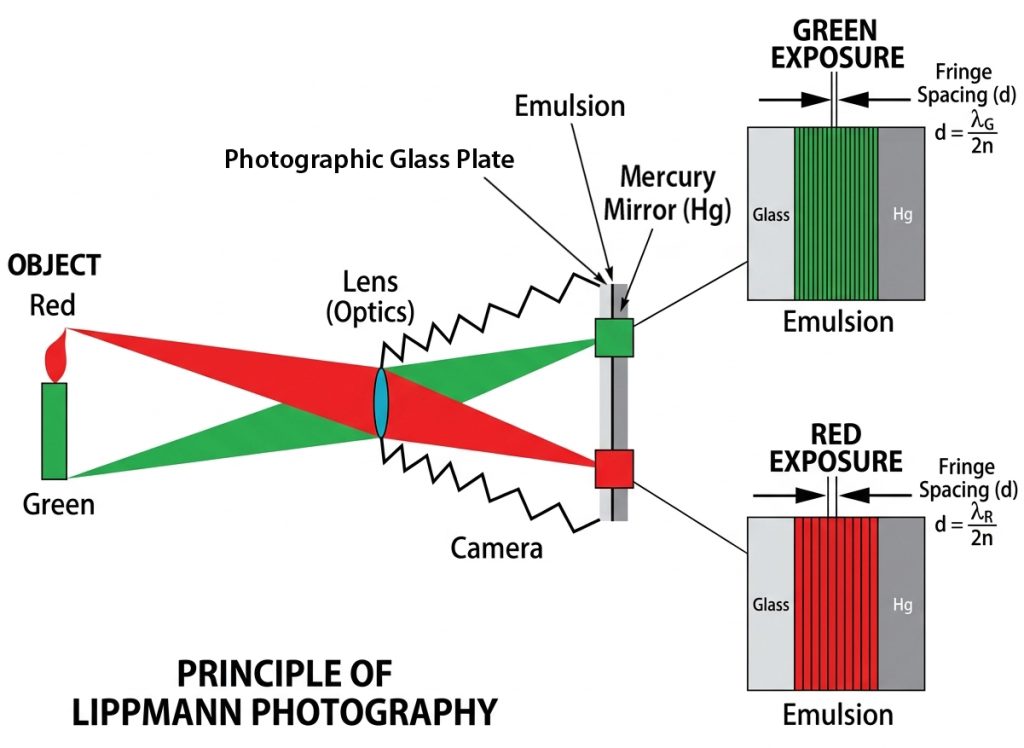
The principle is simple but remarkable. Light passes through an extremely fine-grained photosensitive emulsion and is reflected by a layer of mercury behind it. The incoming and reflected waves interfere, producing standing waves whose structure varies with the wavelengths of light. This microscopic interference pattern is recorded in the emulsion.
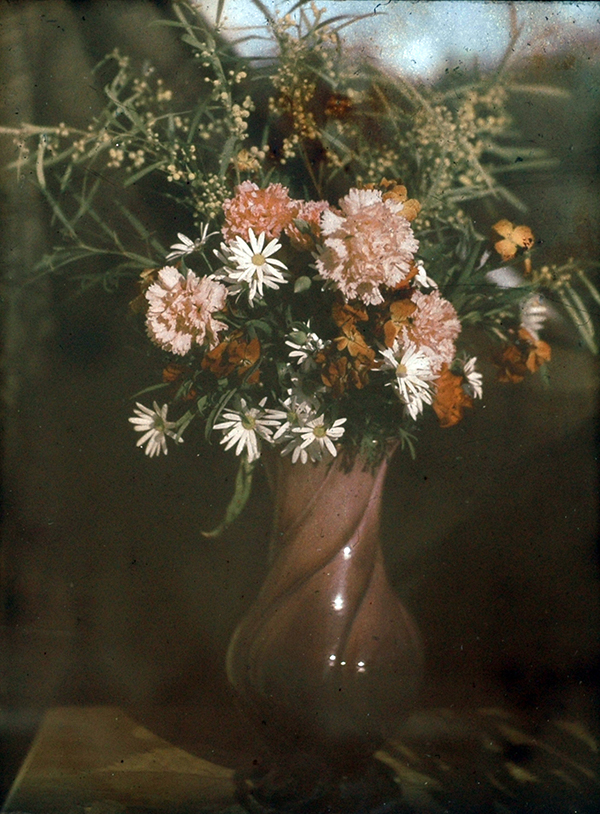
When the plate is later illuminated, its microscopic structure diffracts and reflects selected wavelengths, reproducing the colors of the original scene. Unlike conventional three-color photography, which reconstructs color from three components, Lippmann’s process stores the color information as a physical structure of interference.
The process, however, was technically demanding and never became practical for widespread photography. In 1907, the Lumière brothers introduced the Autochrome, which became the first widely successful commercial color photography process based on three-color principles.
Lippmann photography had one important advantage, though: because it used no dyes, its colors were not subject to fading caused by the deterioration of colorants over time.
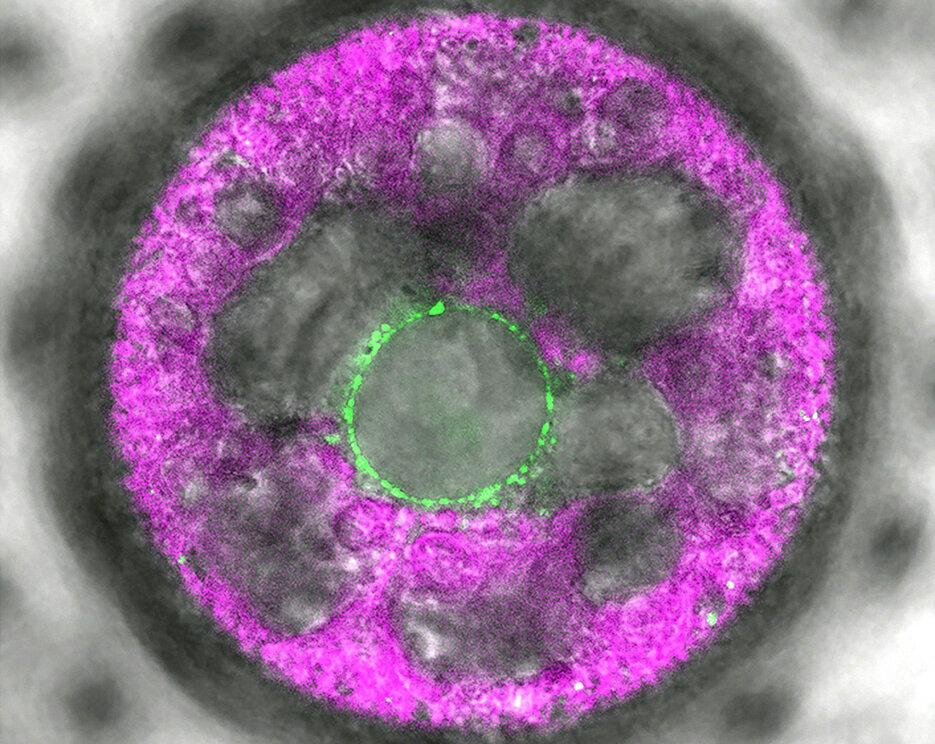
And the old idea has found a new life. Researchers have adapted the principle of Lippmann’s standing waves for long-term archival data storage. In 2019, experimental storage plates were exposed to cosmic radiation aboard the International Space Station for nine months, with no detectable degradation of the stored data.
From recording color to preserving information in space, the same principle still has something to say: sometimes the most durable way to store information is to make it part of the structure itself.