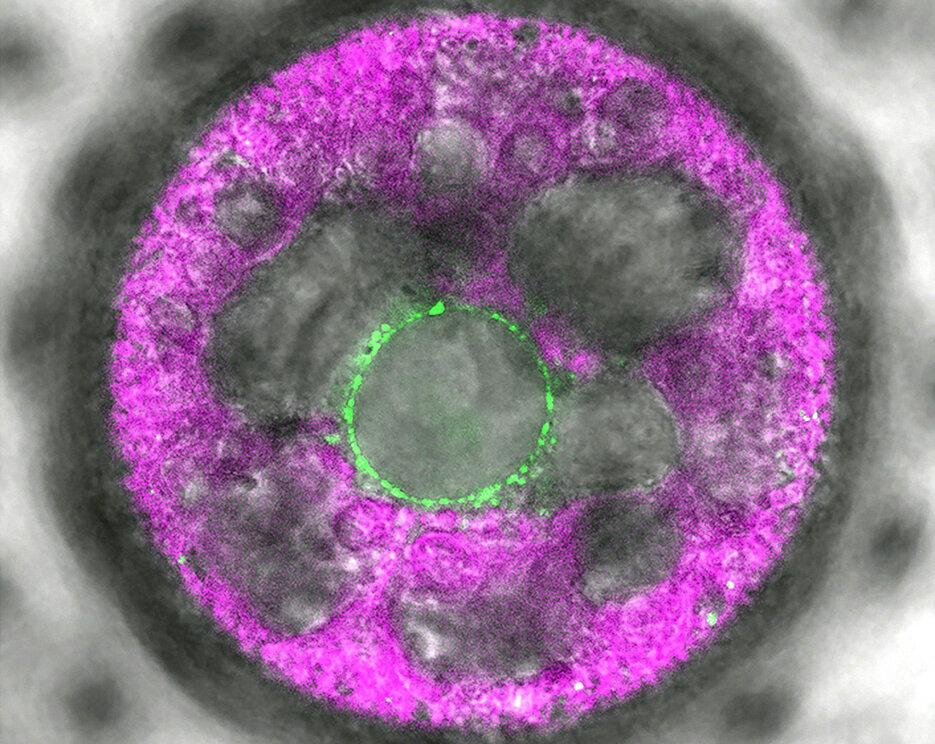
Deep in the retina, an ancient memory persists. Our visual cells rely on “opsins“—light-sensitive molecules inherited from unicellular organisms that existed long before animals. For over a billion years, life has refined this simple act: catching light.
In the sea, the same logic still plays out. Some oysters host algae on their mantle; they feed them, and in return these light-sensitive cells signal the presence of light. A quiet watch system—almost an eye, spread across a surface.
In certain algae, like Chlamydomonas reinhardtii, a tiny eyespot—the stigma—is enough to steer the organism toward light. Not an eye, but already a direction, a choice.
Our rods and cones extend that first invention: a long lineage of light detectors, slowly shaped over time, linking our vision today to the faint glimmers of the earliest oceans.