The Cube That Lies

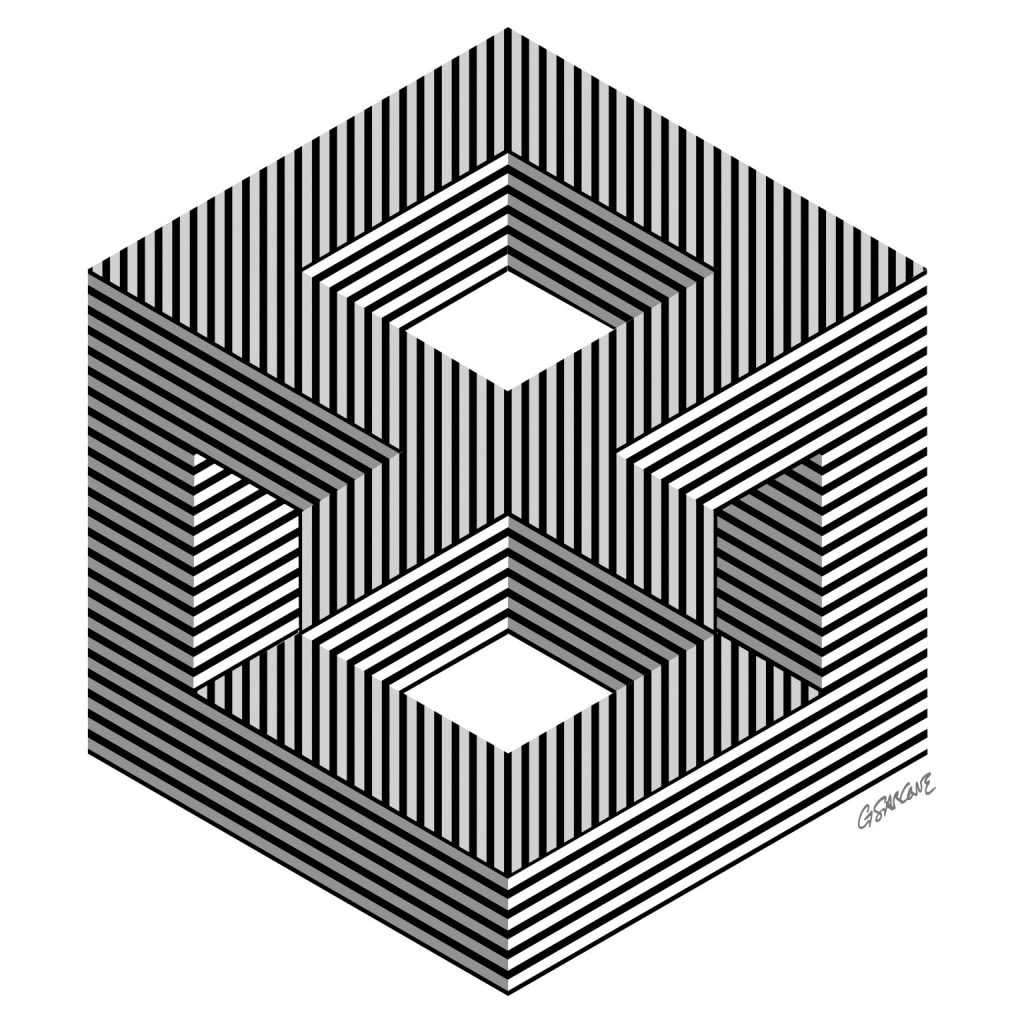
I’ve always been drawn to the architecture of geometry. The hexagon, with its quiet strength and symmetry, sits at the root of so many spatial illusions—it’s the seed of cubes, isometric grids, and 3D paradoxes. From this shape, I began exploring structures that bend logic and perception, eventually giving life to a trio of optical works: Enigma 1, Enigma 2, and Enigma 3.
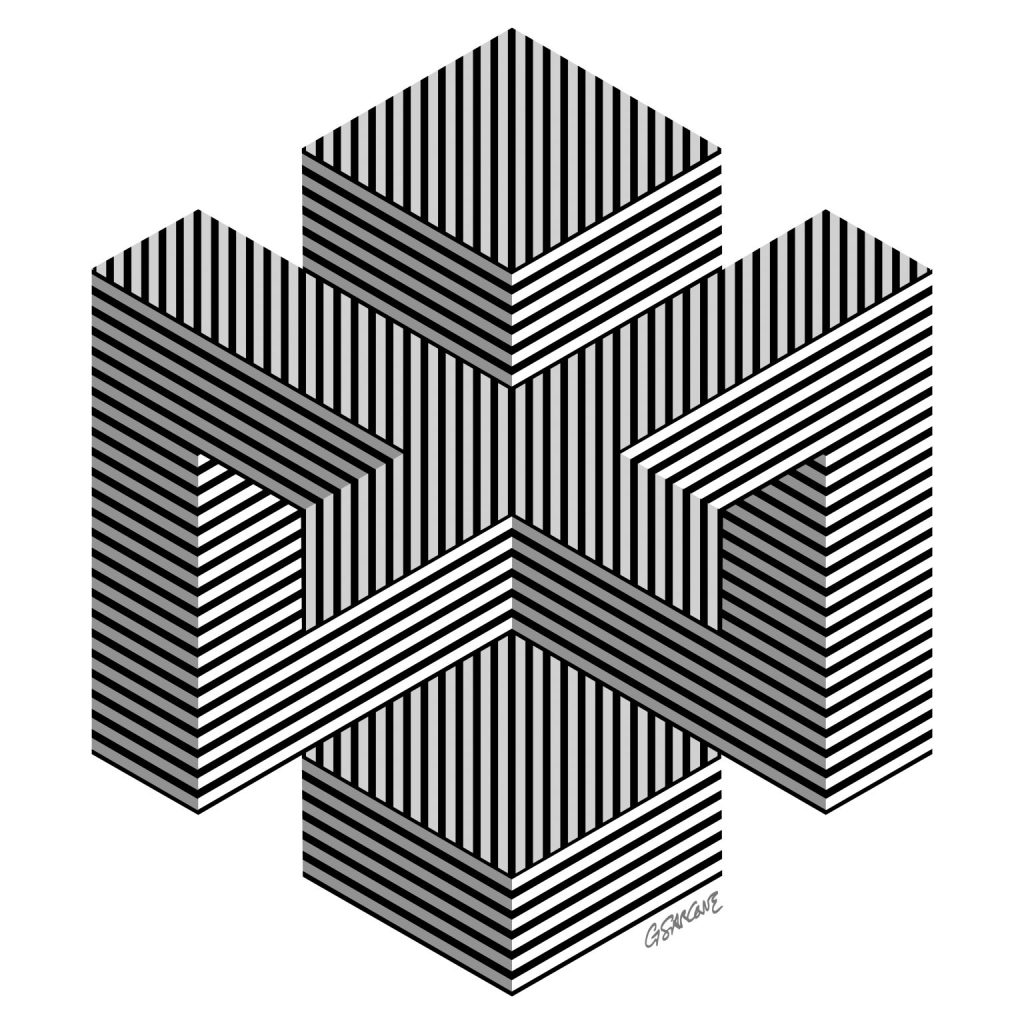
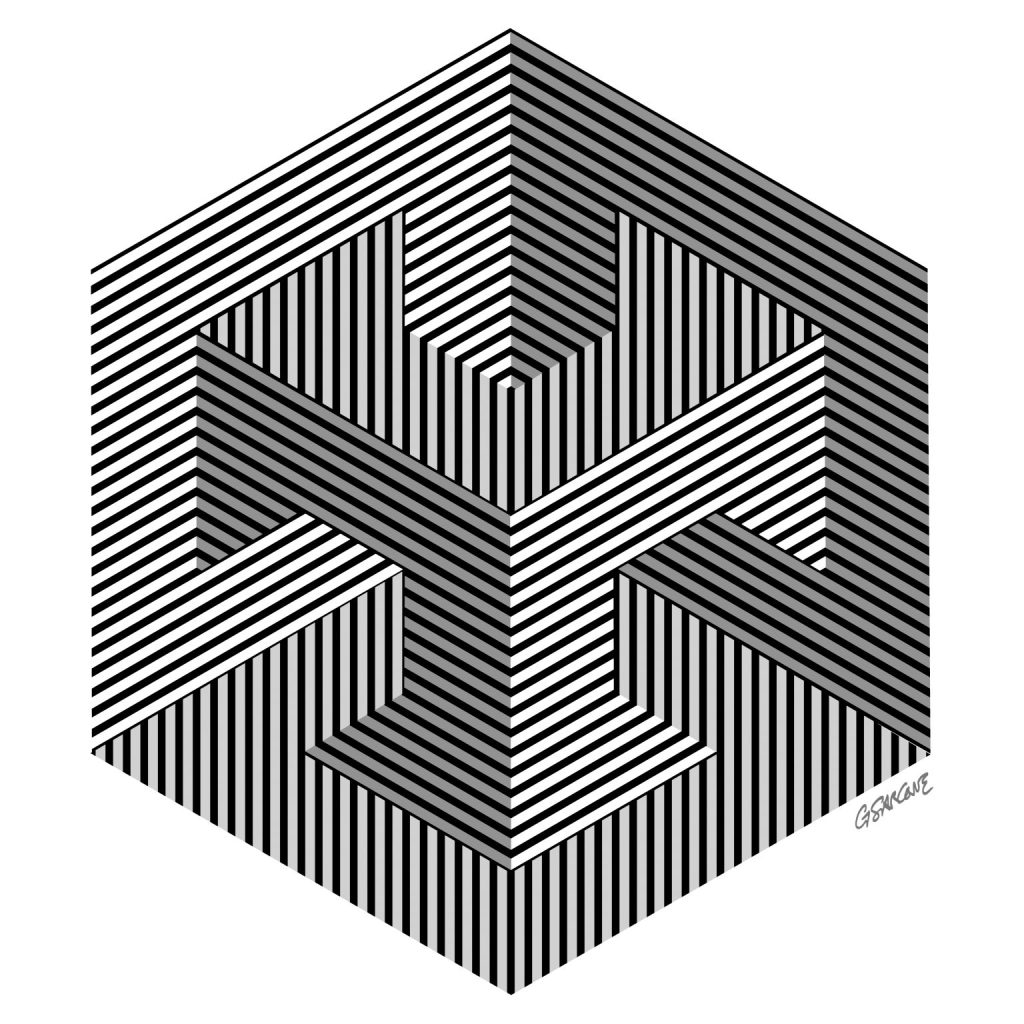
Each piece is built around the visual tension of the impossible cube, created by merging two tribars in perfect isometric perspective. The lines suggest solidity, yet the form escapes reality—what looks structurally sound unravels the moment the eye tries to make sense of it. That’s the game I love to play: where geometry behaves, but perception rebels.

These “Enigmas” are spatial riddles dressed in stripes and angles, each one twisting the viewer’s reading of depth, volume, and continuity in its own way.
“Infinity”, A Kaleidoscope of Squares

With this work, I aim to push geometry to its limits, transcending the confines of color. My goal is to showcase the creative potential of simple concentric squares as a medium for experimentation and the discovery of new op art patterns. By delving into this exploration, I strive to unveil captivating illusions of color and mesmerizing motion.


Draw a large and a small square with thick lines and center them (Fig. A). Next, blend the inner and outer squares in six steps to create a set of concentric squares. Reproduce the set to form a larger square pattern, as shown in Fig. B.

“Enigma”, Paradoxical Volumes

In these minimalist op art works, I explore geometry as metaphor, using the hexagon as a building block for cubes and other regular solids. The forms appear stable and believable, yet they are impossible. Their contradiction isn’t obvious at first; it reveals itself only when the eye slows down and follows the structure closely. By merging incompatible viewpoints and softening the boundary between inside and outside, the drawings turn logic against itself. The more ordinary the form looks, the stronger the effect—these objects are meant less to trick the eye than to unsettle the mind and challenge our sense of space.

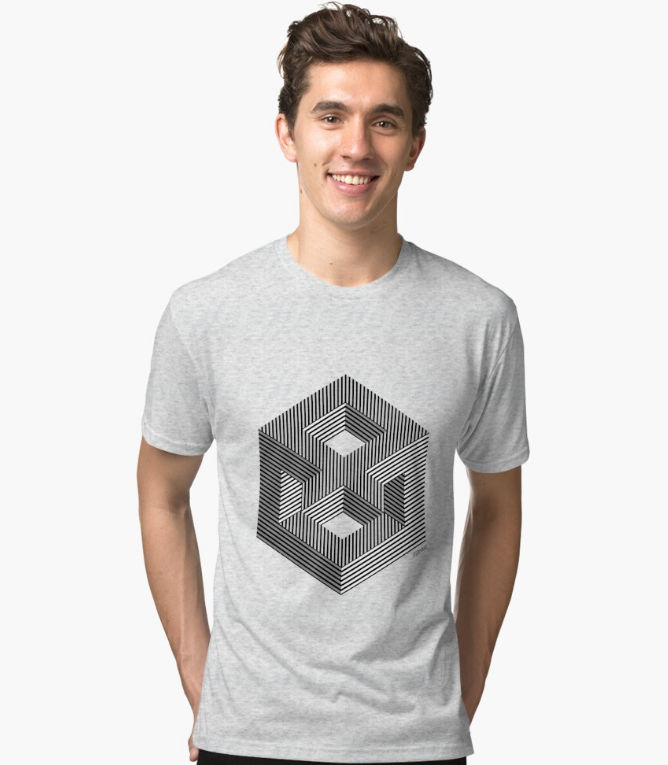
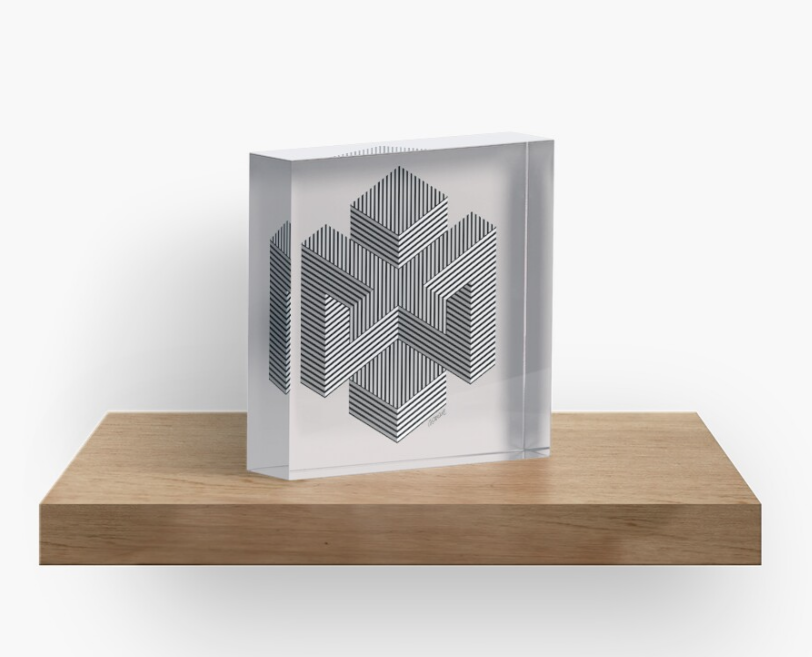
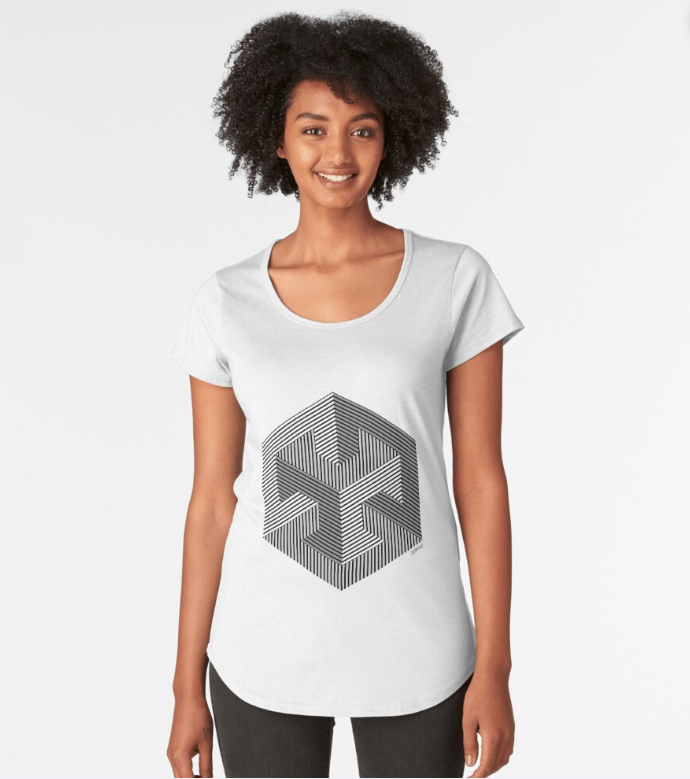
Enigma 1: Available as fine prints and t-shirts.

The two drawings displayed above and below combine paired tribars to form an impossible isometric cube, where form and illusion lock into a single structure.

Enigma 3: Available as fine prints and t-shirts.

Here, the “volume” turns itself inside out, quietly echoing the logic of a Klein bottle and unsettling the usual distinction between interior and exterior.

Enigma 2: Available as fine prints and t-shirts.

I am currently in the process of writing an informative book titled “Mastering Optical & Geometric Art: A Journey to Captivating Creations.” With a length of 136 pages, this book serves as an engaging guide to creating visually striking optical art and intricate 2D and 3D patterns. If you are interested in exploring further, I invite you to connect with me on Amazon.

Ghost Colors

This is one of my earliest color optical illusions. There is no yellow or green in the diamond shapes, just vertical black lines! (If you don’t believe it, use a eyedropper tool to check it.) This intriguing visual effect is mainly due to “simultaneous color contrast induction“.

Illusive colors
Ghost Squares / Black Diamonds (2002 – 2007)
Continue Reading

Breathing Hexagon

This is one of my earliest self-moving op art works (2003). Have a look at the static image above, don’t you have the feeling that the sets of lenticular shapes seem to expand?

This piece is accessible in various formats, including prints, posters, and t-shirts, through my art gallery shop.

Continue Reading

Flying Gothic Bat

A new kinoptic design taken from my book “Extreme Illusions 2”.

Kinoptic designs are optical illusions where a static image appears to be moving due to the cognitive effects of interacting color contrasts and shape position. The essence of Kinoptic Art is actually to play with our optic nerves, to surprise and create the illusion of colors, dimensions or motion. Op Artist uses a palette of elements like blank spaces, XOR spaces, interspaces, interferences, space tiling and geometric patterns. Precision is also important in my creative processes: a small change in an Kinoptic Art picture can strongly modify or negate a visual effect.

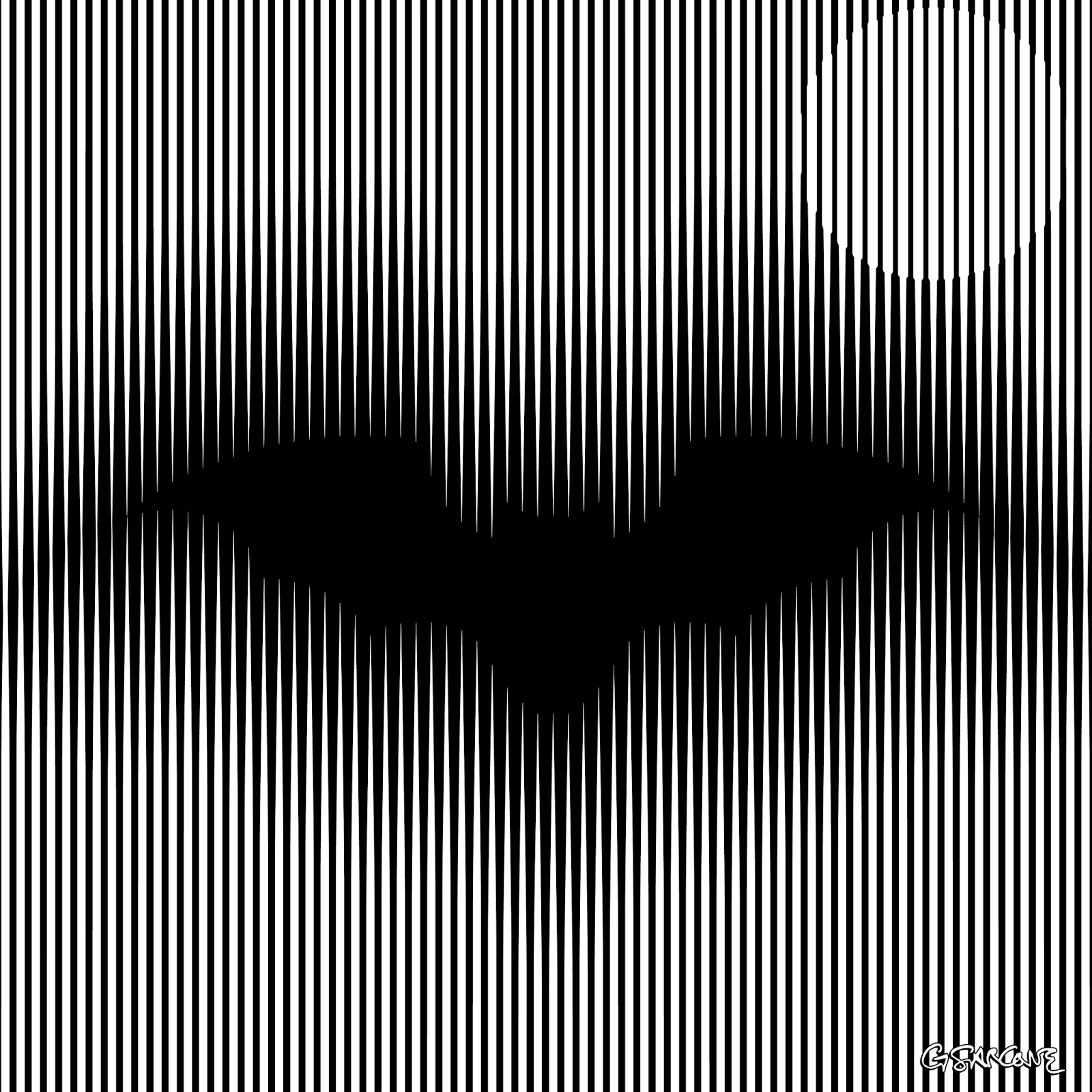
The bat in the picture below seems to flutter, move and/or expand. Moreover, if you stare for a while at it and close your eyes, you will see a smaller white bat appearing to be painted on the insides of your closed eye lids.

bat illusion

You can see more samples of my kinetic optical art on Smithsonian Magazine.