The Eternal Return

At times, I find myself resembling the shipwrecked man from The Invention of Morel, stranded on an island that at first appears deserted, almost welcoming in its deceptive silence. Yet something soon shifts. The people who inhabit it do not see him. He moves among them like a breath, a weightless trace, already slipping out of reality.

Gradually, he understands that his invisibility is not accidental. These bodies, these gestures, this frozen summer light… all obey another logic. A repetition. A projection. Life here has become mechanical memory, the reconstruction of vanished moments, orchestrated by a machine born of obsession.

And in the face of this unsettling truth, a decisive turn emerges: remain outside, intact and separate, or step into the image, accept dissolution within the cycle at the cost of one’s own substance.

The story leaves behind an unnameable imprint—a nostalgia without object, as if something within us recognized a scene already lived elsewhere. It opens a fissure in what we call reality: its fragility, its occasional nature as stable illusion, and the strange condition of the individual who must vanish in order to fully belong to what he contemplates.

A film worth seeking out, or even better, the novel by Adolfo Bioy Casares on which it is based—brief in form, but long-lasting in its quiet afterlife within memory.
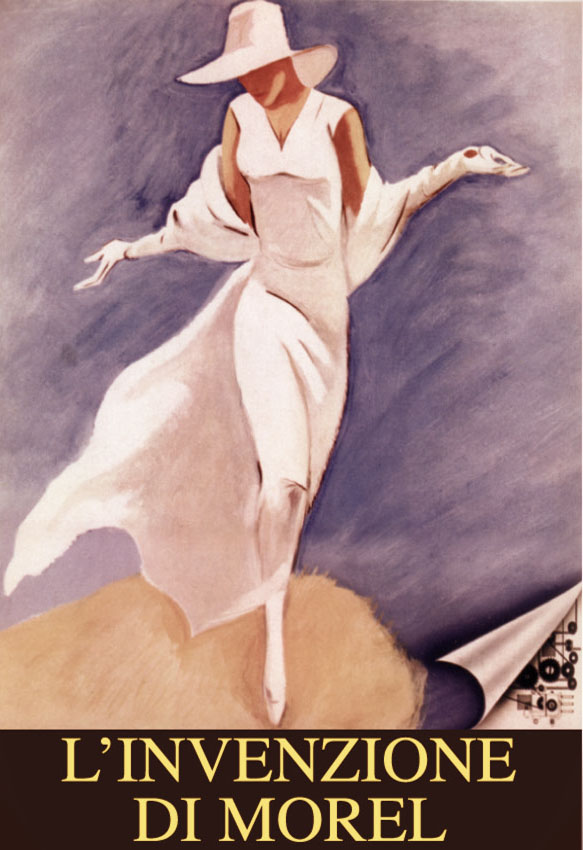
l'invenzione di Morel
Immortality, Love & Loneliness
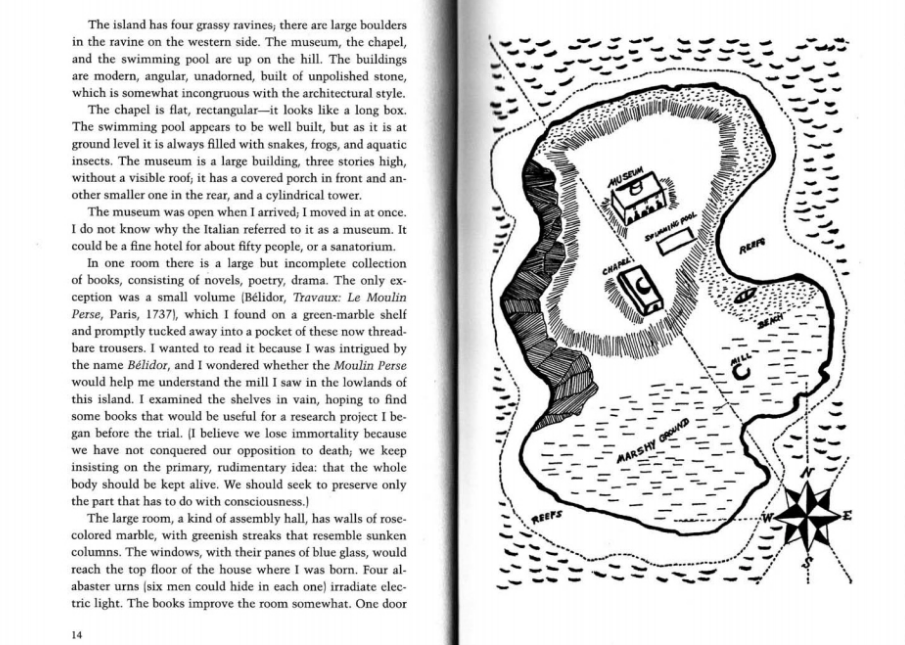
the island
The island as described by Adolfo Bioy Casares

Invent Monopoly—Don’t Collect $200…

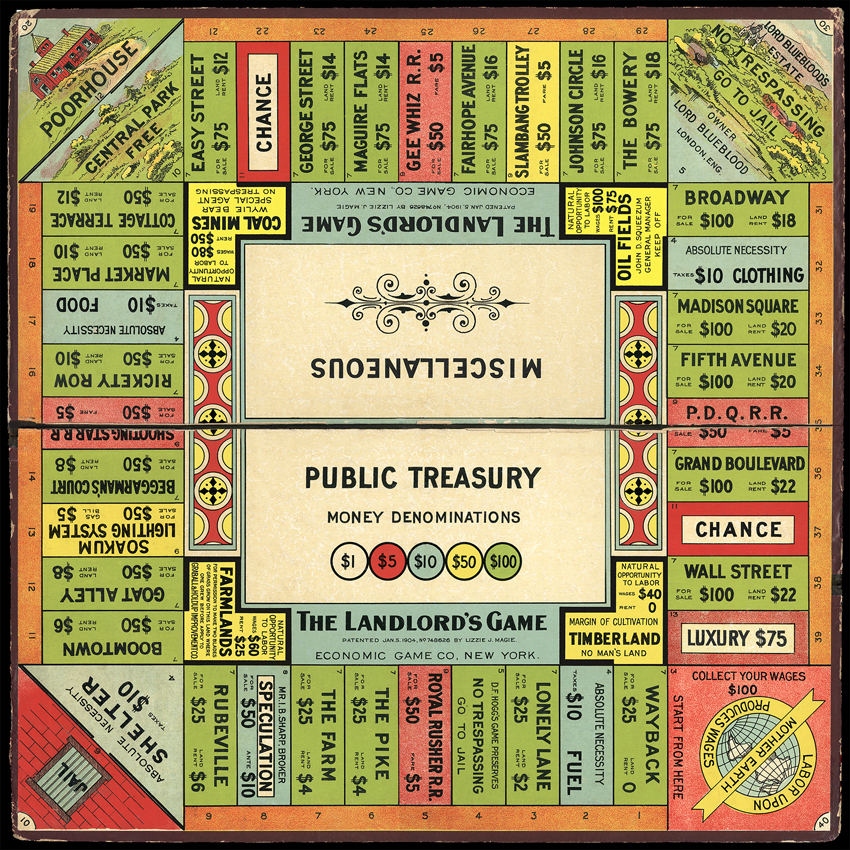
Few stories of creative and intellectual theft are as striking—or ironic—as the origins of the billion-dollar phenomenon known as Monopoly. It all began with Elizabeth “Lizzie” Magie, a brilliant economist and game designer, who in 1904 created The Landlord’s Game to illustrate the dangers of property monopolies and rent-seeking. Her game included two rule sets: one showing how wealth concentrates under monopolies, and another promoting shared prosperity—a subtle critique of unrestrained capitalism.

Over the decades, her game spread informally, with players adapting it to local streets and rules. In the early 1930s, Charles B. Darrow encountered a variant, tweaked it, and sold it as Monopoly. Parker Brothers bought the rights in 1935, marketed it as Darrow’s invention, and turned it into the family-friendly capitalist pastime we know today—while Magie received a mere $500 for her patent and vanished from the mainstream narrative.

The irony is bitter: a game designed to expose the dangers of monopolies became one of the most lucrative symbols of them. And the woman who invented it? Forgotten, while the world continues to pass “Go” and collect $200.

The Landlord’s Game

Trama – A Strategy Game with an Artistic Twist

trama boardgame 2

Back in the ’90s, my board game Trama made waves for its fresh take on strategy and design. Imagine the logic of chess, but with a twist: neutral pieces that both players can use. The board—plexiglass with screen-printed art—echoes the feel of an Op Art piece, while the Galalith tokens add tactile charm.

There are several design variants, with boards featuring different color schemes and patterns. Some versions include holes or extruded circular reliefs to securely hold marbles instead of tokens—offering a fresh, sensory-rich experience.

· Curious? The full rulebook (in French) is 👉 here.
· More about 👉 Trama.

If you’re a manufacturer interested in bringing Trama back to the table, feel free to reach out.

trama news