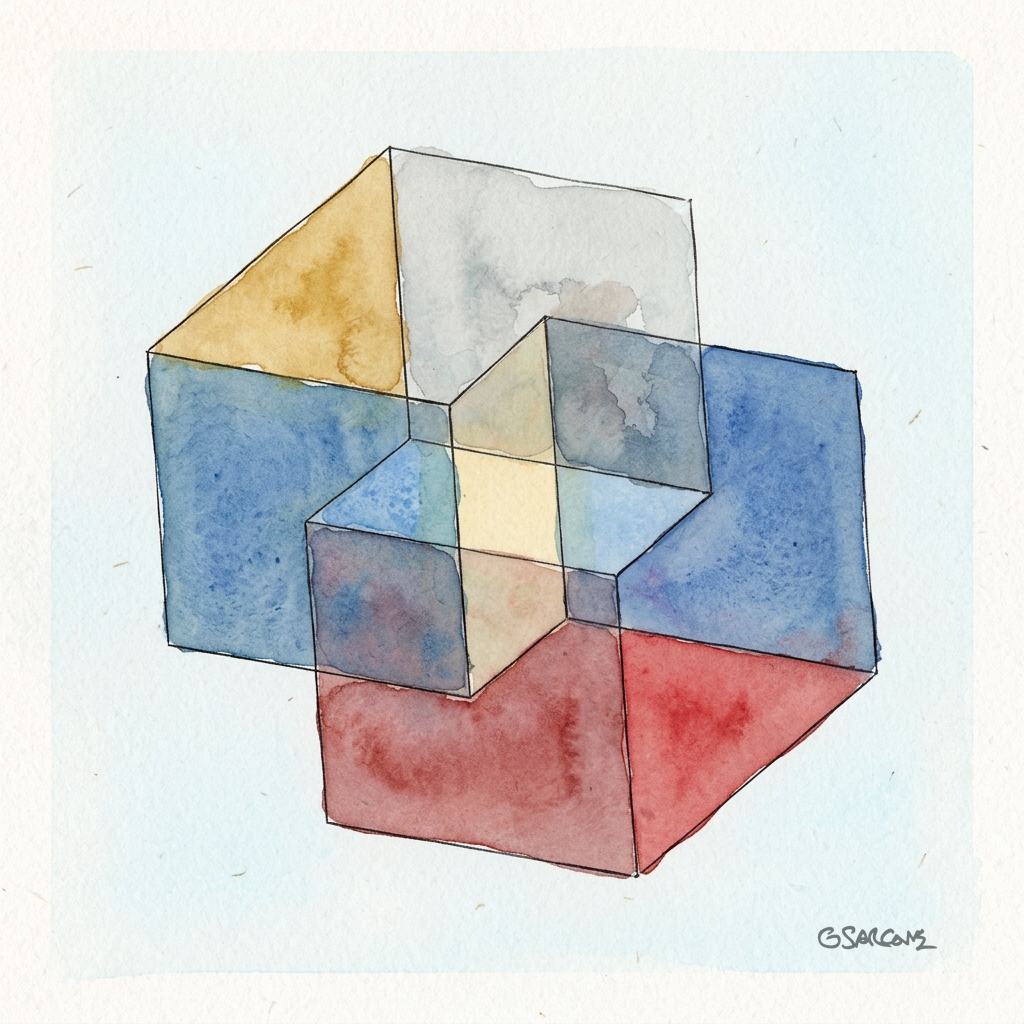
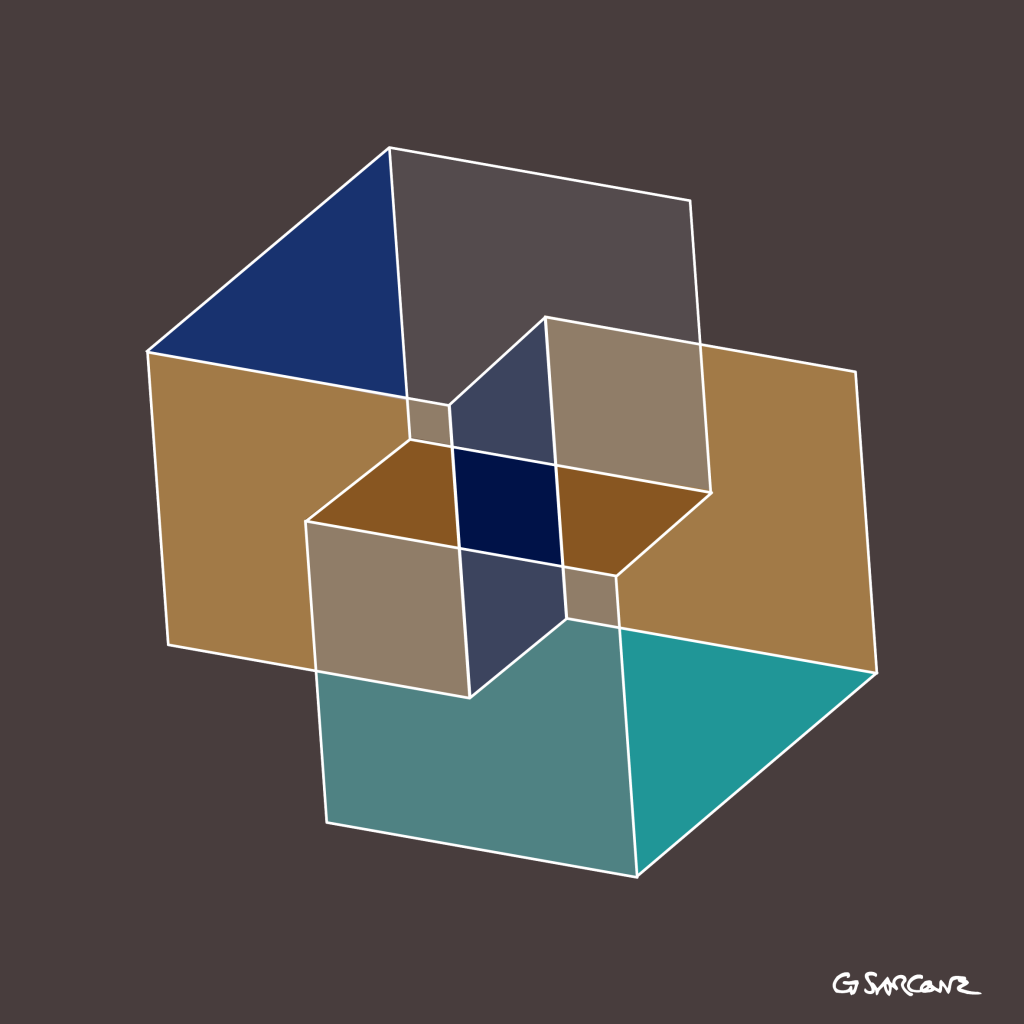
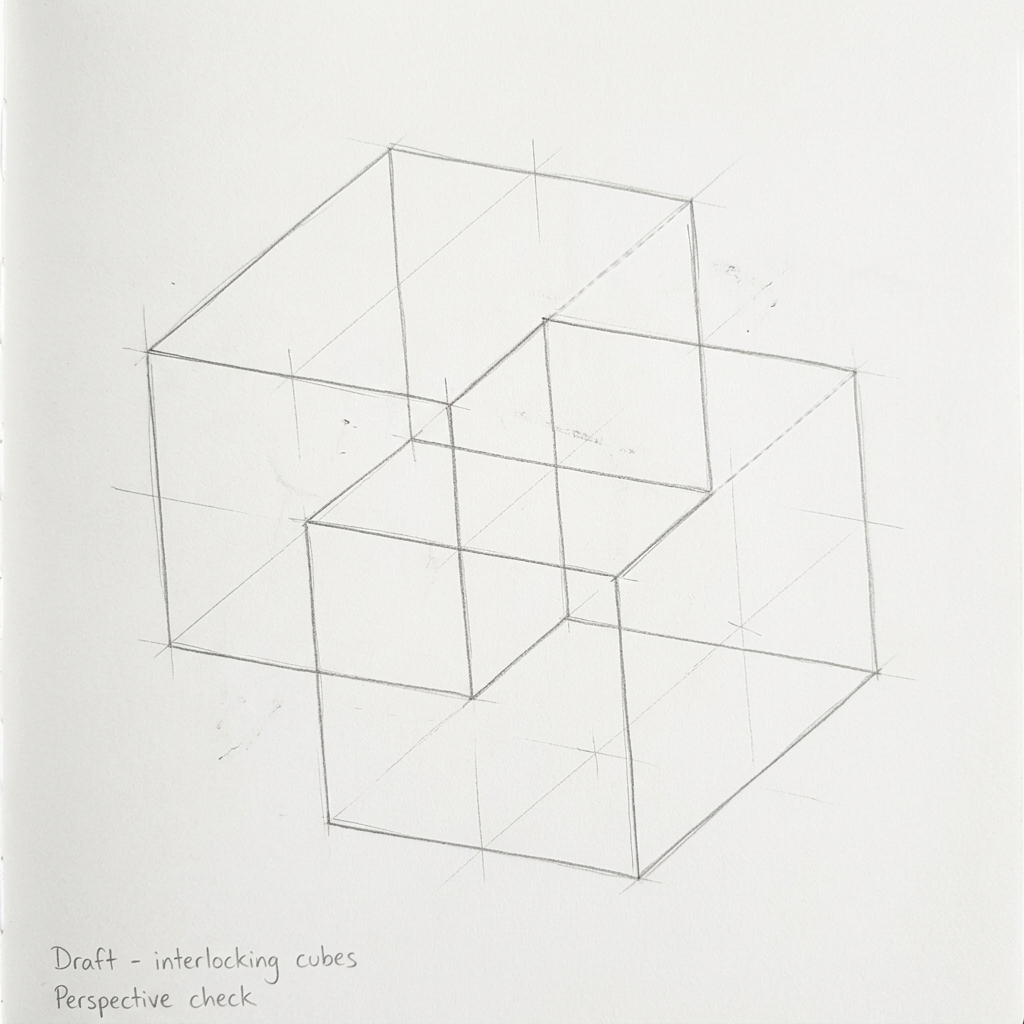
A quick study of impossible interlocking cubes, taking the same paradoxical geometry from line drawing to watercolor and high-contrast digital collage.
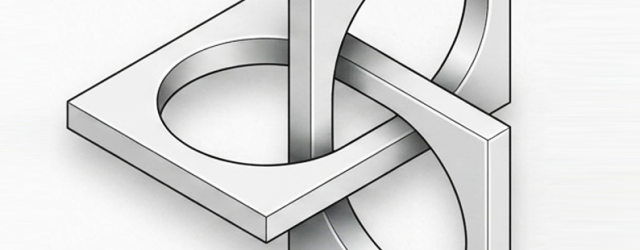
The drawings use isometric projection to represent a three-dimensional cubic structure. The geometry appears consistent at first, but the planes intersect in ways that cannot exist in physical space. What functions as a back face seamlessly projects forward to become a front face, creating a continuous spatial contradiction.
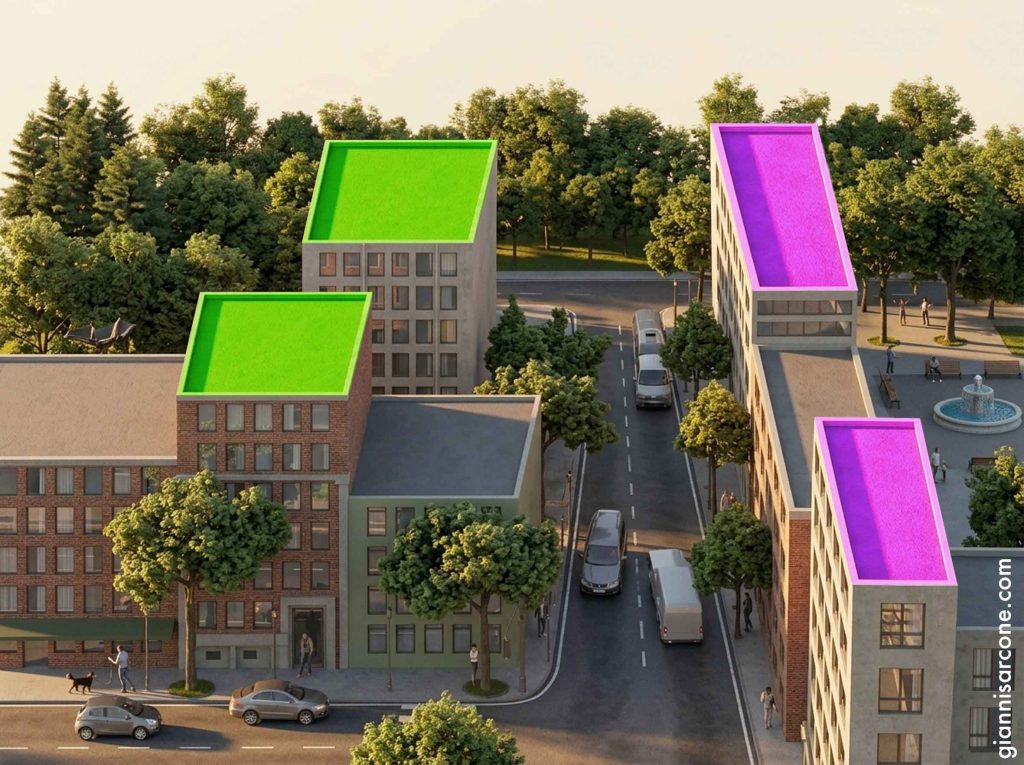
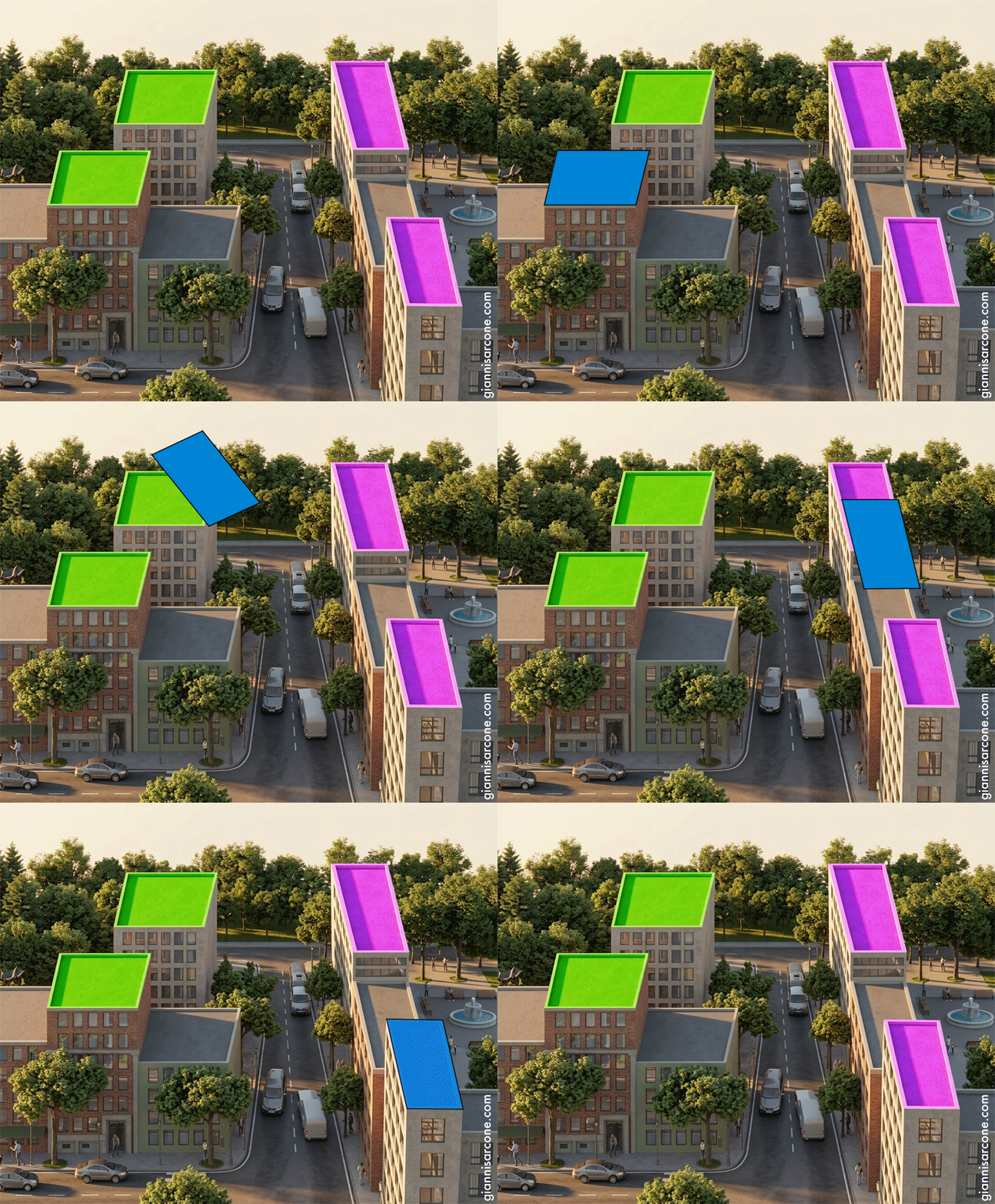
Believe it or not, the green and purple rooftops are congruent—identical in shape, size, and angles. What changes is not the geometry, but your perception of it. Perspective, orientation, and contextual cues lead your visual system to interpret the same form as two different structures.
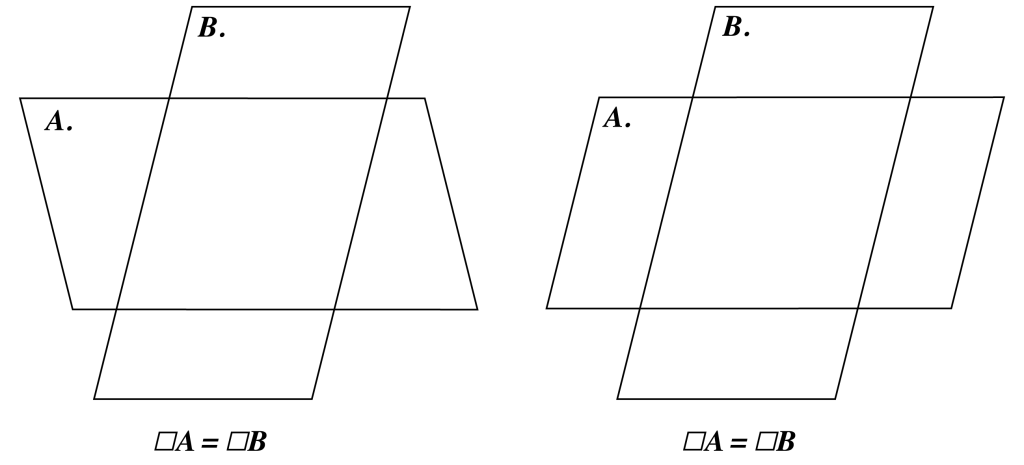
This effect is closely related to Shepard’s tabletop illusion and earlier studies in which identical parallelograms (A and B), when rotated (and superimposed), are perceived as different shapes, as the brain prioritizes interpretation over measurement.
Since some still insist these roofs are not congruent, I’ve put together a short animation that shows otherwise.
This form belongs to the family of impossible figures, more specifically to the Penrose triangle, or tribar.
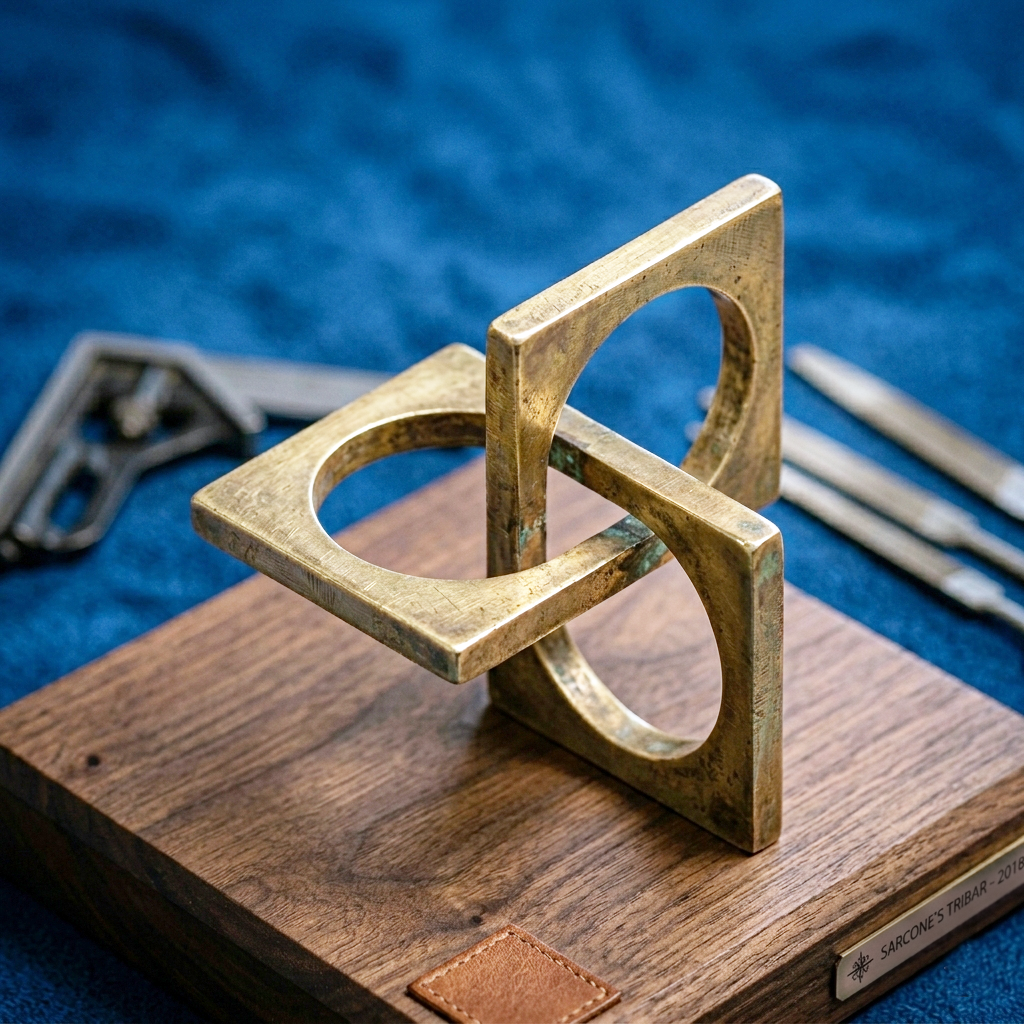
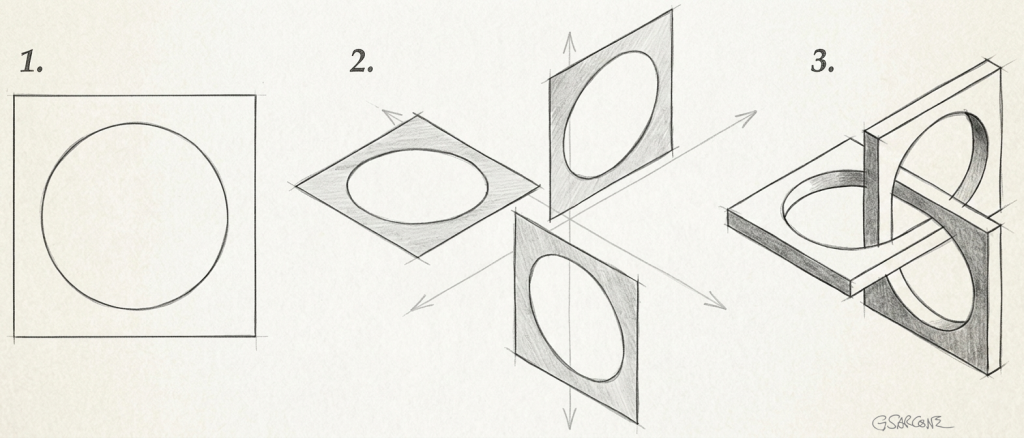
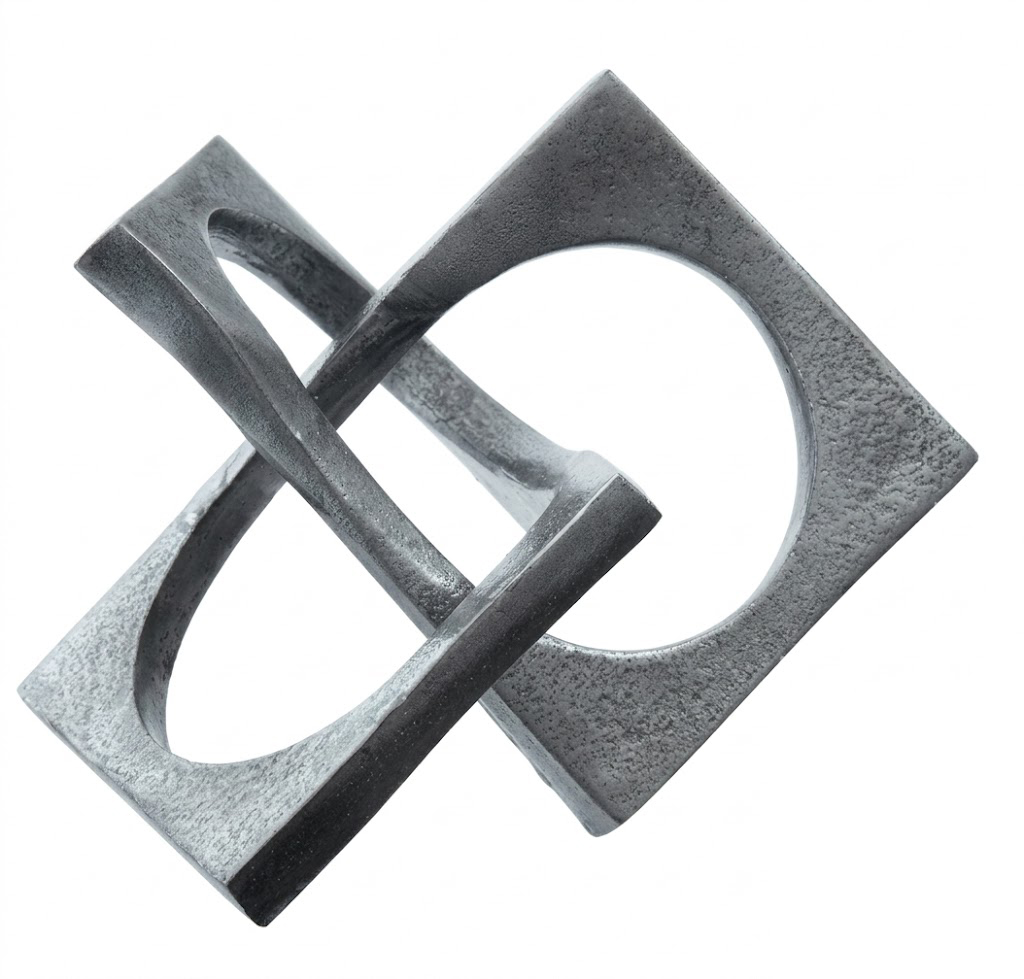
At first glance, it looks entirely manufacturable. The structure appears to be made from three identical square rings (Fig. 1), each pierced by a circular opening and arranged in three mutually perpendicular planes (Fig. 2). Together, they seem to interlock seamlessly, forming an impossible three-dimensional tribar that evokes a trefoil knot and its endless over-under weaving.
If this sculpture looks physically realizable to you, congratulations: your visual system has just accepted a geometric impossibility.
Could such an object be built? Not exactly. One solution would be to twist one of the junctions slightly, but that trick would be immediately noticeable here because some of the angles would no longer appear perfectly square (90°), as shown in the picture below. Another possibility would be to leave a small gap at one junction and view the sculpture from a carefully chosen angle, allowing perspective to hide the discontinuity.
This is how a real 3D Borromean Tribar would appear…
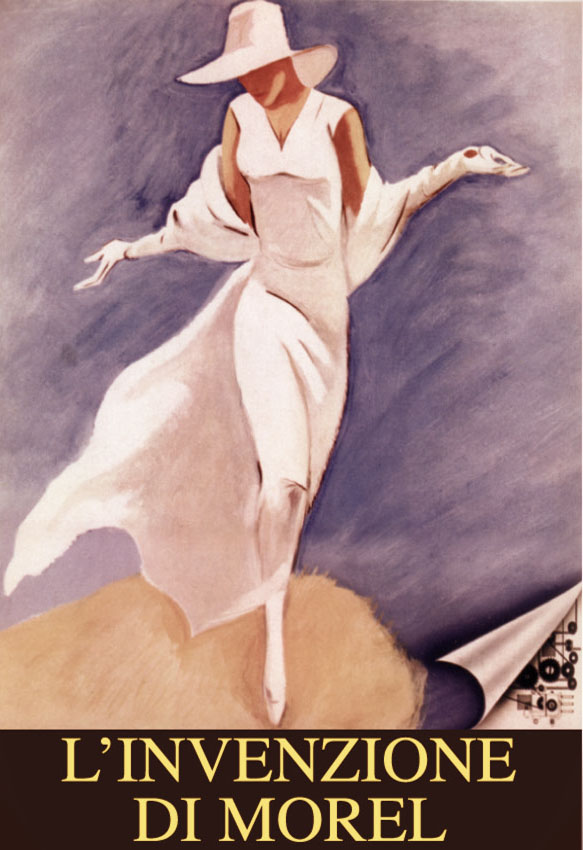
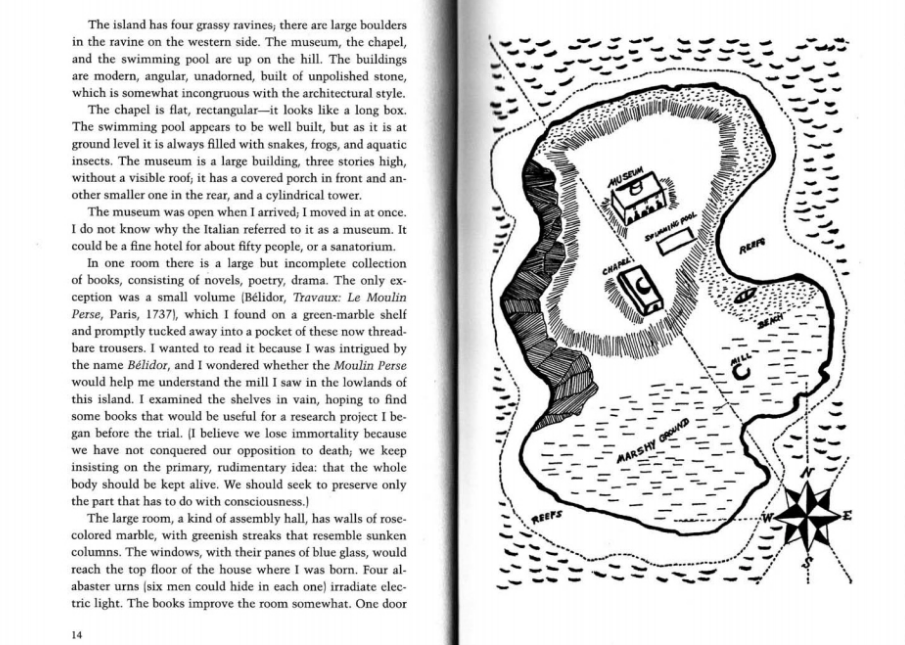
At times, I find myself resembling the shipwrecked man from The Invention of Morel, stranded on an island that at first appears deserted, almost welcoming in its deceptive silence. Yet something soon shifts. The people who inhabit it do not see him. He moves among them like a breath, a weightless trace, already slipping out of reality.
Gradually, he understands that his invisibility is not accidental. These bodies, these gestures, this frozen summer light… all obey another logic. A repetition. A projection. Life here has become mechanical memory, the reconstruction of vanished moments, orchestrated by a machine born of obsession.
And in the face of this unsettling truth, a decisive turn emerges: remain outside, intact and separate, or step into the image, accept dissolution within the cycle at the cost of one’s own substance.
The story leaves behind an unnameable imprint—a nostalgia without object, as if something within us recognized a scene already lived elsewhere. It opens a fissure in what we call reality: its fragility, its occasional nature as stable illusion, and the strange condition of the individual who must vanish in order to fully belong to what he contemplates.
A film worth seeking out, or even better, the novel by Adolfo Bioy Casares on which it is based—brief in form, but long-lasting in its quiet afterlife within memory.
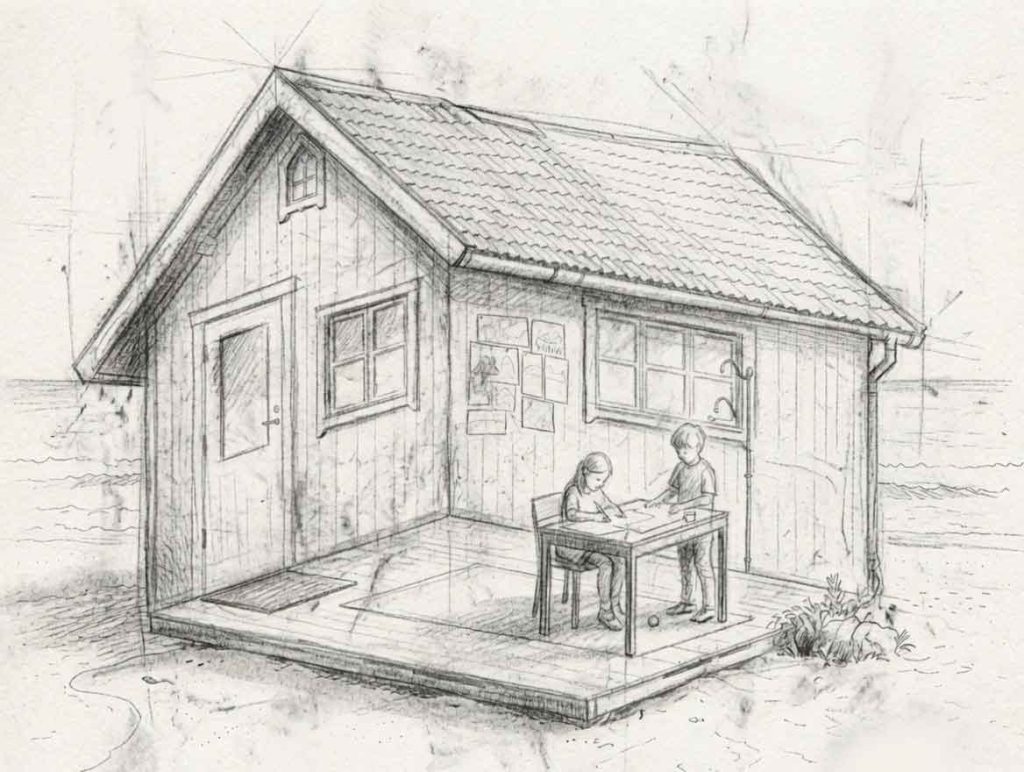
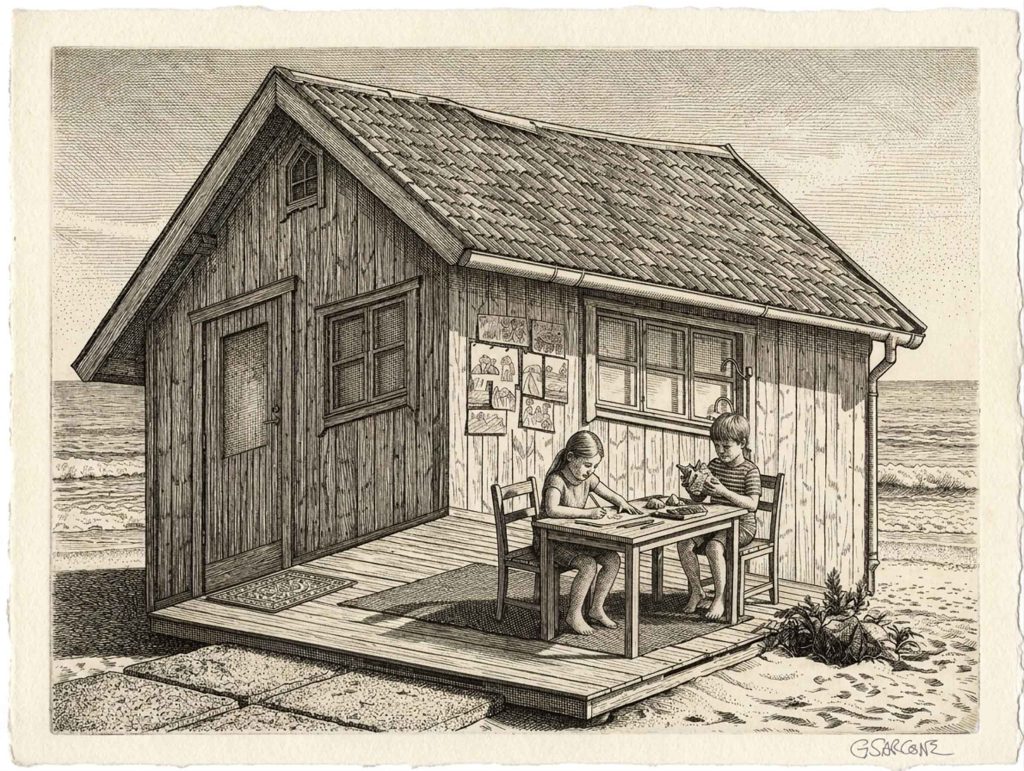
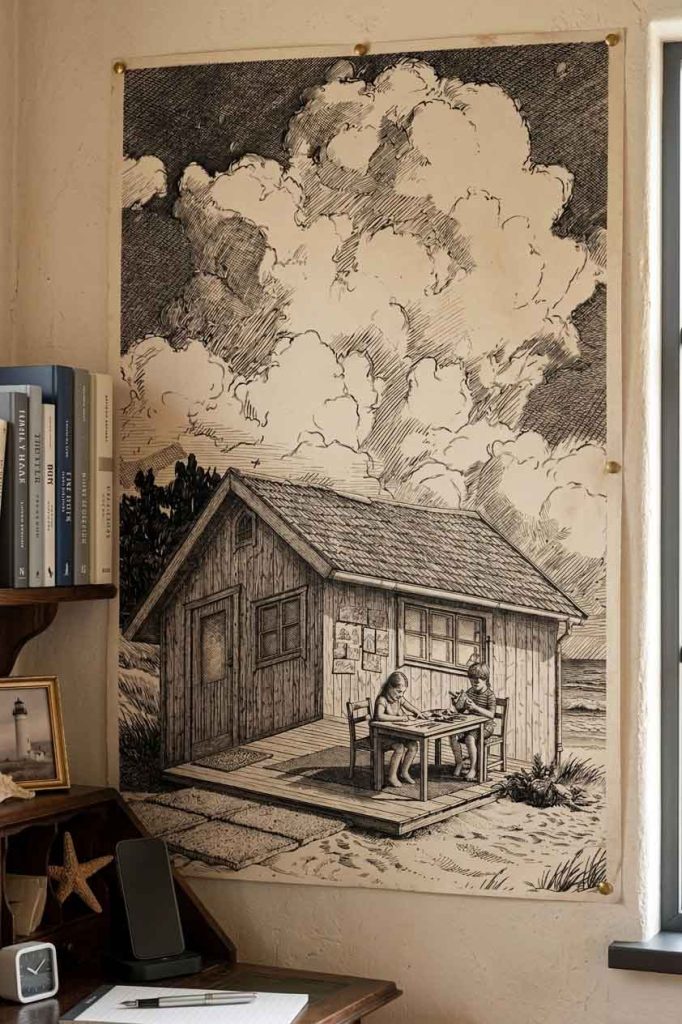
With summer just around the corner, I find myself drifting back to the shores of time, to this delightfully impossible little structure perched on the beach.
A drawing concept created for a children’s coloring book on optical illusions. Over the years, I’ve explored this theme through many curious and playful variations.
Are the kids engaging in creative activities inside the cabin or outside it?
The roof insists we’re looking at the exterior, while the floor pulls us firmly indoors. Both readings feel correct, yet they cancel each other out. So, there’s no clean resolution here—just a quiet visual paradox.
Curious to see more of my optical illusion book concepts, impossible worlds, and mind-bending creations? Take a stroll through my author page.
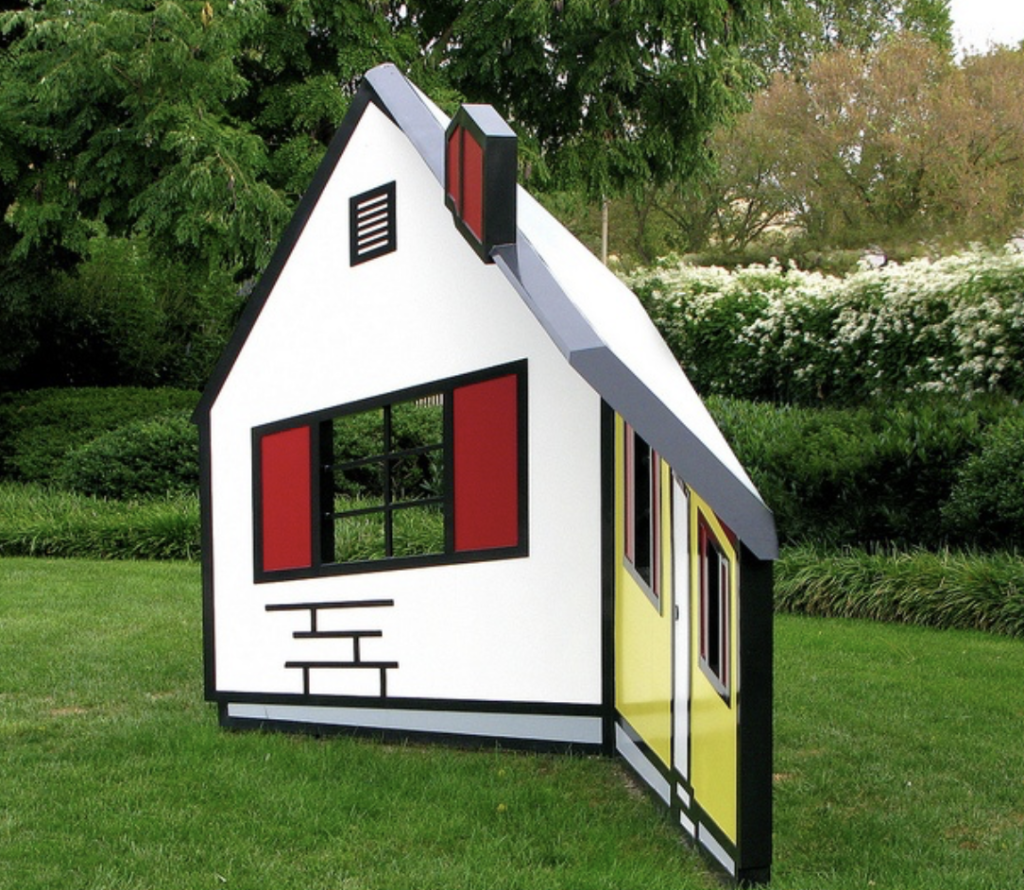
The idea itself is far from new and has inspired countless artists, architects, and photographers. It even exists in three dimensions. A notable example is Roy Lichtenstein‘s House I (1996), an ingenious sculpture that appears to be a solid house but is actually a concave construction made of angled steel planes. As viewers move around it, the structure seems to rotate and reshape itself, turning perception into part of the artwork.
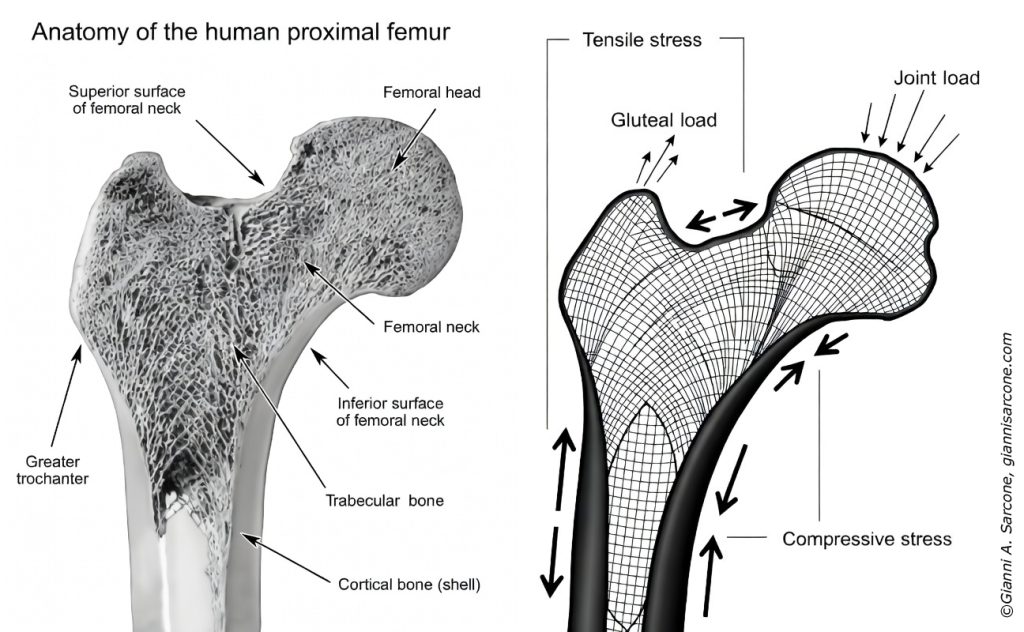
Few people know that the human femur—the body’s largest and strongest bone—played an indirect role in the thinking behind the design of the Eiffel Tower.
Part of the tower’s structural logic can be traced to Swiss engineer Maurice Koechlin, chief engineer in the firm of Gustave Eiffel. While determining how forces would travel through the iron frame, Koechlin applied a principle that places material along the natural paths of tension and compression.
A comparable pattern had been described earlier by Zurich anatomist Hermann von Meyer. His research revealed that the femur’s internal structure forms a network of delicate struts known as “trabeculae.” These tiny elements follow the directions of mechanical stress inside the bone, creating a highly efficient system of support—even though the femoral head sits off-center from the shaft.
The mathematician Karl Culmann later showed that these trabecular patterns correspond closely to the principal stress lines calculated in engineering. His method, called graphic statics, provided a visual way to map how forces move through structures.
This link between anatomy and engineering influenced nineteenth-century structural thinking. The same principle—placing material only where forces demand it—guided the development of lighter, more efficient frameworks in bridges, cranes, and reinforced-concrete designs.
In 1934, the Swedish artist Oscar Reutersvärd sketched a peculiar triangle made of small cubes, neatly aligned on an isometric grid. Everything looked geometrically sound—until the mind tried to assemble it in real space.
This triangular paradox has distant echoes in ancient Greek geometry, but Reutersvärd gave it a clear visual form: the impossible figure.
That’s the charm of impossible figures: every part looks right, yet the whole quietly breaks reality.
I began exploring these paradoxical structures in the 1980s. My interest grew naturally from the meeting point of two inclinations: a mathematical curiosity about spatial logic and a visual fascination with form. Over time I produced many variations—sometimes rediscovering ideas that others had already touched upon, occasionally arriving at configurations that felt genuinely new. In geometry, complete novelty is rare; most discoveries emerge as unexpected turns within an existing landscape.
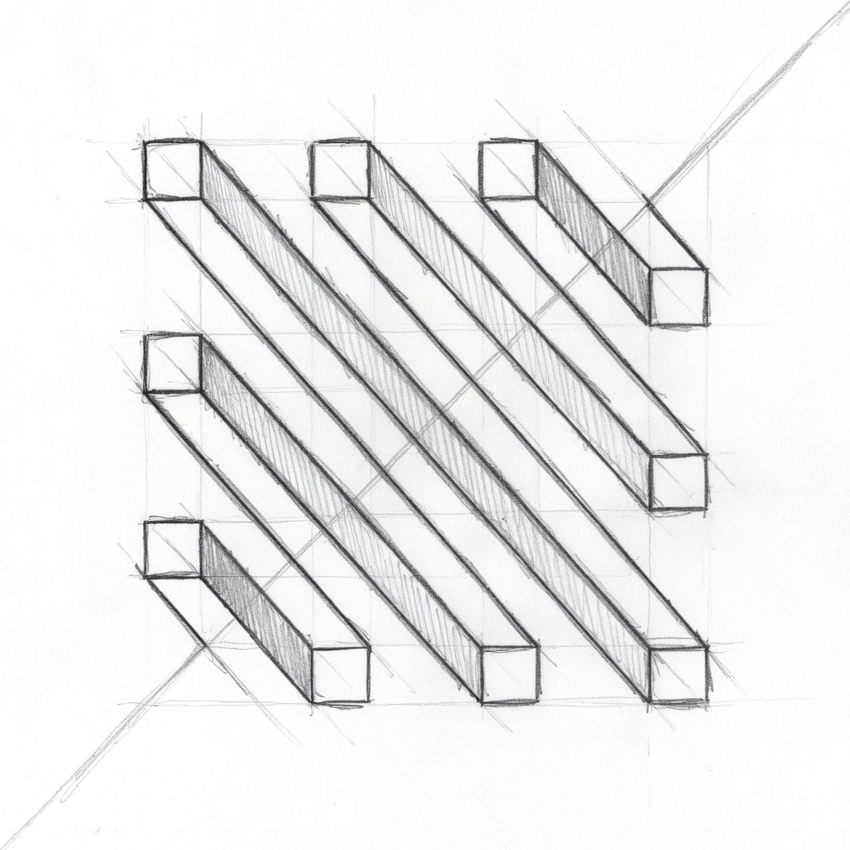
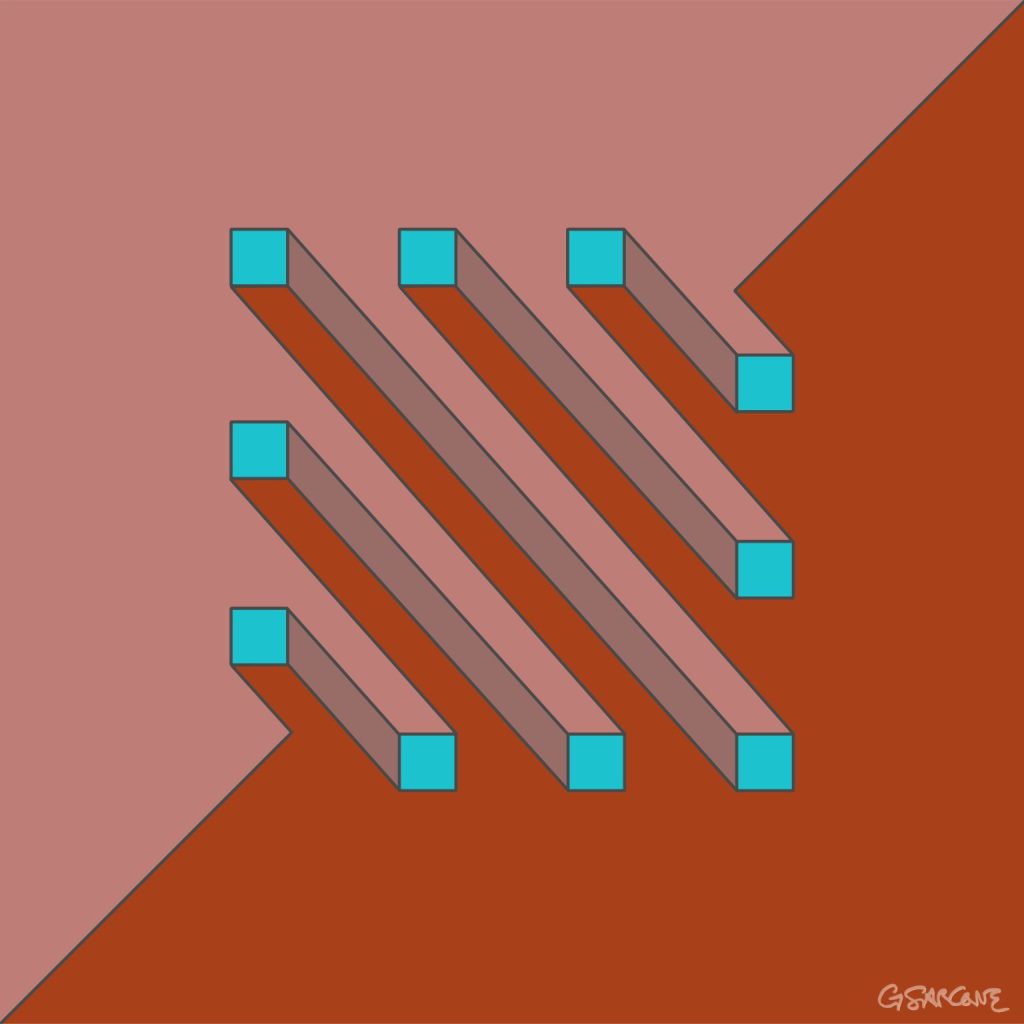
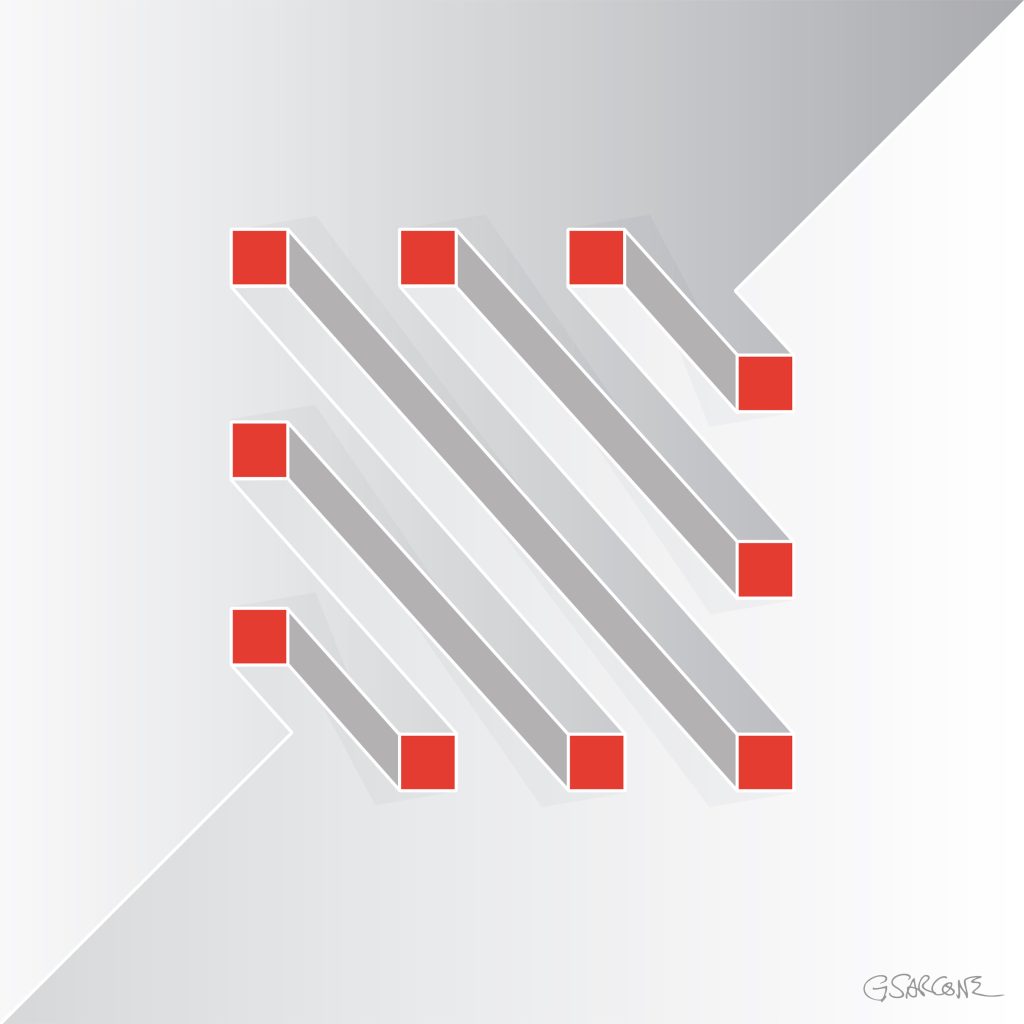
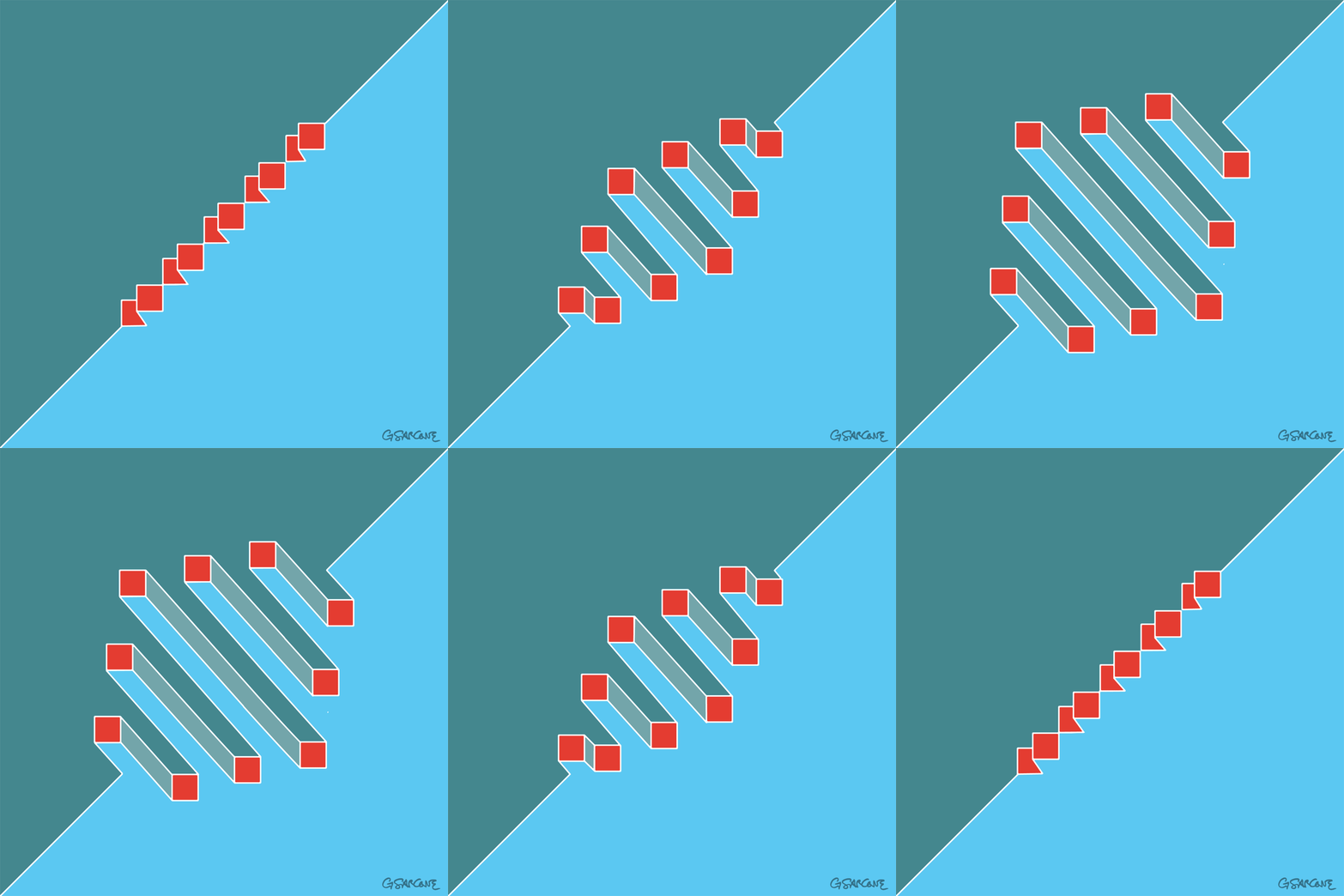
One example from that period is the study shown here, created in the late 1990s and titled Undecidable Bars.
Parallel bars appear to run calmly side by side, yet their connections quietly sabotage the logic of space. Perspective slips from one segment to another, forcing the eye to accept incompatible viewpoints at the same time.
Each element seems perfectly normal. Together, they form a structure that cannot exist.
Some bars appear to pass through others; some join where no joint should be possible. The geometry behaves as if the object were bending through space, while every line still respects the conventions of perspective drawing.
The result is an undecidable figure—a form the eye can follow effortlessly, but the mind cannot reconstruct.
Over the years I have created hundreds of images built on similar principles, across different formats and media. If these works interest you for a book, exhibition, or monograph, feel free to contact me.
Here’s a simple 18-frame animation of my Op Art piece—work in progress.
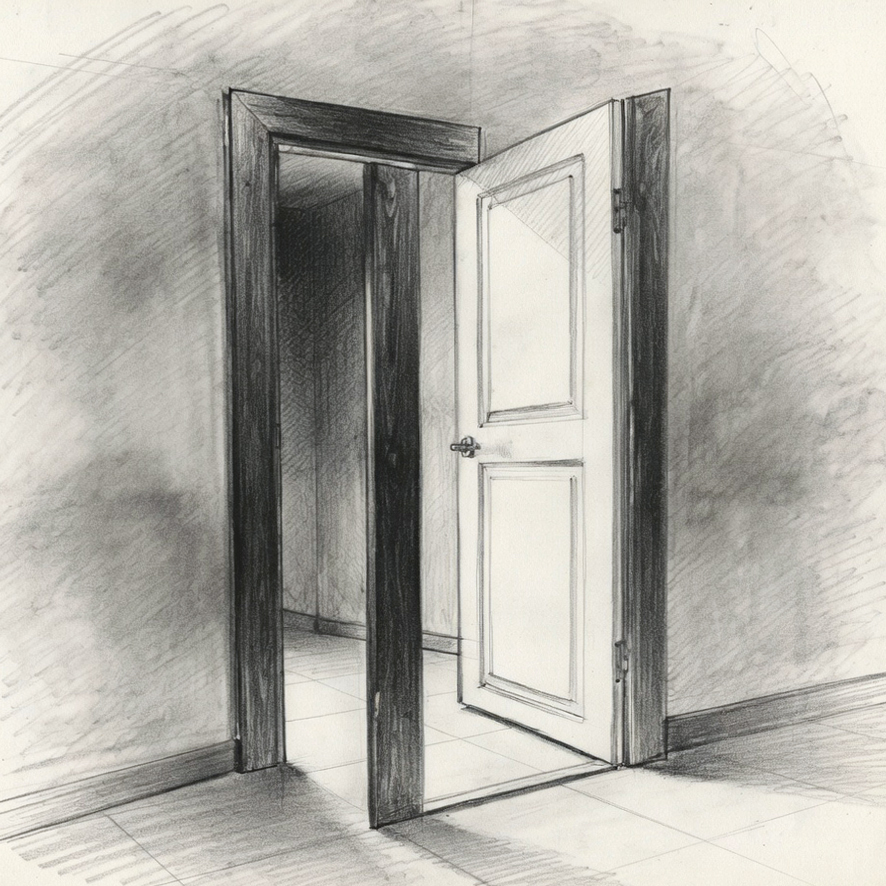
I’ve always been drawn to impossible objects—those forms that slip between logic and illusion, never fully settling into one or the other.
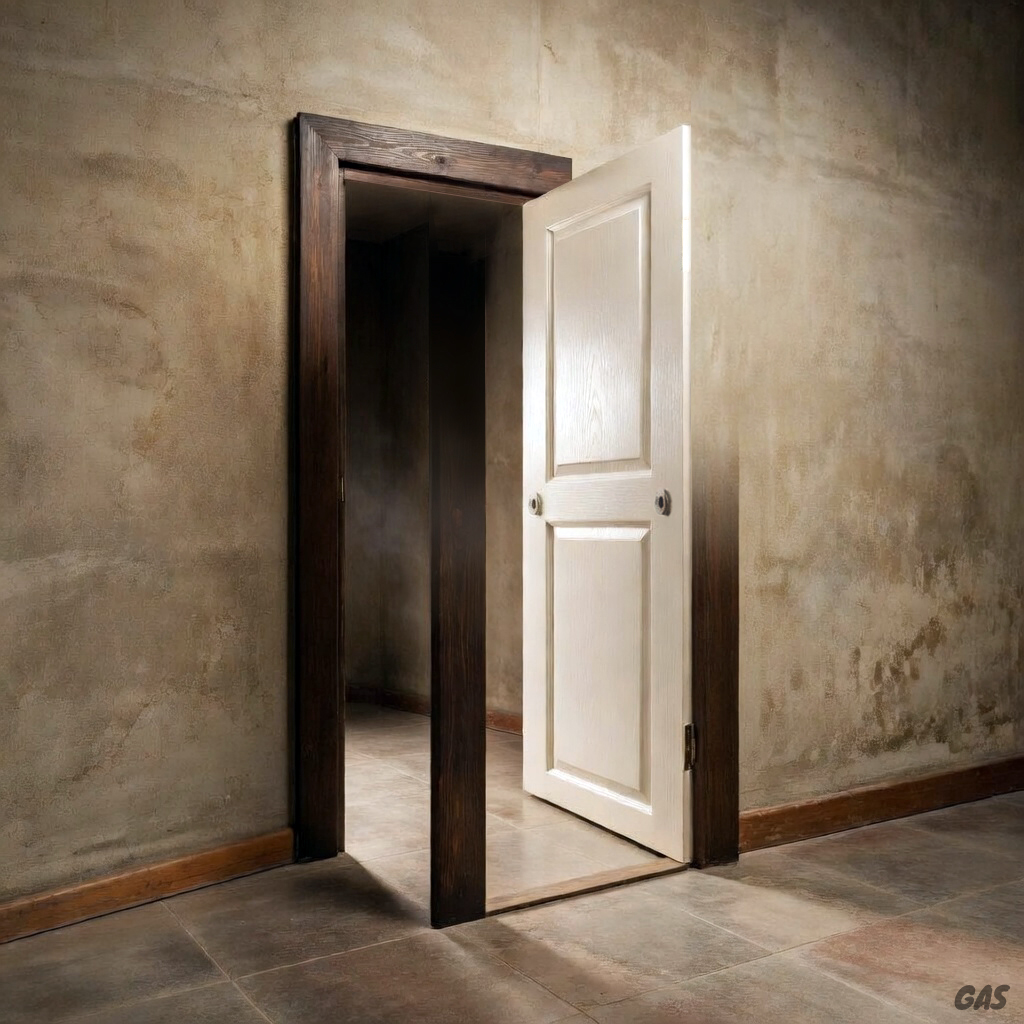
This piece grew out of an old idea I felt compelled to revisit, almost as if reopening a long-forgotten door. A binary door, in fact—one that leads to two distinct worlds. Depending on how you look at it, it shifts, tilts, and reveals something else.
It starts with pencil on paper. A loose, intuitive phase where the form finds its way. From there, I move into FreeHand MS—an old tool I’ve never quite let go of. It still gives me a certain precision and feel I can’t replace. Finally, I refine the piece in Photoshop, adjusting, balancing, pushing it toward that delicate point where everything holds together.
There’s still work to be done. Something remains unresolved—but maybe that tension is part of what keeps it alive.
My minimalist tribute to M. C. Escher: an animated “impossible waterfall,” drawn frame by frame. It’s not exactly my usual artistic language, but I had great fun creating it, and I hope you’ll enjoy watching it as much as I enjoyed making it.
As you can see, the isometric structure links impossible angles to create a continuous water channel that appears to flow upward in a loop, falling from a high point yet seemingly returning to the top.
The “impossible waterfall,” reimagined in a lavish Rococo style, rendered as a surreal illustration for a book project.
Explore My World of Art, Books, and Creative Concepts