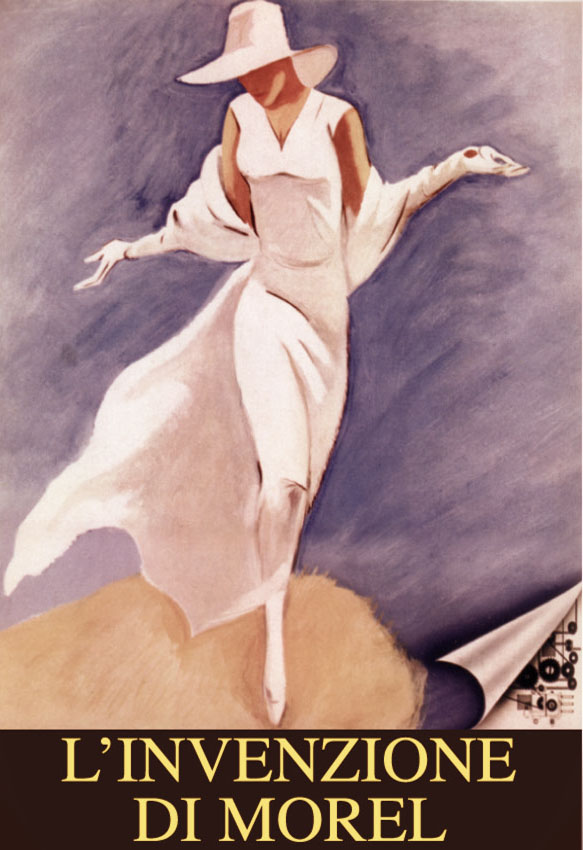
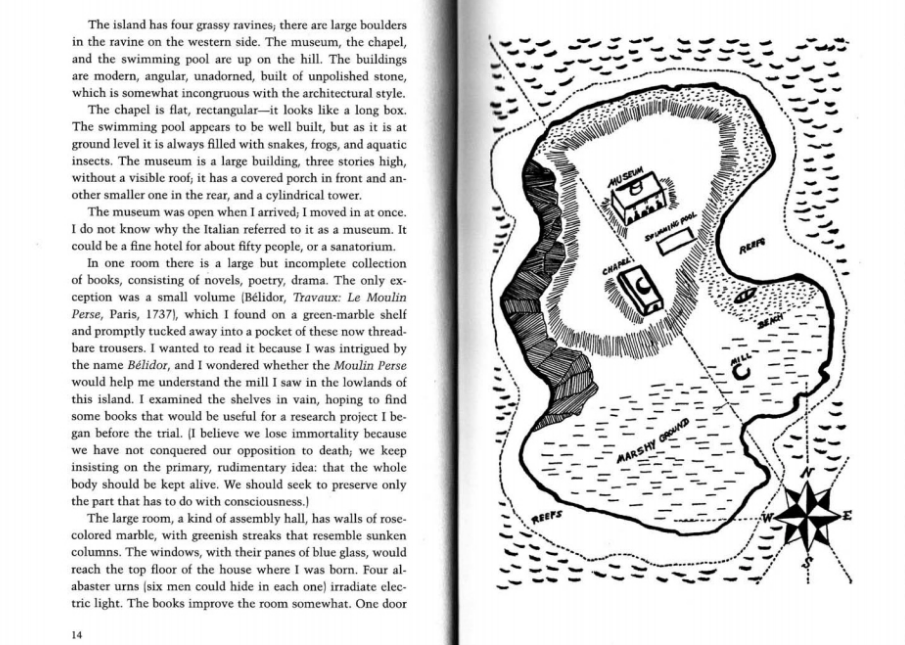
At times, I find myself resembling the shipwrecked man from The Invention of Morel, stranded on an island that at first appears deserted, almost welcoming in its deceptive silence. Yet something soon shifts. The people who inhabit it do not see him. He moves among them like a breath, a weightless trace, already slipping out of reality.
Gradually, he understands that his invisibility is not accidental. These bodies, these gestures, this frozen summer light… all obey another logic. A repetition. A projection. Life here has become mechanical memory, the reconstruction of vanished moments, orchestrated by a machine born of obsession.
And in the face of this unsettling truth, a decisive turn emerges: remain outside, intact and separate, or step into the image, accept dissolution within the cycle at the cost of one’s own substance.
The story leaves behind an unnameable imprint—a nostalgia without object, as if something within us recognized a scene already lived elsewhere. It opens a fissure in what we call reality: its fragility, its occasional nature as stable illusion, and the strange condition of the individual who must vanish in order to fully belong to what he contemplates.
A film worth seeking out, or even better, the novel by Adolfo Bioy Casares on which it is based—brief in form, but long-lasting in its quiet afterlife within memory.