Bear-ly Seal

People often ask where my ideas come from. There is no single answer. They tend to surface quietly, shaped by places I’ve seen and cultures I’ve crossed.

Seal or Bear?” grew out of that kind of moment. An animal suspended in the vastness of a frozen world—emerging from an ice hole, yet refusing to settle into a single identity. Is it a polar bear? A seal? Or something that holds both readings at once?
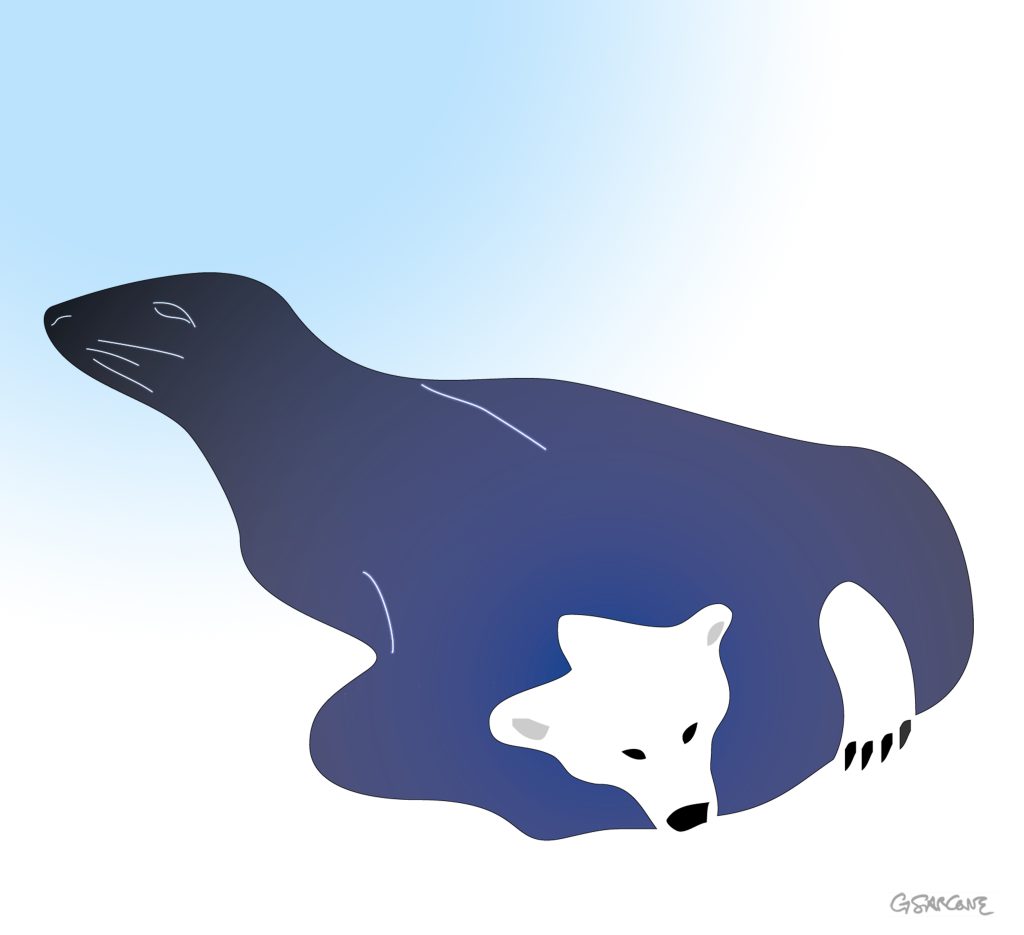
Bear of seal?

The idea came to me while traveling through northern Canada, surrounded by the stillness of Arctic landscapes and the deep presence of Inuit traditions. That silence has a way of sharpening perception—of making ambiguity feel natural rather than puzzling.
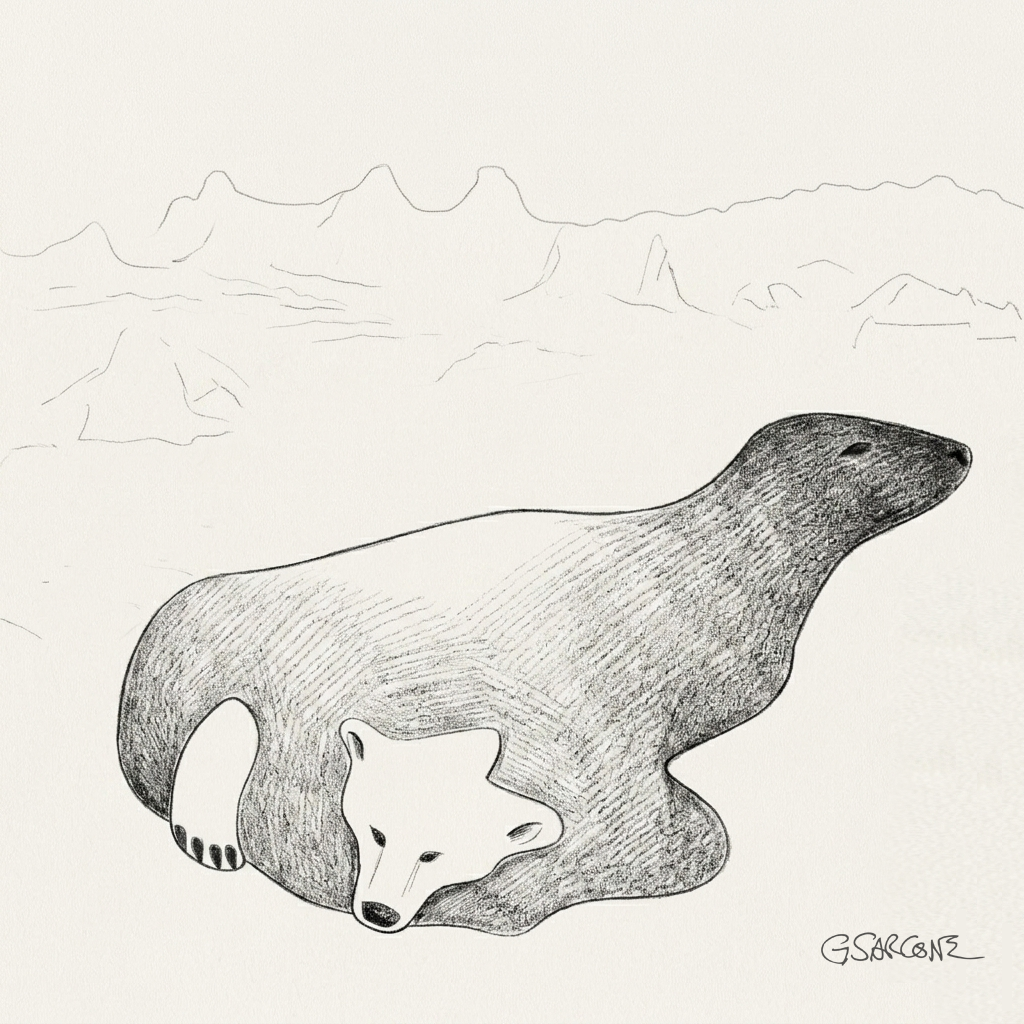
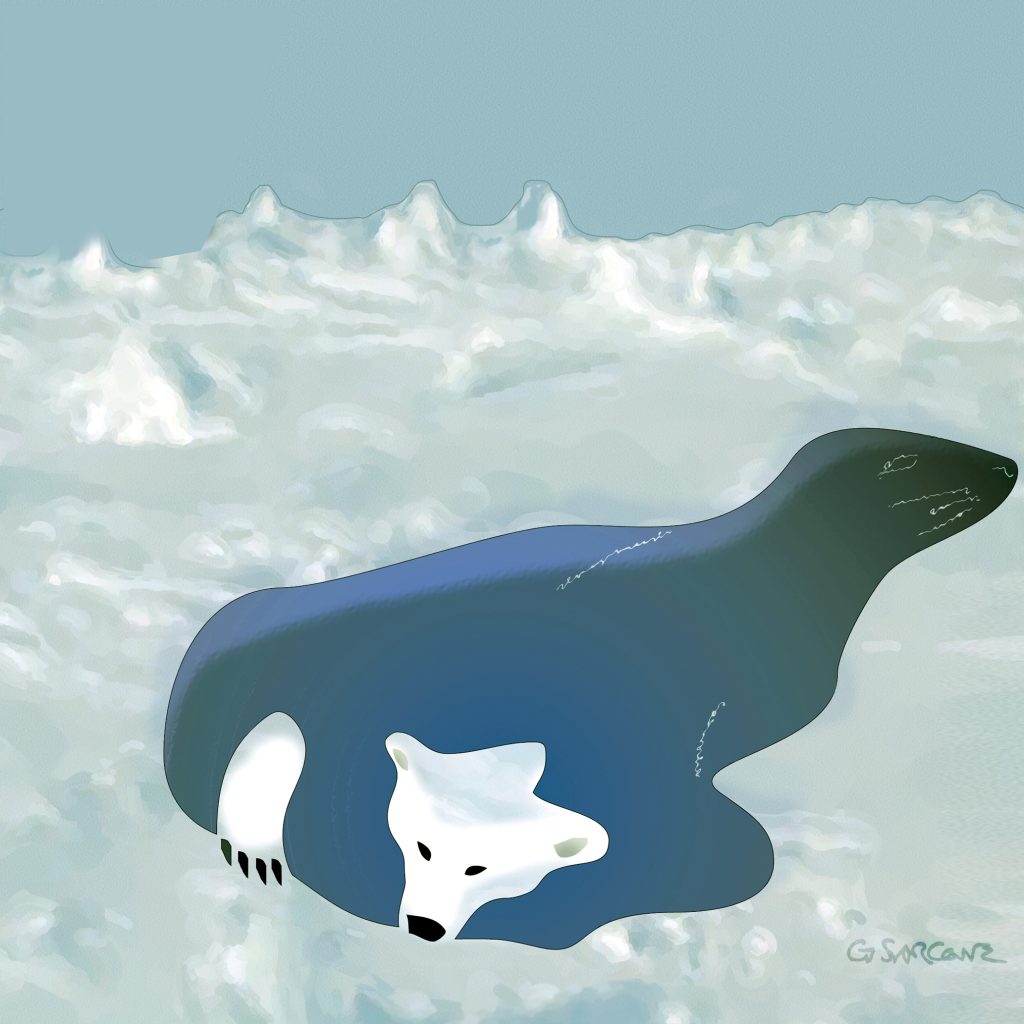
First created in the 1990s, the illusion went on to become a reference point in visual perception studies and later found its way into textbooks.

More recently, the “Seal or Bear?” illusion will be featured by the NHK Educational Corporation as part of a 2026–2027 educational series on psychology and visual perception.

Where Illusions Begin: Travels, Cultures, and the Art of Seeing

People often ask me where the ideas for my illusions come from. The truth is, they often arrive quietly, inspired by the places I’ve visited and the cultures I’ve encountered. During my travels, it’s not unusual for me to create something that reflects the spirit of a place. Take “Seal or Bear?” for example—it came to me while wandering through northern Canada, surrounded by the vast, silent landscapes of the Arctic and the rich traditions of Inuit culture. That illusion went on to become a classic in the 1990s and even made its way into textbooks on perception.

Later, during my journey through Japan between Tokyo and Kyoto, I was captivated by the delicate balance of light, shadow, and movement in the world around me. It was there that “How Many Birds?” took shape, in the ukiyo-e style. One of my earliest optical illusions, it explores bistable perception in a playful way. Depending on your gaze, you can see four birds nestled in their respective nests with one perched on a branch—or four chirping chicks gathered around their mother. I like to think that, in that moment, the spirit of the place and the quiet rhythm of daily life found a way into the lines and spaces of the image, letting viewers glimpse more than one reality at once.

Ultimately, I am like a sponge, absorbing everything that orbits around me, all while staying true to my own style. That is simply how I work.

Latest Update

The NHK Educational Corporation, a production subsidiary of Japan’s public broadcaster NHK responsible for a wide range of educational programming, will feature the “Seal or Bear?” illusion in 2026 and 2027 as part of a series on psychology education and visual perception.