This brief tutorial explores an Op Art tessellation that plays with bistable perception, figure–ground reversal and negative space. By combining modular geometric tiles with contrasting colors, the pattern creates a visual interplay in which arrows can be perceived as either foreground shapes or background forms, depending on how the pattern is interpreted.
Experiment 1:
· Preparation — Fig. A: Start with a 3 × 3 square. Divide it along its diagonals into four triangles, then add a 1 × 1 square to the outer side of each triangle, as shown. Color the resulting cross-shaped tile with two contrasting colors, ensuring that adjacent sections are different colors. The construction produces four inward-pointing arrows.
· Preparation — Fig. B: Following the construction shown, subdivide a 2 × 2 square to create five diamonds arranged in a staggered pattern. Use the same two contrasting colors. This produces a complementary tile containing four outward-pointing arrows.
· Assembly — Fig. C: The two tiles are complementary and fit together. Interlock the cross-shaped tiles with inward-pointing arrows and the square tiles containing the diamond pattern to create a continuous tessellation.
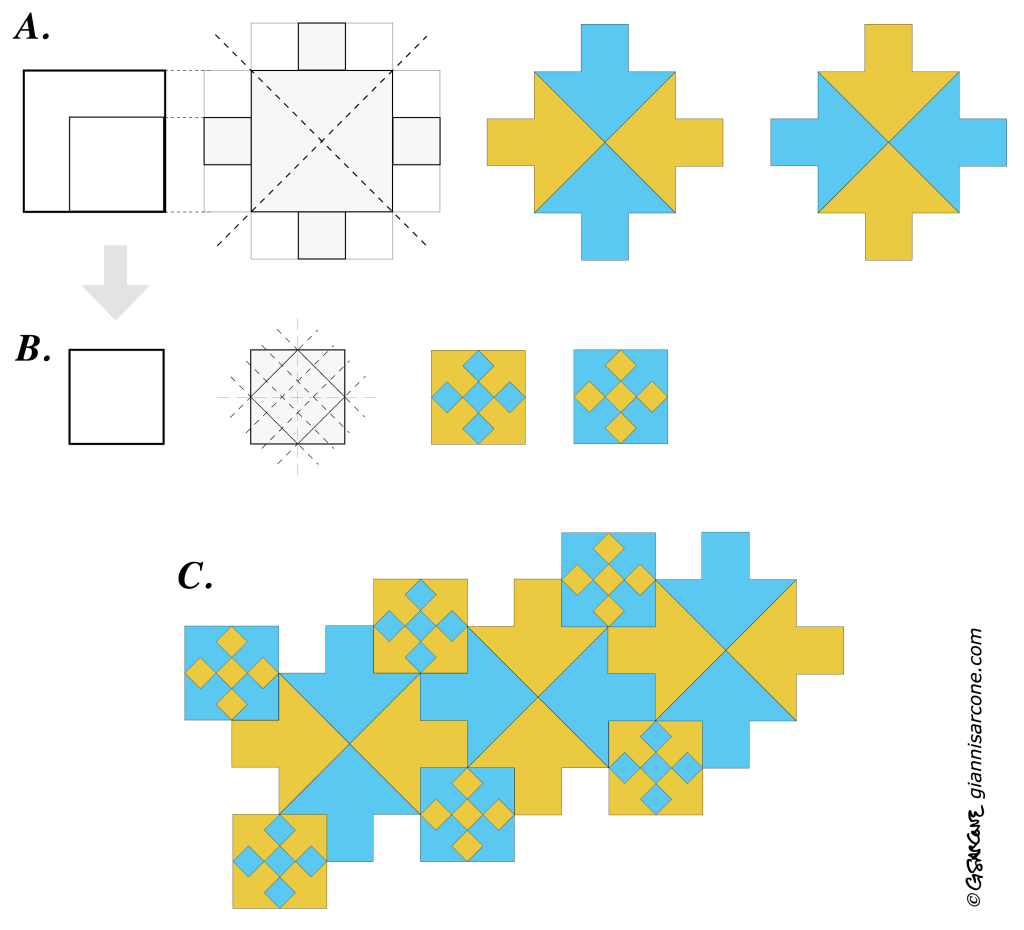
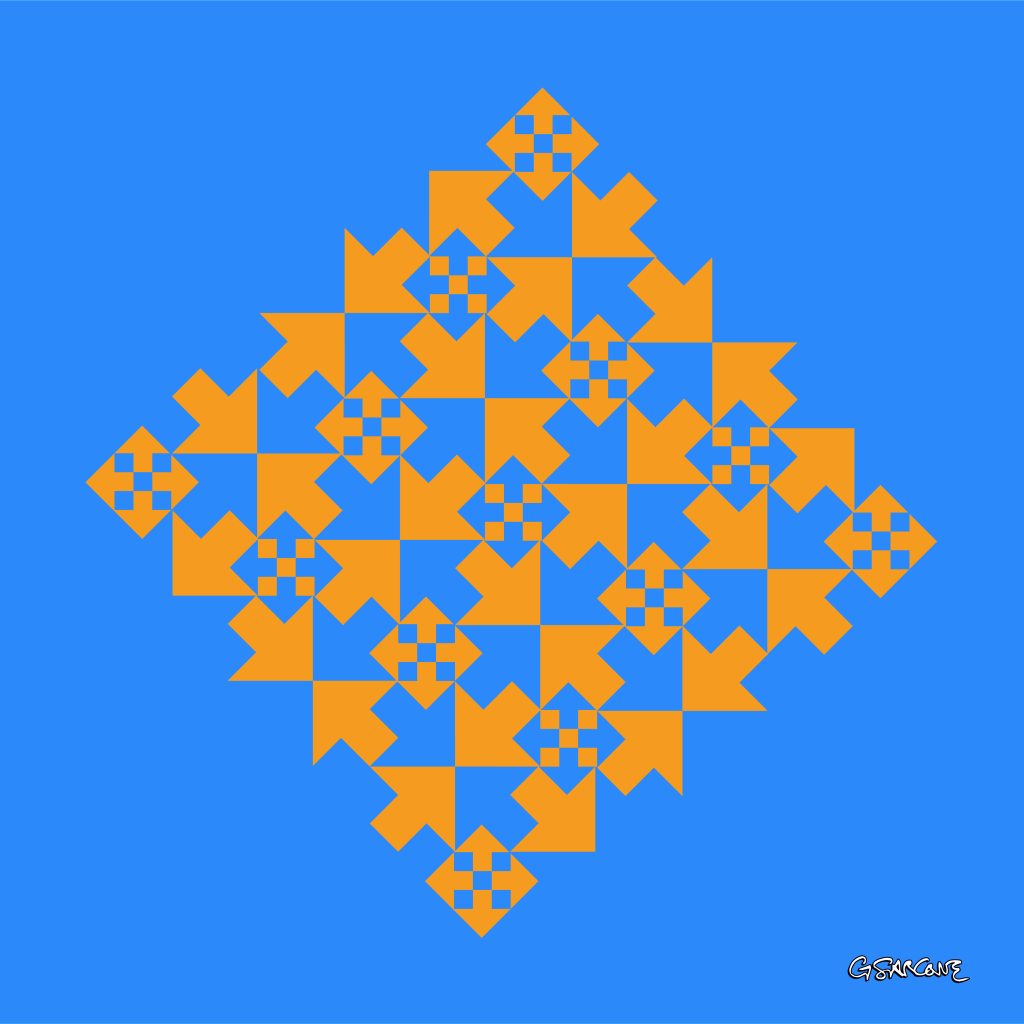
Visual result: The alternating geometric modules form a large geometric Op Art pattern in which arrows emerge through figure–ground reversal. And hidden within it are, believe it or not, 100 arrows. Yes, one hundred arrows!
Experiment 2:
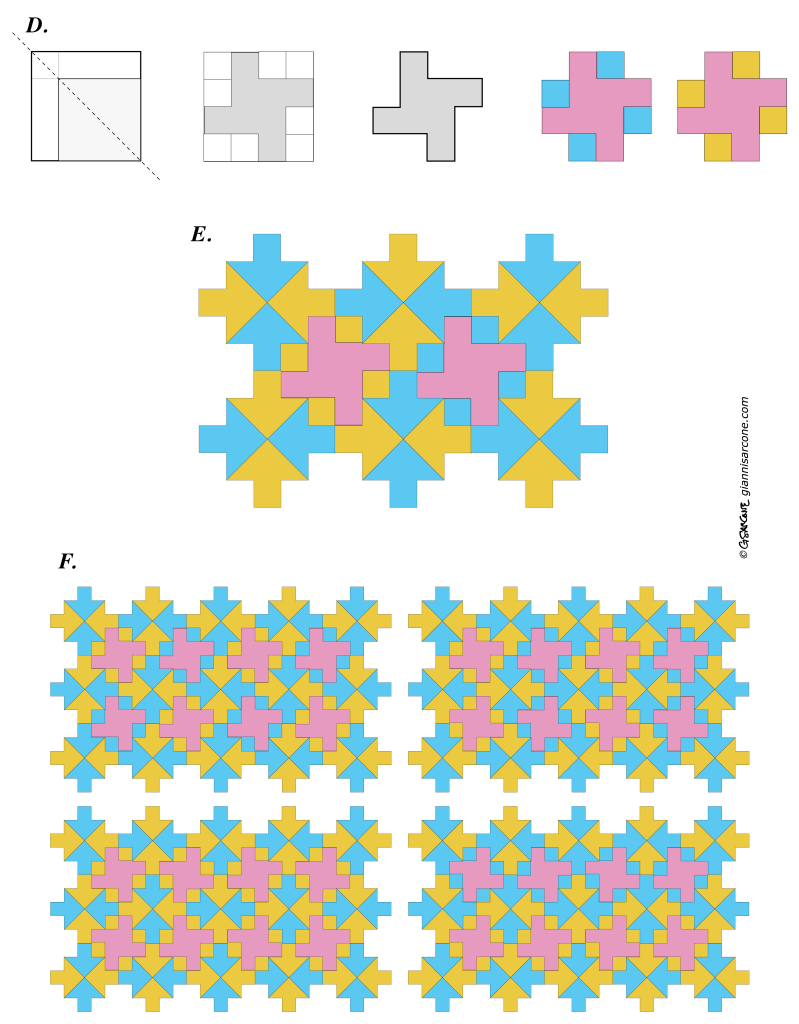
· Preparation — Fig. D: Build a four-armed pinwheel shape from a 4 × 4 square, as shown.
· Assembly — Fig. E: Interlock the four-armed pinwheel shape with the cross-shaped motifs containing the inward-pointing arrows.
· Assembly — Fig. F: As shown, these four-armed pinwheel shapes can be assembled in four or more different ways, producing different geometric configurations.
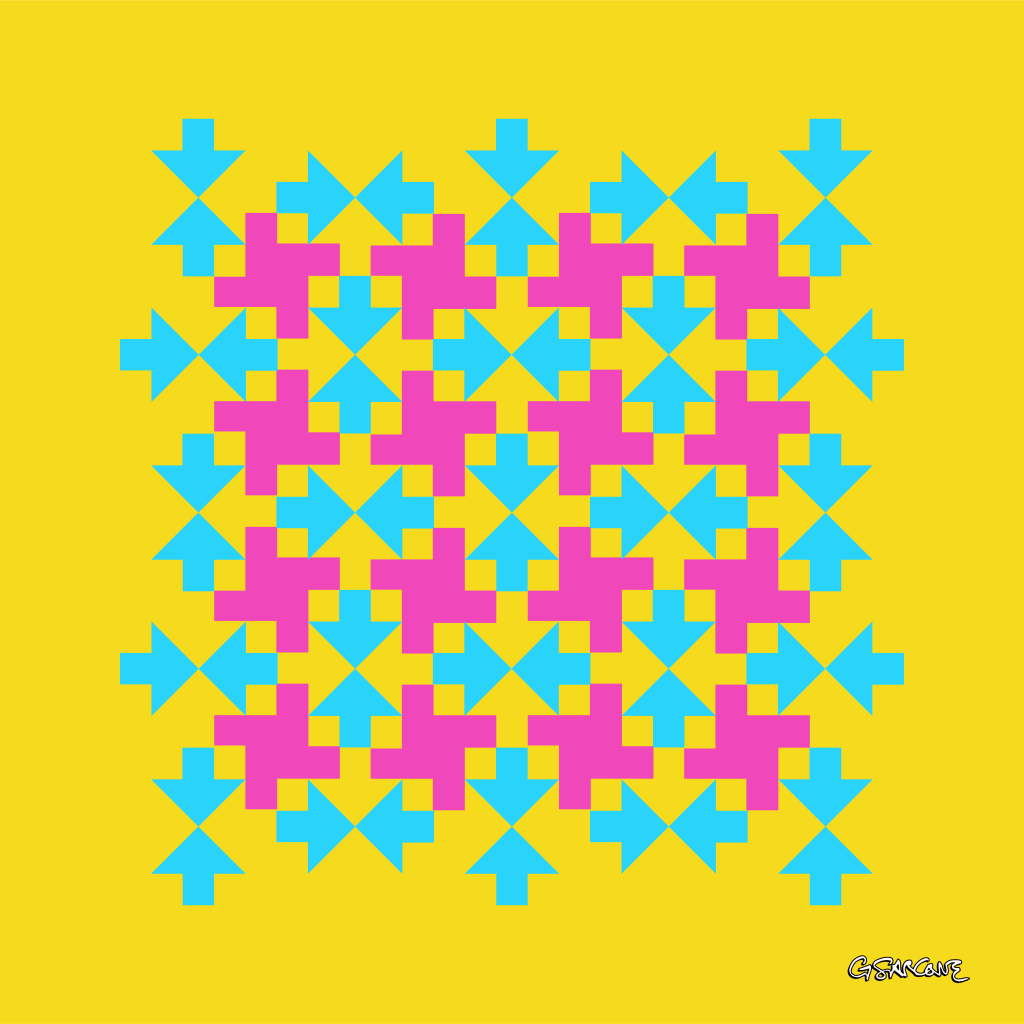
Visual Result: As seen in the example below, the contrasting colors make the bright blue arrows radiating around the pink central hubs—the pinwheel shapes—stand out, while the yellow arrows, matching the background color, virtually disappear from view.
Experiment 3:
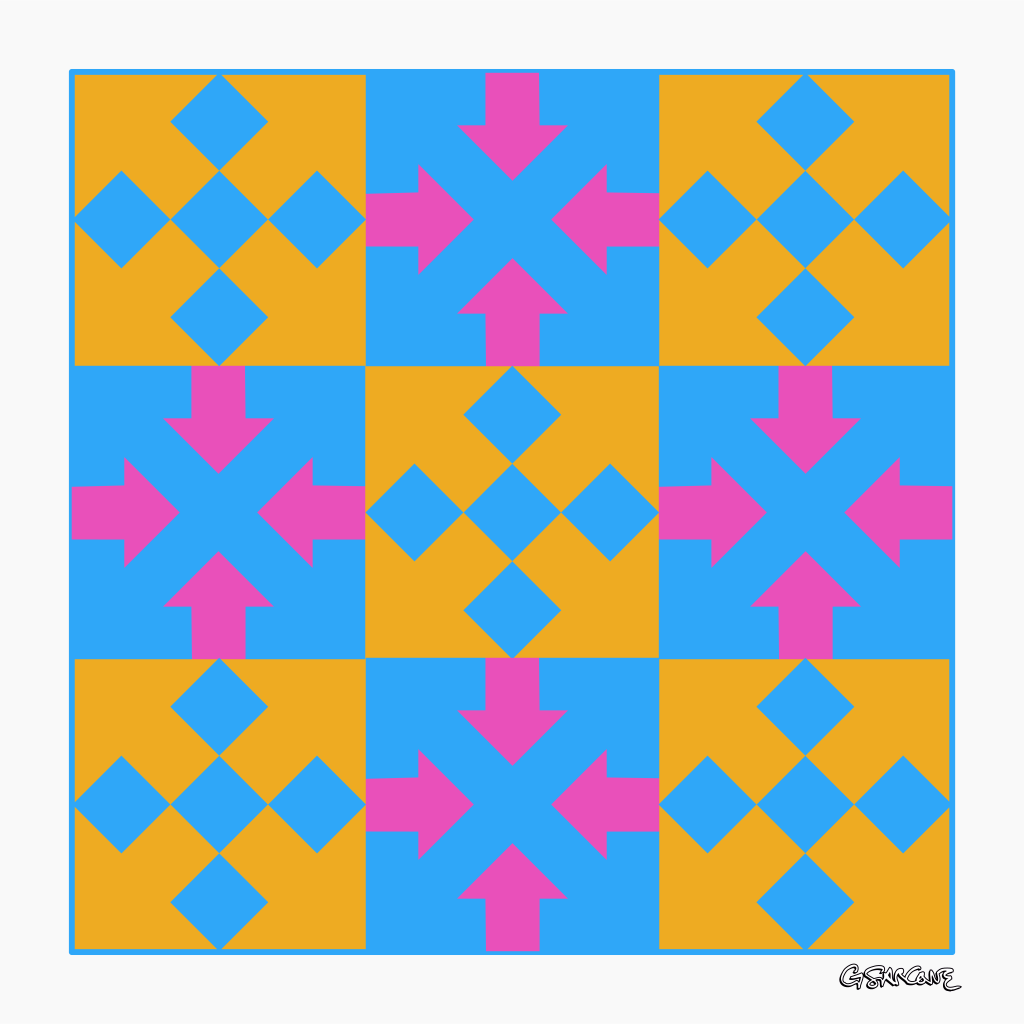
· Preparation & Assembly — Fig. G: Combine square tiles containing interior diamond arrangements with tiles featuring four inward- and four outward-pointing arrows formed by negative space. Arrange them alternately to create a checkerboard pattern.
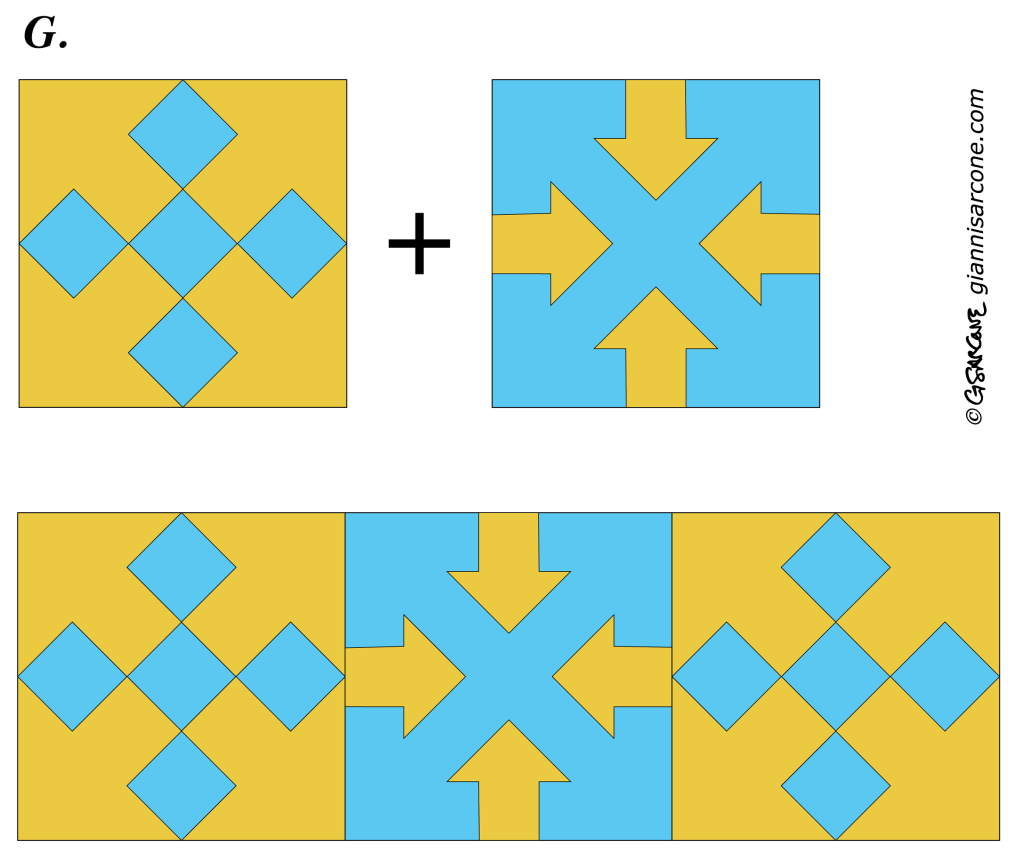
The example below shows a 3 × 3 alternating checkerboard configuration that surprisingly reveals 52 arrows in total.
Variation: Here is a striking variation of the tile with four inward- and outward-pointing arrows. The inward arrows extend into continuous paths on a white background, creating the effect of interwoven arrowed ribbons.

Extra 3D Arrow Illusion
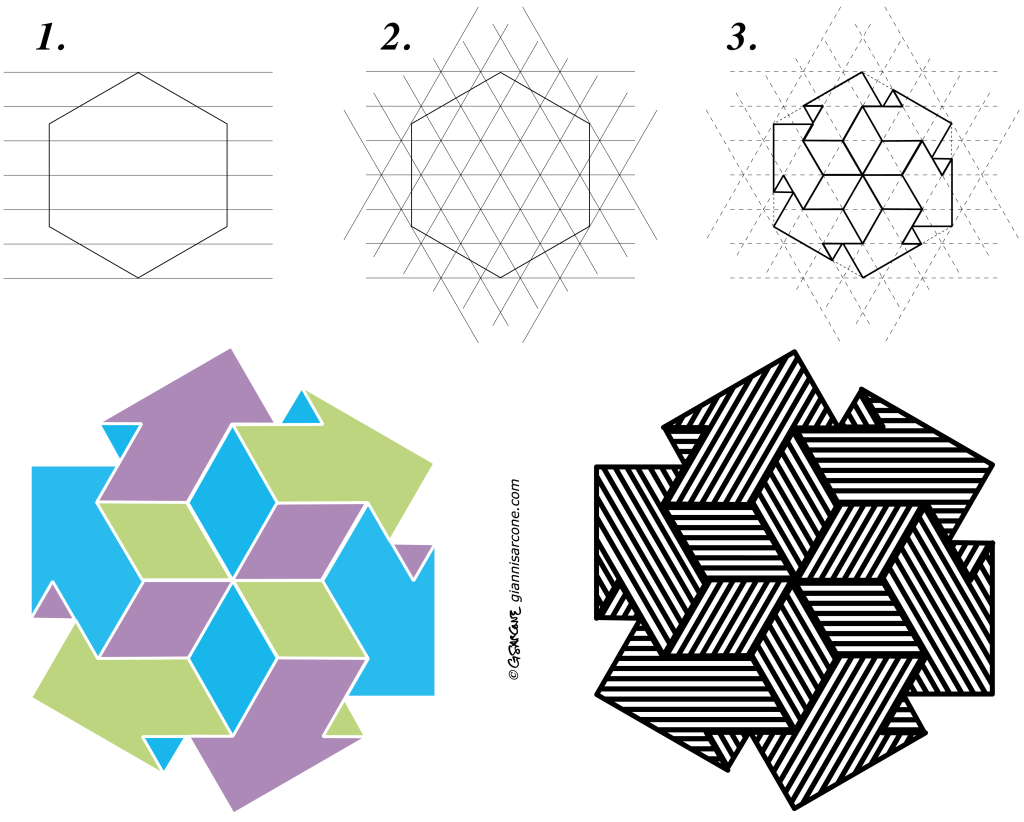
Let’s take a different direction from the experiments above and explore a 3D isometric illusion. This construction is inspired by classic impossible figures depicting ambiguous stacks of cubes, whose apparent number can change depending on how you interpret their spatial arrangement.
Start with a hexagonal boundary (Fig. 1) and overlay a triangular isometric grid (Fig. 2). Then draw six interlocking arrow shapes around a central point, folding their tails inward (Fig. 3).
Finally, use three colors to shade the isometric planes, or apply directional line hatching, to give the flat arrows a three-dimensional, interlocking appearance.
Curious about the mathematics behind these impossible 3D arrows? Math lovers can explore the geometry and construction 👉 here.