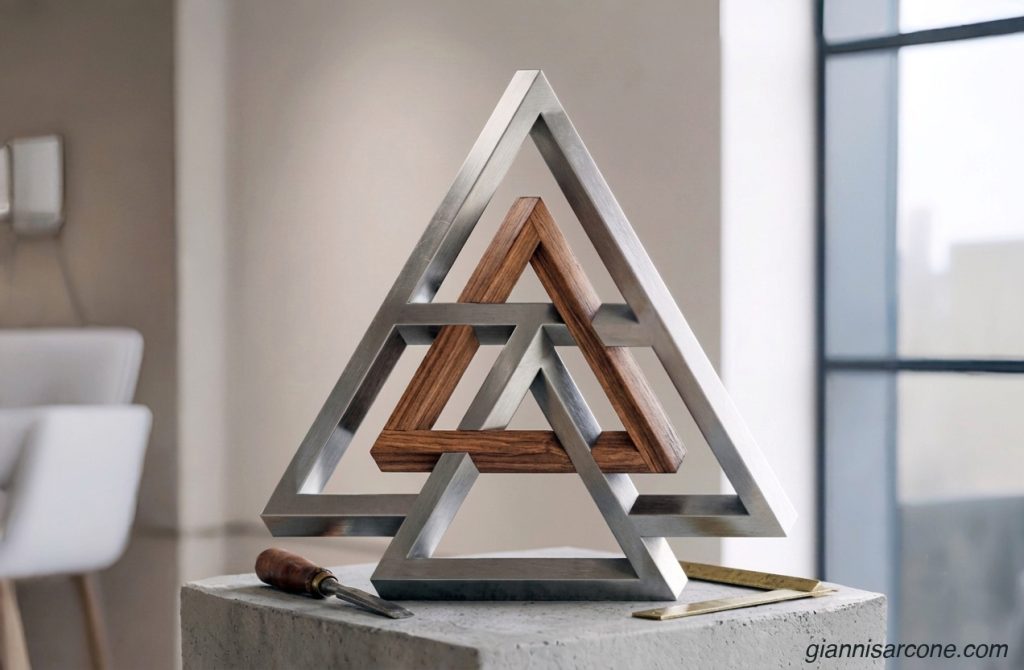
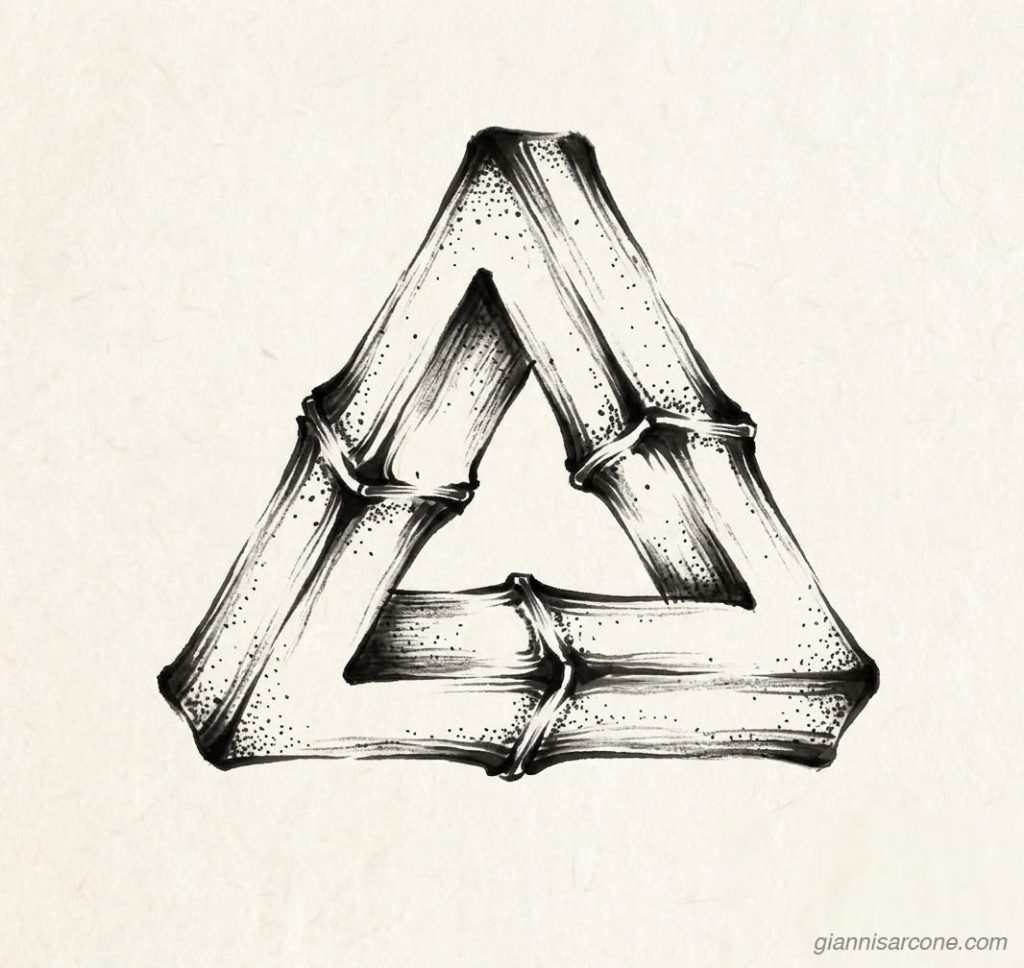
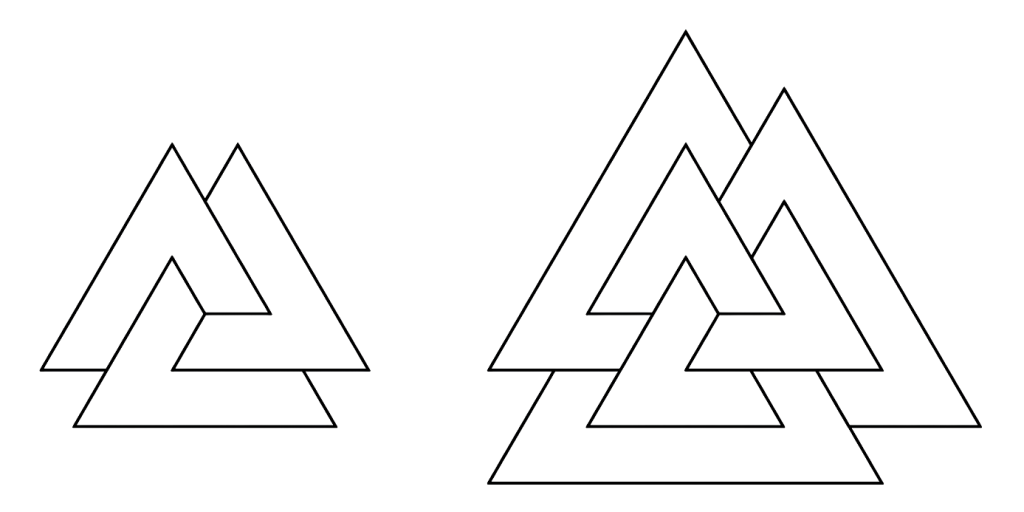
Immergiti nel mondo dell’arte ottica!

Le mie opere, esposte permanentemente alla Città della Scienza e al Dipartimento di Fisica dell’UNIFI, offrono un’esperienza visiva che stimola curiosità e meraviglia. Non perdere l’occasione di vederle dal vivo!
Scopri di più.

Dipartimento di Fisica dell’UNIFI

🇬🇧 Dive into the world of optical art!
My works, on permanent display at Città della Scienza and the Physics Department of UNIFI, offer a visual journey that sparks curiosity and wonder. Don’t miss the chance to experience them in person!

Learn more.

Related links:

Moona Lisa

The Responsive Eye

“The Responsive Eye,” held at MoMA in 1965 and organized by William C. Seitz, was a landmark exhibition in Op Art. Featuring over 100 artists—including Bridget Riley, Victor Vasarely, Richard Anuszkiewicz, and Josef Albers—it explored how geometric patterns and color could manipulate perception.

Riley stood out with her precise, rhythmic paintings that seemed to move and breathe, challenging the way we see. The show fascinated the public, drawing huge crowds, and sparked a wave of interest in optical effects across art, design, and fashion.

Critics were divided. Some celebrated its innovation and playful engagement with vision; others dismissed it as flashy spectacle, questioning the depth and seriousness of Op Art. Personally, I see it as a pivotal moment—one that reminded everyone that perception itself could be the medium, and that art could be both cerebral and exhilarating.

Further information: https://ubu.com/film/depalma_responsive.html

The Cube That Lies

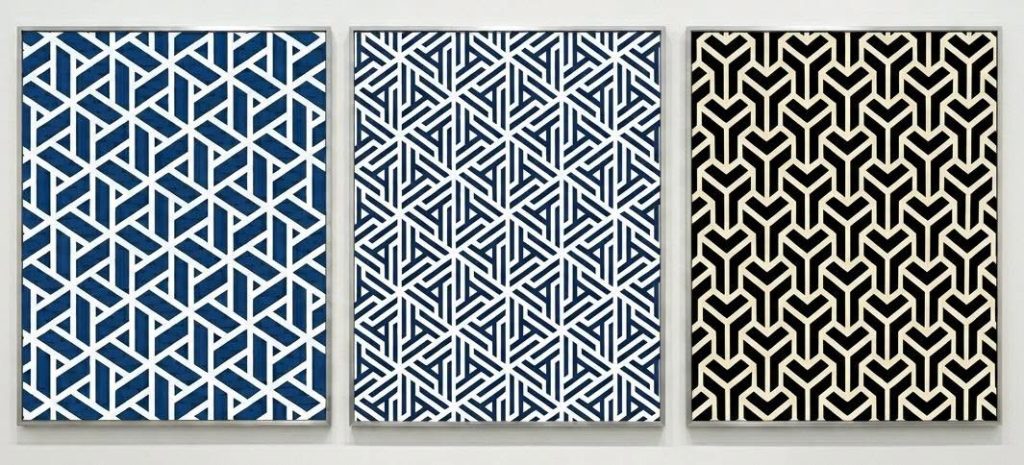
I’ve always been drawn to the architecture of geometry. The hexagon, with its quiet strength and symmetry, sits at the root of so many spatial illusions—it’s the seed of cubes, isometric grids, and 3D paradoxes. From this shape, I began exploring structures that bend logic and perception, eventually giving life to a trio of optical works: Enigma 1, Enigma 2, and Enigma 3.

enigma 1
Enigma 1Prints & T-shirts.
enigma 2
Enigma 2Prints & T-shirts.
enigma 2
Enigma 3Prints & T-shirts.

Each piece is built around the visual tension of the impossible cube, created by merging two tribars in perfect isometric perspective. The lines suggest solidity, yet the form escapes reality—what looks structurally sound unravels the moment the eye tries to make sense of it. That’s the game I love to play: where geometry behaves, but perception rebels.

These “Enigmas” are spatial riddles dressed in stripes and angles, each one twisting the viewer’s reading of depth, volume, and continuity in its own way.

The Story of Blue

Sonne au comble de l'or
l'azur du jeune hiv
er
– Paul Valéry

For me, blue is air, wind, melancholy. It is like a Fellini film—always haunted by the whisper of the wind, the scent of things, and the fleeting moments of time we wish we could hold in an eternal present. Blue can carry regret; it is, in a way, a conservative principle. Blue has always held a strange duality: so immediate, yet once so elusive. Looking back to antiquity, it fascinates me that Homer never described the sea as blue, but as ‘wine-dark.’ In Greek, kyaneos evoked a dark, mineral depth, while glaukos hovered between gray, green, and blue. The Romans spoke of caeruleus, tied to the sky (caelum), and of lividus, the bruised, bluish tone of flesh. They never elevated blue; it was the color of outsiders, the hue of Celts painted in woad. Only the Egyptians seemed to truly revere it. They invented Egyptian blue, the first artificial pigment, and made it the shade of eternity and the divine.

In the Middle Ages, blue nearly vanished from prominence. Christian art turned to red, white, and black, leaving blue to the margins. Yet the word itself was evolving. The Germanic blāo—and its Vulgar Latin adoption, blavus—once meant something far less precise: shimmering, lustrous, dark, gray, even pale or yellowish. That ambiguity makes me realize how fluid color once was, before language fixed its boundaries. From blāo we inherited English blue and French bleu. Meanwhile, through Arabic lazaward came the words azure, azzurro, and azul, all born from lapis lazuli.

Then, in the 12th century, blue was transformed. Artists began clothing the Virgin Mary in ultramarine, ground from lapis lazuli more costly than gold. What had been humble became heavenly. Heraldry embraced azure as one of its noble tinctures, and kings like Louis IX made blue their emblem. A forgotten hue became a sacred, regal presence.

By the Renaissance, ultramarine shone as a color of prestige, truth, and constancy. Painters reserved it for the highest subjects, poets linked it to loyalty, and explorers carried its name across the seas as azul. Blue had finally claimed its place.

The modern era democratized it. Prussian blue appeared in 1704, followed by cobalt, cerulean, and synthetic ultramarine. Blue poured into uniforms, flags, and revolutions; it became the shade of liberty, of nations, of collective identity. Goethe called it spiritual, a color that retreats yet draws the soul inward.

In the 20th century, painters gave blue an entirely new destiny. The Expressionists used blue to conjure emotion, depth, and inner turbulence—think of Kandinsky, who saw blue as moving ‘toward the infinite,’ or Franz Marc, who painted blue animals to symbolize spirituality and hope. Even Van Gogh’s Starry Night swirls with blue, capturing both wonder and melancholy. Later, Picasso entered his Blue Period, transmuting sorrow into tone. Yves Klein went further still, reducing blue to its purest intensity with his International Klein Blue, turning it into an immaterial field of experience. For Klein, blue was not simply a color but ‘the most abstract color of all,’ a space in which one could lose oneself.

Today, I see blue everywhere. In the jeans that became the fabric of daily life. In corporate logos designed to inspire trust. In flags that mark belonging. Blue is calm, yet melancholy; humble, yet exalted. Once overlooked, it is now the world’s favorite color.

Blue is more than a hue. It is an idea shaped across centuries—etymologically born of caelum, blāo, and blavus; symbolically stretched between heaven and earth; culturally tied to faith, power, and identity. Its story mirrors our own: restless, mutable, and ever searching for meaning.

I’ll end with a little story from my own family. After World War II, my paternal grandfather, a house painter, bought a massive surplus of blue paint from the military. He had so much of it that whenever a client asked how he planned to paint their home, his answer was always the same, year after year: “All in blue, yes, all in blue…” (in our dialect, tutt’azzurr, tutt’azzurr).

That simple phrase stuck. Before long, the whole village started calling our family the Tuttazzurr family, and I myself became known as Giuan Tuttazzurr. Blue marked our home, but also my identity and my story—etched in memory and in name.

Glittering Eyes of the Night

The ‘glitter’ you see on this wolf spider comes from the eyes of the babies she carries on her abdomen. Like cats, owls, and other nocturnal hunters, wolf spiders possess a reflective layer behind their retinas called a “tapetum lucidum,” which amplifies even the faintest light and makes their eyes glow in the dark. This tiny adaptation turns the forest floor into a stage where predator and prey perform under the faintest moonlight.

Nature often converges on similar solutions, weaving common threads through vastly different lives. It’s fascinating to think that very different species—arachnids and mammals alike—have evolved the same “superpower”: the ability to see in near darkness.

Next time you spot a tiny flash of light on a night hike, remember: a wolf spider might be staring right back, sharing with you the magic of the nocturnal world.

Moonlight Reflections on the Waters

A memory from Japan, where I lived briefly in the 1980s. This piece recalls earthy colors, organic shapes, and fragments of that time. A circle emerges from a flowing field of triangles—like ripples of moonlight dancing on the sea near Kamakura.

Immersing in my Op Art is entering a space where opposing forces meet, interlock, and balance with precision and intensity. Each piece is a silent dialogue of form, line, color, perception, and mathematical structure, anchored in the language of symbols. Beneath the surface, it engages archetypes and ancient rites that still resonate in the collective unconscious.

This unique op art piece is available as fine art prints and canvases in my online gallery.

Rediscovering Flutex: Simple Glass, Complex Illusions

I’ve been toying with the idea of revisiting an old, low-key material for my art: Flutex.

If you haven’t heard of it, Flutex is a patterned industrial glass from the 1930s and ’40s, mostly used to give a bit of privacy in bathrooms and office partitions.

In the ’70s, Op artist Sydney Cash started playing with this glass and found that its ribbed surface works like a lenticular screen—showing different images depending on how you look at it. The effect? Hypnotic, shifting artworks that change as you move around them.

It’s just simple glass, but it tricks perception in a really cool way.

I’m seriously considering giving it a try myself—there’s something about that mix of humble material and complex visual play that feels worth exploring again.

Relative Size Illusions

Here are two relative size illusions I described back in 1997 and 2013.

The first, called Sarcone’s Crosses, challenges classic illusions like the Ebbinghaus illusion (Titchener Circles, 1898) and the Obonai square illusion (1954). It features a cross (the test shape) surrounded by squares of different sizes.

As shown in Fig. 1.a, 1.b, and 1.c, the three blue crosses are all the same size — yet the one on the left (Fig. 1.a) appears larger. Surprisingly, the illusion still works even when smaller squares completely cover the cross (Fig. 1.c).

So, the size of surrounding shapes doesn’t always dictate how we perceive the central one.

In the second illusion (Fig. 2.a and 2.b), due to assimilation, the red diagonal inside the larger ellipse seems longer — but the blue line is actually the longest.

Perception loves to play tricks on us.

sarcone's relative sizze illusions

You can explore more of my illusions and visual inventions on my official site: giannisarcone.com

Illusive Pietà

Uncovering the subtle visual tricks Michelangelo wove into his masterpiece.

We’re not very good at judging the true size and positioning of objects just by looking. Take Michelangelo’s Pietà—it hides some subtle, conceptual “illusions”:

  • If they were standing, the Virgin Mary would actually be much taller than Christ, which may be surprising.
  • Her knees are slightly off-center, forming a kind of base or pedestal that supports Christ’s body.
  • And while logically the Virgin should look older, her face is almost childlike, creating a striking contrast with the mature, somber face of her son.

Michelangelo himself explained this choice:
“The mother had to be young—young enough to appear forever a virgin. Meanwhile, her son, who took on our human nature, must, in the stripping away of death, be a man like any other.”

Art is full of illusions designed to meet the visual expectations of viewers—and sometimes to correct what might seem off or unnatural to the eye. Because reality, at times, doesn’t always feel quite real or right to those who look at it.

And one last curious detail: Pietà is the only work Michelangelo ever signed. Stung by whispers that another sculptor had made it, he returned one night and boldly carved his name across Mary’s sash— “MICHAELA[N]GELVS BONAROTVS FLORENT[INVS] FACIEBAT” (Michelangelo Buonarroti, the Florentine, made this). A rare flash of pride from an artist who usually let his work speak for itself.)

Pietà by Michelangelo

A Hidden Time Machine

We all carry within us a time machine—hidden in plain sight, right in the middle of our face. It may sound unlikely, but the NOSE is the only sensory organ capable of transporting us into the past without our even realizing it.

Our sense of smell activates memories like no other. A single scent can unlock a precise moment from childhood or early adulthood: the fragrance of oranges at Christmastime, melting snow during your first school field trip in winter, the scent of your sweetheart’s sweater the day you met, your grandmother’s simmering tomato sauce during Sunday lunches, the waxed floor of your grandparents’ house, school glue in primary class, the sunscreen of beachside summers, old book ink in the town library, the leather of your first satchel, or the aroma of fresh coffee at dawn when everyone else was still asleep…

The nose is a powerful trigger for nostalgia because the olfactory bulb, where smells are processed, is directly connected to the limbic system—the brain’s emotional and memory center. This close link allows smells to summon vivid memories, often with startling clarity, and sometimes, with them, an unexpected flood of emotions.

Each smell opens a door to a suspended instant—fragile, vivid. It’s an inward journey to a hidden past, a place buried deep, that suddenly bursts forth like a firework of nostalgia.

Each of us holds a palette of scents capable of bringing us back—suddenly, vividly—to a time that’s gone. Mine carries rustic, earthy tones: my maternal grandparents were farmers, and I spent much of my early childhood with them in the mountains of Irpinia.

I remember the sticky perfume of freshly harvested tobacco leaves, the white film of yeast clinging to wine grapes, the wild asparagus gathered by riverbanks, the unmistakable sweet scent of the ceuze—what we called mulberries in dialect—and the zenzifero, a local mint that gave ricotta ravioli its delicate fragrance…

I doubt I’ll ever stumble across those long-lost smells again—or perhaps they’re just dormant, waiting. But if they do return, that would be the most beautiful time travel I could ever hope for.

And you? What scents carry you away to other times, other worlds?

smell memory, nose