A guy walks into a bar and asks for a coffee without cream. The bartender replies, “Sorry, we’re out of cream—how about a coffee without milk instead?”
It’s a simple joke, but it highlights something curious: absence has weight. Psychologically, a coffee without cream doesn’t feel quite the same as a coffee without milk.
Now, let’s take it a step further. Is the absence of a loved one the same as the absence of a random stranger? Of course not. Absence isn’t just a void—it carries the shape of what’s missing.
The ancient Greeks had a word for this: steresis (στερήσις), the idea that everything is defined by both what is present and what is absent. Zen philosophy explores a similar concept with mu (無), suggesting that sometimes, absence is a kind of presence in itself.
So next time you order a coffee without cream, pause for a second—what is it you really don’t want to be in there?
The circle, a timeless symbol of wholeness, is found at the core of human thought. In the West, it evokes the Pythagorean harmony of the cosmos, the eternal return of Nietzsche, the indivisible unity of Being. A form without beginning or end, it embodies the perfect balance between presence and absence, the finite and the infinite. In Eastern traditions, the ensō (円相)—literally “circular form”—is a distilled gesture of perception, a visual echo of clarity. Not merely a shape, but an experience, it is drawn in a single stroke, capturing the ephemeral moment where thought and movement dissolve into pure expression. It is said that the earliest Zen painting was an ensō, traced to offer a student something tangible yet elusive, a paradox to ponder. A circle can be brushed on paper, traced in sand, drawn on a misted window, or merely imagined. It lacks nothing, needs nothing, yet contains all things. In its quiet completeness, it is not an answer, but an opening—an invitation to see beyond the limits of form.
The mirror stage, conceptualized by Lacan, occurs in humans between six and eighteen months of age. It is the moment when a child perceives a unified image of their body and recognizes themselves in the mirror—a process rooted in the imaginary dimension—often accompanied by a sense of jubilation. This stage marks the emergence of narcissistic identification with the self.
But what about animals? Do they recognize themselves as a tangible entity in a mirror, or does their reflection remain an enigma to them? Research suggests that self-recognition in a mirror is rare in the animal kingdom. While species such as great apes, dolphins, elephants, and some birds—like magpies—can pass the mirror test, most animals either ignore their reflection or react as if encountering another individual. This highlights fundamental differences in self-awareness across species.
While technology may expand globally and permeate every facet of our daily lives, CULTURE, with a capital C, will inevitably remain rooted in specific places and times. It cannot be universal because its true essence lies precisely in that uniqueness. The idea of an “open culture” is a fallacy, as such a concept would erase its own meaning. While some cultures may appear inclusive, this openness always occurs within the boundaries of their own identity, preserving their core values and norms. A striking example of this is the ancient Romans, who, rather than resisting, embraced and integrated elements from civilizations radically different from their own into their laws, religion, language, cuisine, and daily life. This process reflects their remarkable ability to absorb and enrich their culture without betraying it—a true feat.
Another aspect of culture is that, like us, it too is destined to die. At some point in history, it fades away gradually or disappears abruptly. Furthermore, it is impossible to measure a culture from within, much like the eye that can see but cannot look at itself. It is through the lens of an outside perspective—another culture—that we can evaluate it. It is difficult to have an objective view of one’s own culture without reducing it to superficialities. Confronting cultures without falling into the trap of simplistic analogies or discrimination is no easy task, but it is achievable if we abandon preconceived notions.
The darker side of culture lies in its expansionism, which can easily slip into hegemony. It’s important to emphasize that hegemony is not the same as universality. While expansionism imposes and overwhelms, universality reflects shared values that connect cultures without erasing their uniqueness. Throughout history, people have embraced dominant cultures—sometimes abandoning their own—either because they were fashionable or aligned with the spirit of the times. But where do we draw the line between natural influence and disguised colonialism? Consider the global reach of American pop culture, shaping tastes and behaviors worldwide, while some traditions persist, resisting this wave of uniformity.
Multiculturalism, often touted as an ideal by well-meaning elites, obscures a fundamental truth: a culture, like a living organism, inevitably seeks to assert itself at the expense of others. It feeds, grows, and struggles to find its place in an ever-moving, chaotic world.
In the world of contemporary art, the concept of invisibility has become an imaginative playground for creativity. Here’s a glimpse into some intriguing—and often humorous or haunting—examples of invisible artworks that challenge our perceptions and redefine what art can be.
This installation featured an empty room with two air conditioning units, emphasizing that the true art lies in the feelings and conversations it inspires. Talk about a cool concept!
Byars designed a pitch-black room, inviting visitors to contemplate emptiness. It’s like stepping into a fridge at midnight—dark and full of existential questions.
Barry’s artwork consisted of thoughts communicated mentally to visitors. A reminder that sometimes art is all about connection—without any visual representation!
Warhol’s intangible sculpture, presented atop a white pedestal, exemplifies the idea that art can exist without form, challenging us to think beyond traditional boundaries.
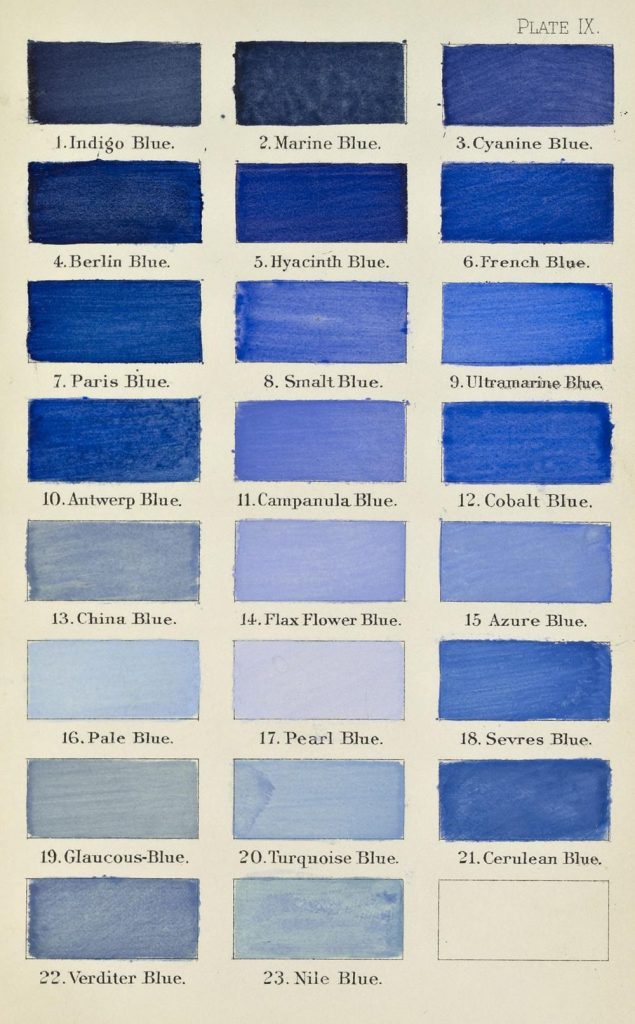
Imperialism is not limited to a group or a country. In fact, each of us is, in essence, an imperialist, striving—whether subtly or forcefully, skillfully or clumsily—to expand his / her sphere of influence in the world. The methods we employ vary from person to person: some are conciliators, while others are more combative. When I was 25, I empirically explored how these spheres of influence, which I termed ECFs, interacted between two individuals. To make the concept understandable, I employed the metaphor of colors. This brief is discussed in my book, “Le Voile d’Iris” (French edition, see image below). Perhaps one day, I will revisit this study to develop it into something more rigorous.
The Buddhist parable of the man hanging from a cliff and the Christian legend of “Barlaam and Josaphat” both explore human vulnerability, the impermanence of life, and fleeting pleasures. Despite different contexts, they share profound philosophical insights.
The Buddhist Parable
A man chased by tigers falls off a cliff, clinging to a fragile root. Facing death above and below, he notices a ripe strawberry. Ignoring danger, he tastes it, savoring the present moment. The strawberry symbolizes mindfulness and the beauty of the present despite life’s dangers.
The Christian Legend
In the medieval Christian story, a man chased by a unicorn falls into a pit, holding onto a branch. A dragon waits below, while two mice—one black, one white, symbolizing night and day—gnaw at the root. Drawn by the sweetness of honey dripping nearby, he forgets the danger beneath. The honey represents worldly pleasures that distract from spiritual awareness.
Key Similarities
– Life’s Fragility: Both stories depict imminent danger, emphasizing life’s precariousness and impermanence.
– Fleeting Pleasures: The strawberry and honey symbolize temporary sensory pleasures.
– Impermanence: The mice in the Christian tale echo the passing of time, a theme also present in the Buddhist view.
Key Differences
– Buddhist Perspective: Focuses on mindfulness and present awareness.
– Christian Perspective: Warns against worldly distractions from spiritual truth.
Both parables emphasize life’s fragility and the tension between danger and fleeting pleasures. They offer timeless reflections on mindfulness and the importance of spiritual awareness.
But how is art connected to these stories? Both explore how perception shapes our experience of life. What we focus on—whether a ripe berry, a drop of honey, or a striking pattern—can define our reality, revealing beauty or reflecting deeper truths.
These parables also show the importance of context. In the East, strawberries symbolize sweetness, while in the West—especially during medieval times—it was honey. The sources of fear also differ: in the East, tigers have long been feared, and this legacy endures today. In the West, storytellers created mythical creatures to inspire fear, since real animals like bears and wolves, though dangerous, typically keep their distance from humans, making them seem less threatening than imagined monsters.
Beauty’s been a big deal since ancient Greece, where καλὸς κἀγαθός meant more than just a pretty face. It was the ultimate combo: good looks, brains, and virtue. For the Greeks, this wasn’t just a nice idea—it was how they judged your worth.
Fast forward to now, and beauty is still treated as a golden ticket. If you’re not exactly a head-turner but you’ve made it, chances are you’re pretty smart… Sure, beauty often gets written off as superficial, but Aristotle wasn’t wrong when he said, “Beauty speaks louder than any introduction.” Let’s be honest: good looks are a serious social advantage. People treat you better, offer more opportunities, and generally give you a leg up—whether you’re in school, at work, or even in court. Plus, fairy tales and society are pretty obsessed with tying beauty to success. Studies show that attractive people even get a better deal in the justice system.
But here’s the twist: if a guy who’s no Greek god succeeds, people assume he’s smart. If it’s a woman, they’ll say she’s got “character.” Funny how that works, right?
Luckily, looks fade, and that’s when real beauty shows up in unexpected ways. As Shakespeare said in A Midsummer Night’s Dream: “Love looks not with the eyes, but with the mind.”
Beauty’s a gift you didn’t have to work for. Intelligence, though? That’s earned, much like how a pearl forms in an oyster in response to a parasitic intruder. Life’s challenges are what shape and refine your smarts, one obstacle at a time.
So, sure, beauty’s nice—but it can also be a bit of a double-edged sword. What really counts—whether you’re a looker or not—is CHARISMA. It’s not something you’re born with, but something you build over time. Only the truly determined, the ones who know what they want, actually get it.
Sabato 21 dicembre ti aspettiamo alla Mostra delle Illusioni di Genova per “Paradossal…mente“, il laboratorio interattivo sulla percezione visiva che ho ideato e che guiderò personalmente. Non mancare!
I partecipanti saranno attivamente coinvolti in esperienze che mettono alla prova le percezioni: scopriranno illusioni ottiche inedite, creeranno giochi percettivi sconcertanti e indagheranno vari paradossi e misteri della mente e del sistema visivo. Ogni esperienza invita a riflettere su come il cervello può “ingannarci” o lasciarsi influenzare da ciò che lo circonda
Durata del laboratorio: 1 ora circaIl Materiale per il laboratorio creativo sarà fornito direttamente dalla Mostra delle Illusioni.
Here’s the recipe to make an average-sized human: 15 kg of carbon, 4 kg of nitrogen, 1 kg of calcium, half a kg of phosphorus, 200 g of sodium, 150 g of potassium, 150 g of chlorine, a few grams of about 15 other elements (some exotic, like selenium, lithium, and vanadium in trace amounts), and four 10-liter buckets of water.
The 40 liters of water can be made by combining 5 kg of hydrogen and 35 kg of oxygen. Commercial cost? Just a few euros. The hydrogen and a pinch of lithium come from the Big Bang, about 15 billion years ago. The other ingredients are more recent; they required billions of years of cosmic evolution, with stars being born, shining, dying, and reforming in nebulae from stellar collapse. The 15 kg of carbon was formed in a star’s final stages by combining three helium atoms. The 35 kg of oxygen came from the fusion of carbon and helium in extremely hot stars. Iron is the ash of spent stars, and calcium, phosphorus, sulfur, chlorine, sodium, and nitrogen also come from these stellar forges. Traces of even heavier elements reach us from supernovae. In short, we are born from the stars.
Explore My World of Art, Books, and Creative Concepts