
“The part of life we really live is small. For all the rest of existence is not life, but merely time.” — Seneca
Chronos measures time; Kairos gives it meaning.
The ancient Greeks had more than one word for time.
There was Χρόνος (Chrónos), the time that flows relentlessly, measured by clocks, calendars, and the ageing of our bodies. It is the time that runs, pushes us forward, and often makes us feel we are always late for something.
But the Greeks also spoke of Καιρός (Kairós): the right moment, the opportune moment, the instant when circumstances come together and something becomes possible. Unlike Chronos, Kairos cannot be measured in hours or minutes. It must be recognized.
Perhaps we spend too much of our lives chasing Chronos, when we should sometimes pause and listen for Kairos.
There is a time to sow, a time to harvest, and a time to let the earth rest. There is also a time to act, and a time to wait.
Interestingly, other ancient cultures developed similar ways of thinking about time. In Sanskrit, Kāla (काल) refers to time in its chronological and universal sense, while Ritu (ऋतु) describes time as a season or a qualitative moment—a period defined by its particular nature and significance.
The curious thing is that time does not pass at the same speed for everyone. A minute of anxiety can feel like an hour, while an entire afternoon of happiness may disappear in an instant. A child experiences summer as an eternity; an adult may wonder where the years have gone.
Chronos is the time we share. Kairos is the time we experience.
The deepest mystery of time, for me, is not how quickly it passes, but why it feels so different depending on who we are, what we are doing, and what we are waiting for. Two people can share the same hour, the same year, even the same lifetime, yet experience it in profoundly different ways. The distance between them is not measured in space, but in the way they inhabit time—as if they were living in different dimensions.
Which kind of time are you living in today?
Credit:
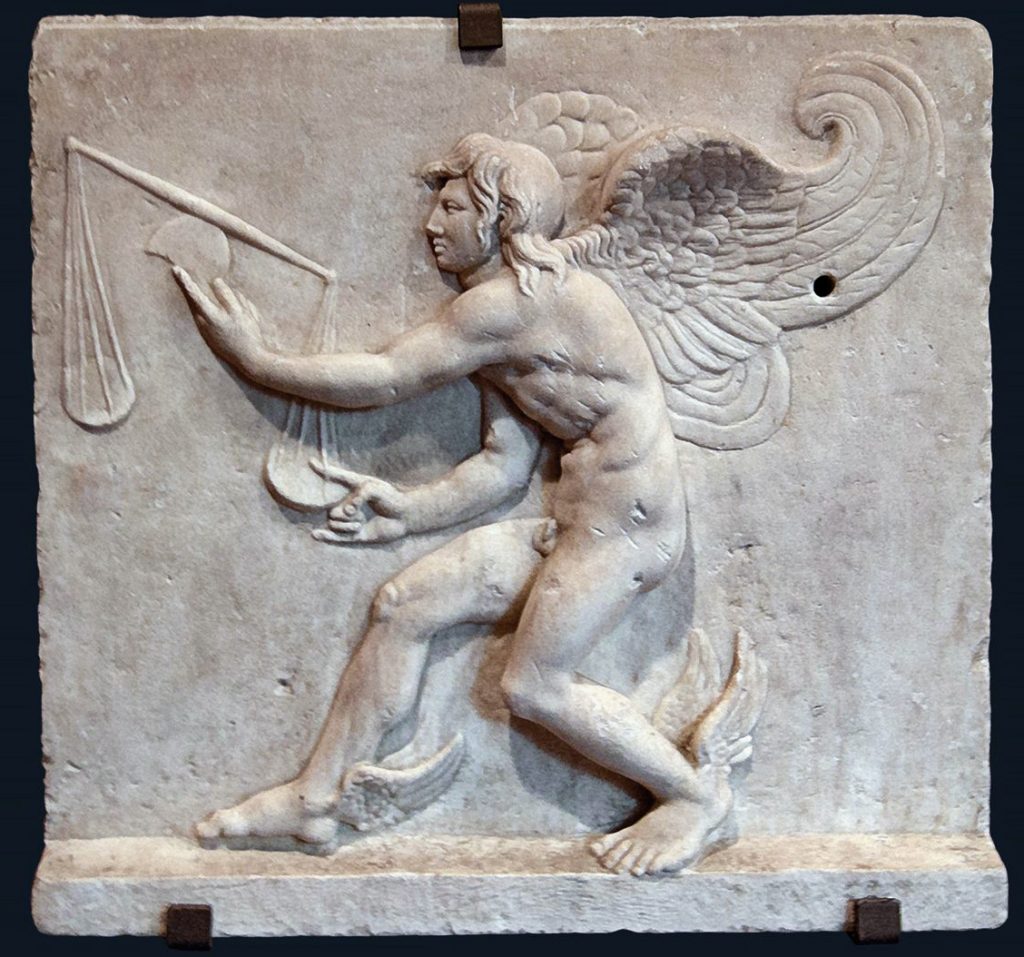
The image shows a relief of Kairos, the personification of the opportune moment. Why the long hair at the front and the bald back of his head?
The symbolism is brutally simple: when Kairos approaches, seize him by the hair. Once he has passed, there is nothing to hold on to. No amount of regret can bring the opportunity back.
The original reliefs associated with Kairos are preserved today at the Archaeological Museum of Trogir, Croatia, and the Kunsthistorisches Museum in Vienna.