Unveiling the Ancient Unicursal Labyrinth

Ancient labyrinths, known as unicursal, were also referred to as “Cretan” labyrinths, drawing from their roots in Greek mythology. In Great Britain, similar turf mazes based on the same pattern are called ‘caerdroia‘—a Welsh term meaning “City of Troy.” These mazes can still be found in a few remote villages and rural hamlets.

They were typically built around a central core—often shaped like a cross resembling a ‘gammadion’. With the help of the diagrams below, you’ll find it quite straightforward to construct one yourself.

(There are two main historical variations of the Cretan labyrinth, as you can see in Figures. A and B.)

The image is taken from my article “Parcours et détours,” originally published in the French journal MathÉcole.

You can read the full piece here (in French).

The Word: From Incantation to Influence

In the beginning, whether real or invented, certain words—many from a distant past—formed a bridge between humans and the great Mystery. One such word that survived the ages, still cloaked in a strange aura of power, is Abracadabra. Even today, magicians use it to conjure effect, echoing its ancient weight.

Originally, Abracadabra wasn’t just theatrical. It was an apotropaic charm—spoken or inscribed to ward off harm. The earliest record, from the 2nd century CE in a medical treatise by Serenus Sammonicus, describes it as a remedy for fever. Written in a tapering triangle, the word visually dissolved with each line, symbolizing the illness retreating. Its origins are uncertain. Some link it to Aramaic or Hebrew—“I create as I speak” (אברא כדברא). Others see it as a coded sequence from the Greek alphabet (ΑΒΓΔ), or a variant of another potent name: Abraxas.

An incantation born of another—what a journey through a world woven in magic.

Abraxas (Greek: ἀβραξάς), central to the Gnostic teachings of Basilides, named a powerful being ruling over 365 heavens. Engraved on amulets, Abraxas was thought to hold innate power. These stones, often cited in magical texts, show a belief system where sound and symbol merged—where the right word could invoke protection, healing, or cosmic order. Its earlier spelling, Abrasax, likely morphed through transliteration. With seven letters, the name was also tied to the seven classical planets, deepening its cosmic charge. Whatever its true roots, one idea persists: properly arranged, words carry force.

Across time, this belief shifted but never vanished. Ancient incantations gave way to new forms of verbal power.

Antiphon of Athens (5th century BCE) stripped speech of ritual but kept its essence. Considered a forerunner of psychotherapy, he used dialogue to ease emotional suffering. His method wasn’t mystical—it was precise, rooted in rhetoric and clarity. Where once words summoned the divine, now they served insight and balance.

Language, even without the trappings of magic, remains transformative. In the 20th century, thinkers like Paul Watzlawick showed how communication doesn’t just reflect our world—it shapes it. A change in phrasing can shift perception. A word can open or close a mind.

From Abraxas to Abracadabra, from spell to speech, the thread continues: words influence, connect, heal. What began as incantation lives on as conversation—still crafting reality, still carrying power.

The Interrogation Mark: From Greek Semicolons to Spanish Twists

In ancient Greek, questions were marked by a semicolon (Ερωτηματικό) rather than a question mark. This practice faded over time, and no special punctuation indicated questions in antiquity. The modern question mark emerged in the Middle Ages when scribes used “qo” (from Latin quaestio). To avoid confusion, they stacked the letters, turning the Q into a curl and the O into a dot, creating the question mark (“?”). In Spanish, the question mark was placed only at the end until 1754, when the Ortografía de la Real Academia introduced the inverted opening question mark (¿), as in: ¿Qué edad tienes? (How old are you?).

B.U.T. – Bridging Unlikely Thoughts

Ah, the infamous “BUT“! The semiologist in me would have a field day with this little word. It’s like the ultimate plot twist in a sentence—an entire world of contradiction wrapped in just three letters. It’s the “Dr. Jekyll and Mr. Hyde” of conjunctions: on one hand, it tries to introduce a new idea, and on the other, it erases everything said before, as if it were all just a warm-up.
As a historian, I’d argue it’s the “philosopher’s stone” of language. A single “BUT” has the power to change history—like when someone says, “I’m not sexist, BUT women just aren’t good at math.” And then—BAM!—history is rewritten in a very particular shade of awkward.
The comedy gold lies in the absurdity of it all. It’s a linguistic loophole, designed to create just enough space for a “disclaimer” while conveniently ignoring any of its consequences. Call it the punctuation equivalent of “I have a friend who…” or “No offense, but…”—it sets you up for everything that follows, no matter how absurd!

The Many Flavors of Absence

A guy walks into a bar and asks for a coffee without cream. The bartender replies, “Sorry, we’re out of cream—how about a coffee without milk instead?” 

It’s a simple joke, but it highlights something curious: absence has weight. Psychologically, a coffee without cream doesn’t feel quite the same as a coffee without milk. 

Now, let’s take it a step further. Is the absence of a loved one the same as the absence of a random stranger? Of course not. Absence isn’t just a void—it carries the shape of what’s missing. 

The ancient Greeks had a word for this: steresis (στερήσις), the idea that everything is defined by both what is present and what is absent. Zen philosophy explores a similar concept with mu (無), suggesting that sometimes, absence is a kind of presence in itself. 

So next time you order a coffee without cream, pause for a second—what is it you really don’t want to be in there?

The Silent Orbit of Thought

The circle, a timeless symbol of wholeness, is found at the core of human thought. In the West, it evokes the Pythagorean harmony of the cosmos, the eternal return of Nietzsche, the indivisible unity of Being. A form without beginning or end, it embodies the perfect balance between presence and absence, the finite and the infinite.
In Eastern traditions, the ensō (円相)—literally “circular form”—is a distilled gesture of perception, a visual echo of clarity. Not merely a shape, but an experience, it is drawn in a single stroke, capturing the ephemeral moment where thought and movement dissolve into pure expression. It is said that the earliest Zen painting was an ensō, traced to offer a student something tangible yet elusive, a paradox to ponder.
A circle can be brushed on paper, traced in sand, drawn on a misted window, or merely imagined. It lacks nothing, needs nothing, yet contains all things. In its quiet completeness, it is not an answer, but an opening—an invitation to see beyond the limits of form.

Umbrella Illusion

One of my illusions from the late ’90s. Take a look at the colorful umbrellas in Figures A and B of the table below—are they the same or different? About 80% of people will say that Umbrella A has jagged, zigzag edges, while Umbrella B has a smooth, wavy outline. But here’s the trick—you’ve been fooled by the brightness contrast of the rays inside the umbrellas. In reality, both umbrellas are identical in shape, perfectly congruent.

This illusion works even when only the lines of the shapes are emphasized. As demonstrated in the table below, the outline of Umbrella A appears jagged and zigzagged, while Umbrella B seems to have, once again, a smooth, wavy outline.

This illusion shows a phenomenon called curvature blindness, which was rediscovered in 2017 by Japanese psychologist Kohske Takahashi. He created a powerful variant and studied its impact on how we perceive shapes.

Read more

The Illusion of Color in Astrophysics


Study on Colors in Astrophysics – Ongoing Research

Under specific atmospheric conditions and with the technological tools employed, stars or planets may appear to emit green or blue light to some observers. However, as illustrated in the accompanying diagram, this is often nothing more than an optical illusion. The blue region seen in the diagram is actually a medium gray, entirely desaturated. You can verify this by using Photoshop’s color picker tool (or an analogous method) to check the true color values.

This phenomenon raises interesting questions about how color perception in astrophysics can be influenced by both atmospheric effects and the limitations of observational tools. How much of what we “see” in the cosmos is truly the color of the objects themselves, and how much is a product of the interaction between light, our atmosphere, and the instruments we use to detect it?

The Architecture of Light

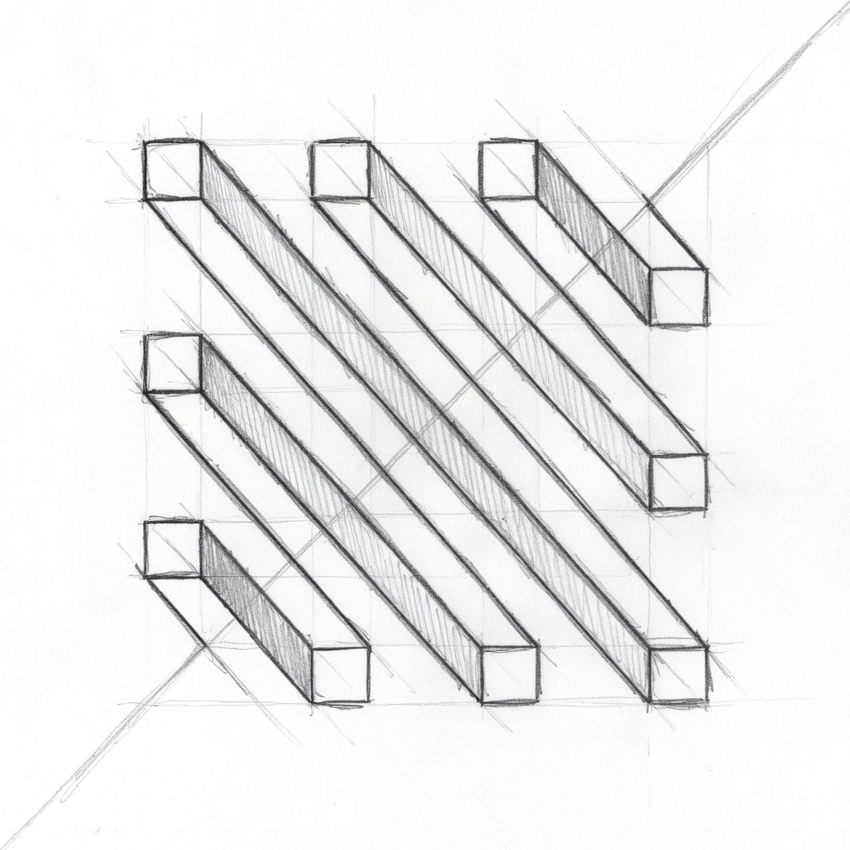
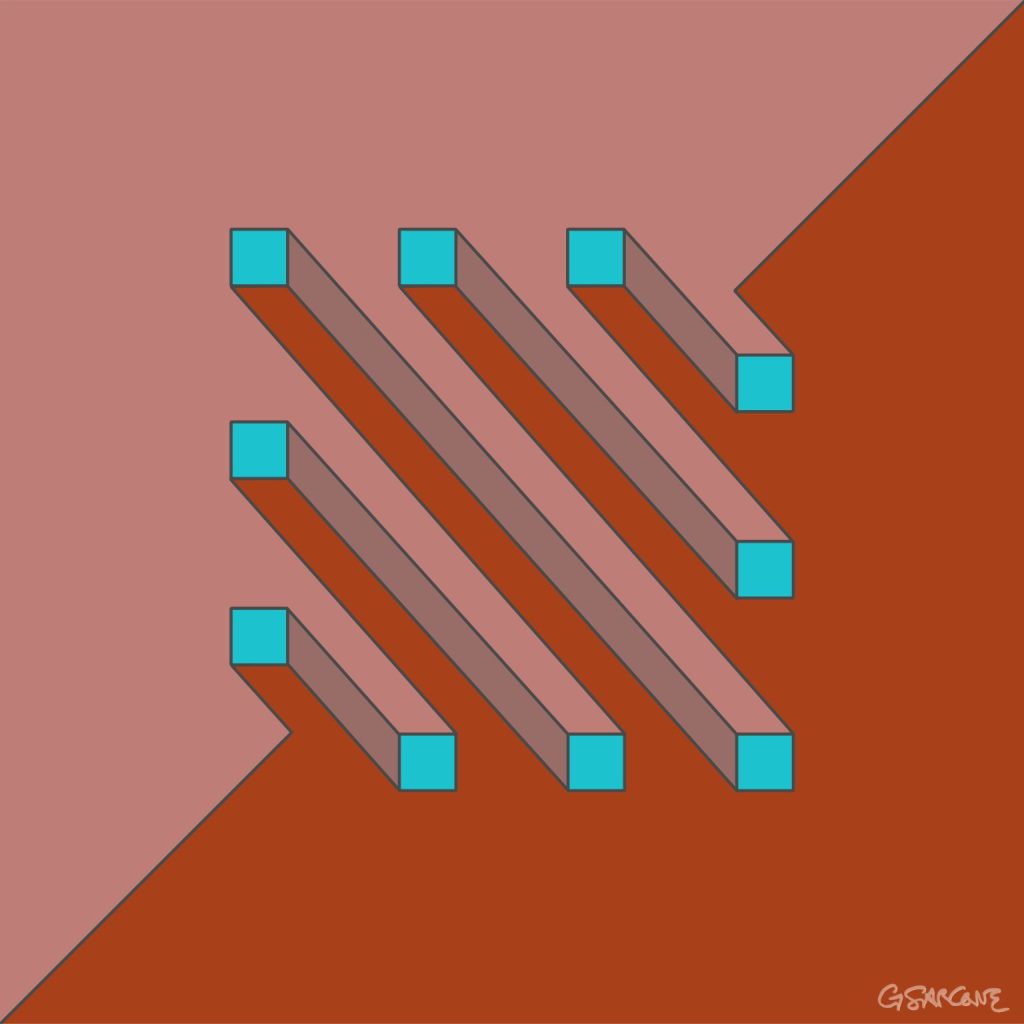
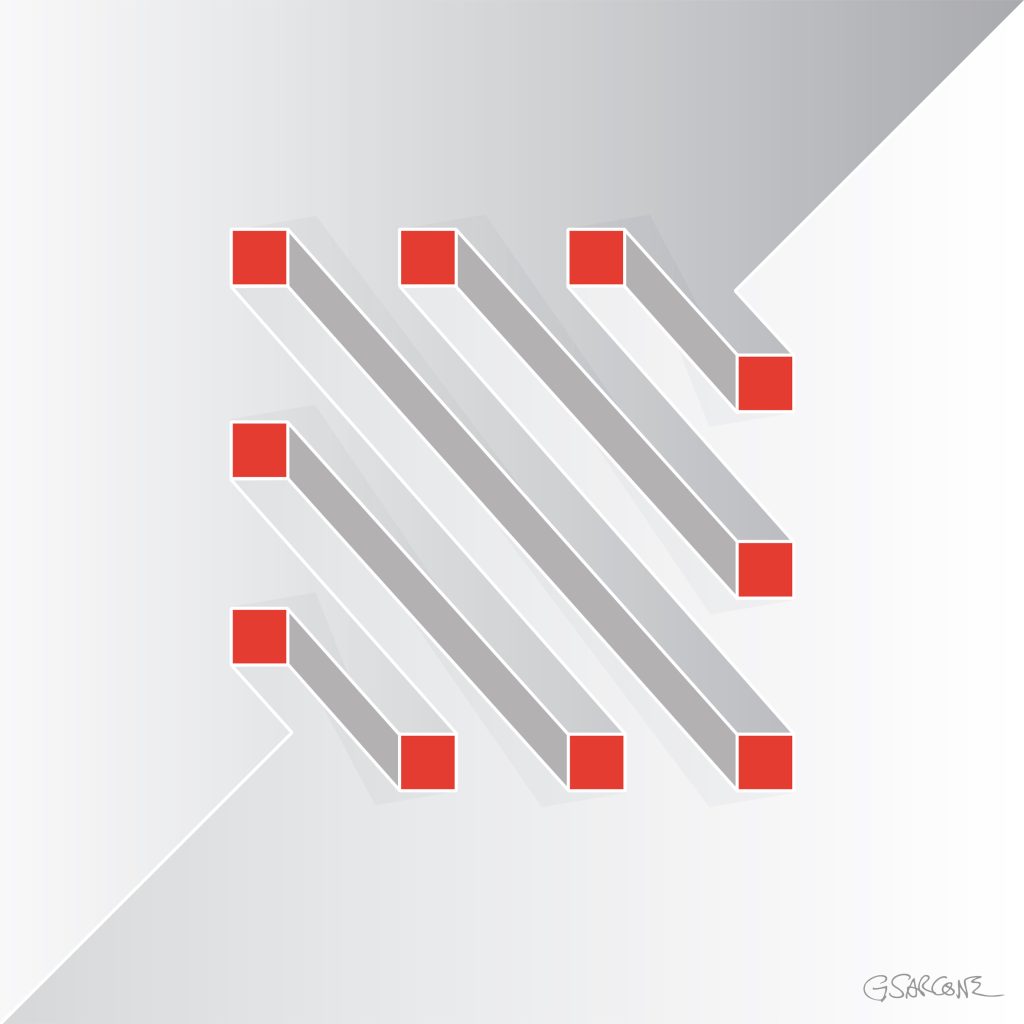
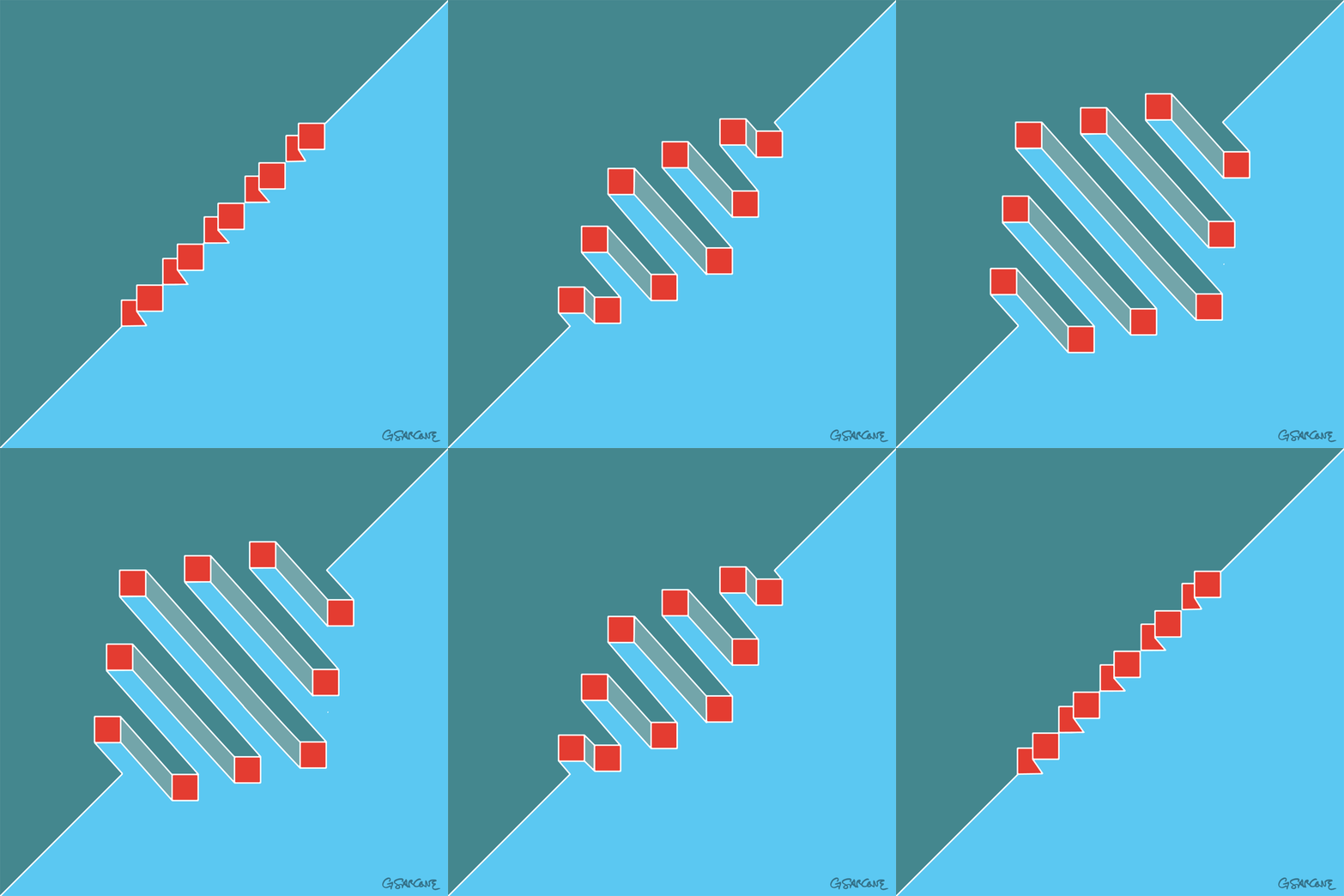
Colors, though fundamentally phenomena of light, are not merely superficial aspects of perception. They play a structural role in organizing visual elements. For example, applying contrasting colors to a series of repetitive graphic patterns—while varying their distribution—can dramatically alter how they are perceived. This demonstrates how color is not just an embellishment but an active force in shaping visual reality.


As Goethe put it, “Colors are the deeds and sufferings of light.” More than a sensory experience, they influence our perception of space, depth, and meaning, revealing the intricate dialogue between vision and cognition.

🔍 Explore more about the illusion of colors.

Reflections of the Self

The mirror stage, conceptualized by Lacan, occurs in humans between six and eighteen months of age. It is the moment when a child perceives a unified image of their body and recognizes themselves in the mirror—a process rooted in the imaginary dimension—often accompanied by a sense of jubilation. This stage marks the emergence of narcissistic identification with the self.

But what about animals? Do they recognize themselves as a tangible entity in a mirror, or does their reflection remain an enigma to them? Research suggests that self-recognition in a mirror is rare in the animal kingdom. While species such as great apes, dolphins, elephants, and some birds—like magpies—can pass the mirror test, most animals either ignore their reflection or react as if encountering another individual. This highlights fundamental differences in self-awareness across species.

Do Animals Recognize Themselves in a Mirror?