The Other Sight
Sometimes the eyes are not enough,
and the heart finds another way
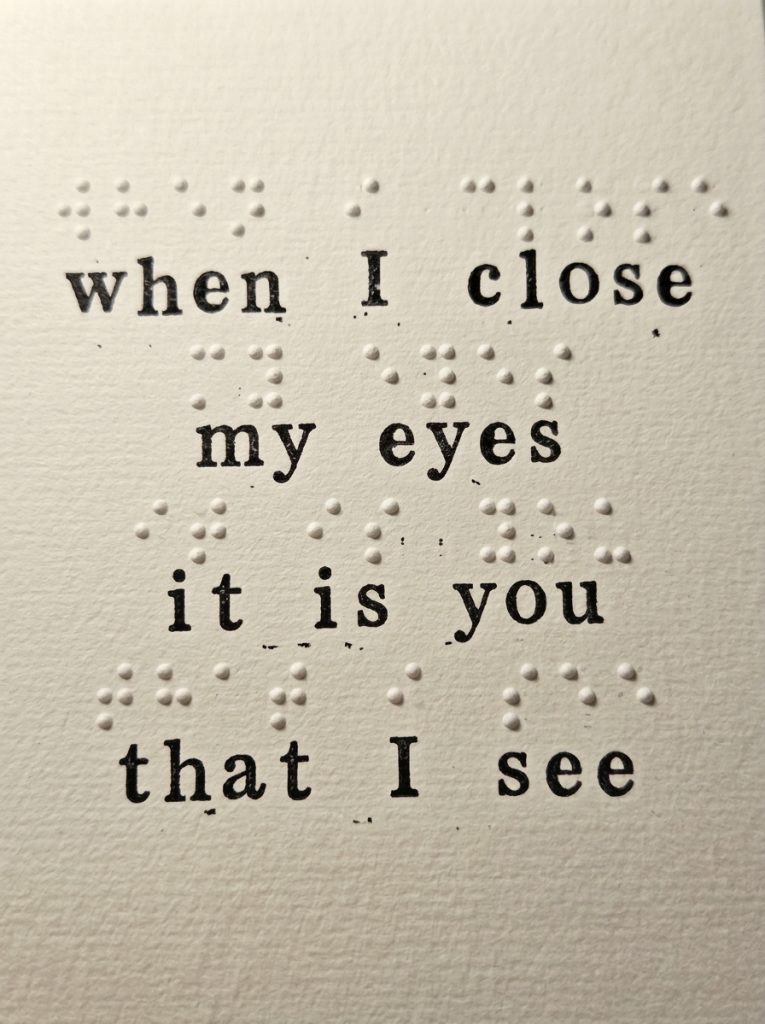

The Other Sight
Sometimes the eyes are not enough,
and the heart finds another way
These two minimalist Zen compositions exploit our brain’s tendency toward pareidolia and the Gestalt principle of closure: we instinctively connect isolated strokes, filling in what is missing until a familiar presence begins to emerge.
A few seemingly unrelated brushstrokes can be enough to suggest something—or someone—we recognize.
Can you see the hidden figures?
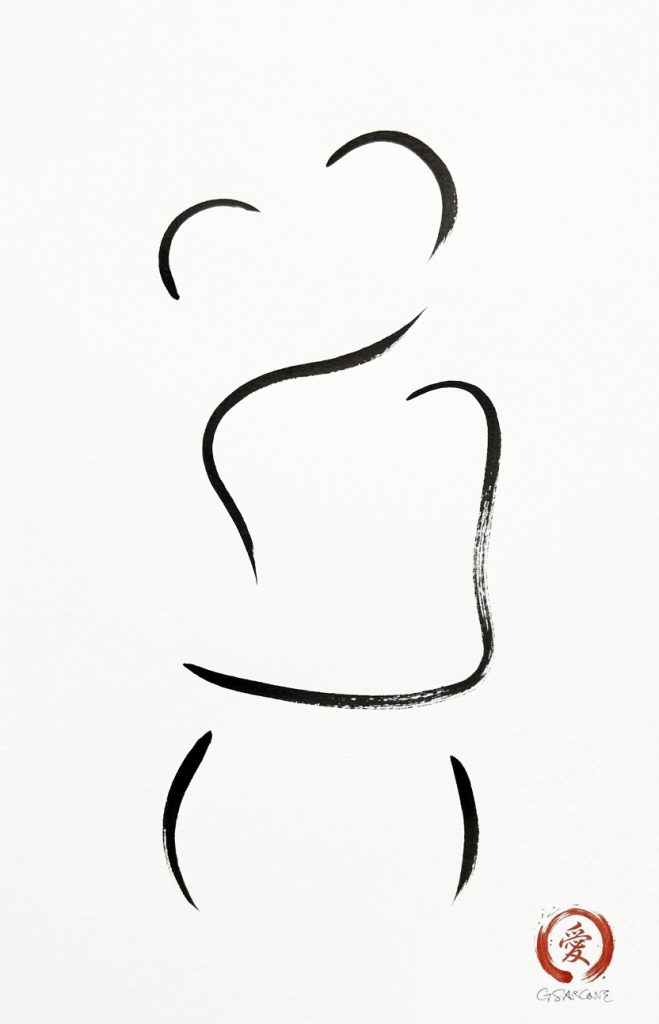
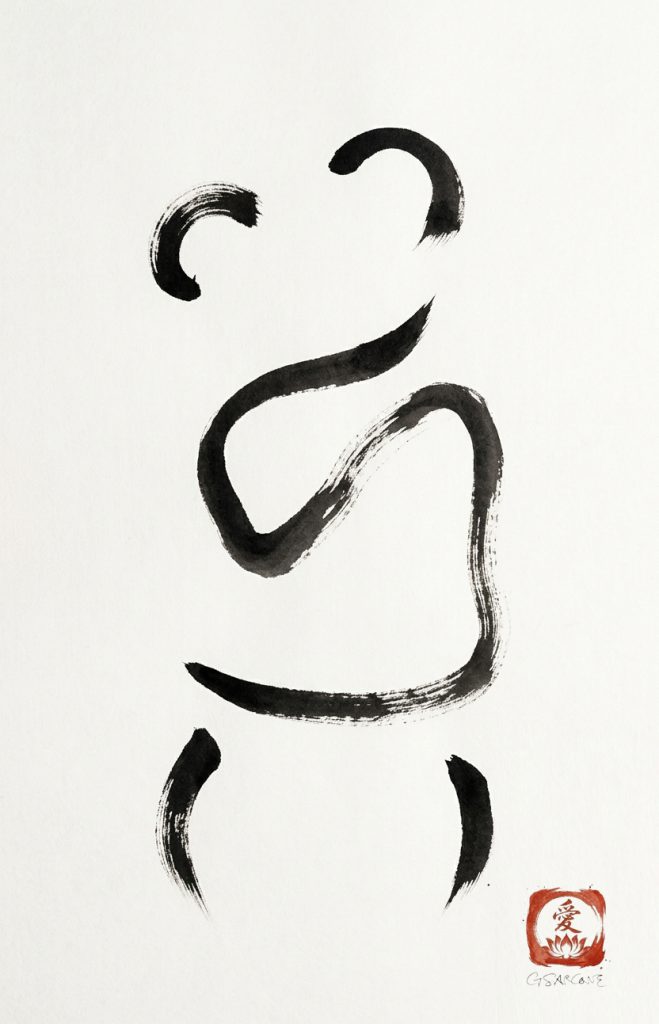
☞ For further exploration, visit my Subliminal Faces gallery.
A Zen-inspired sumi-e unicursal brushstroke that gently evokes the silhouette of a sleeping cat.
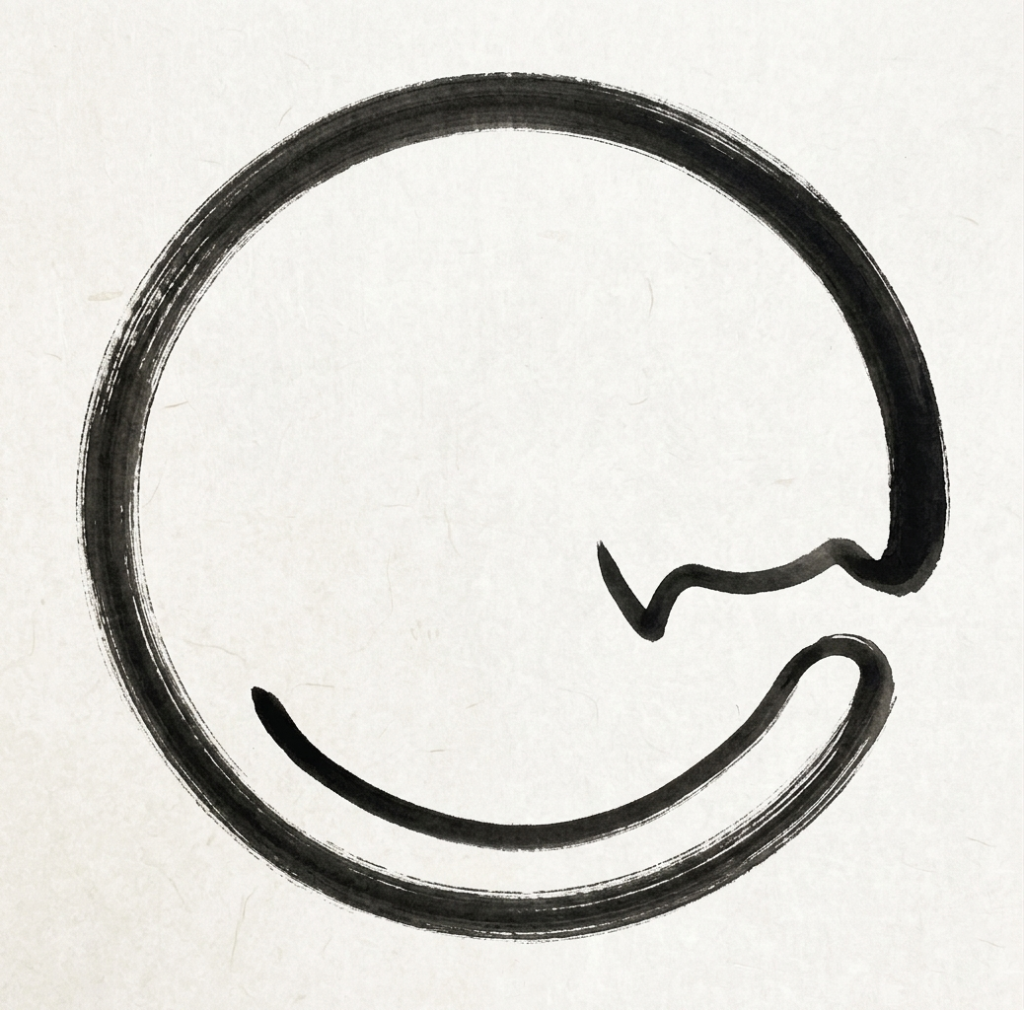
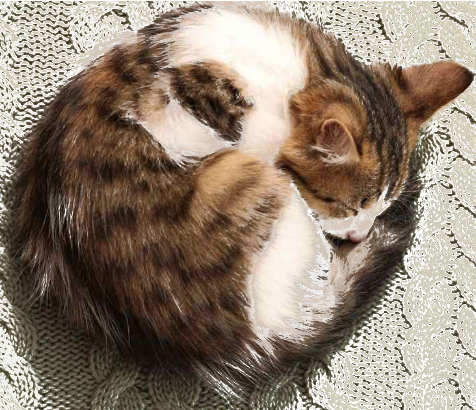
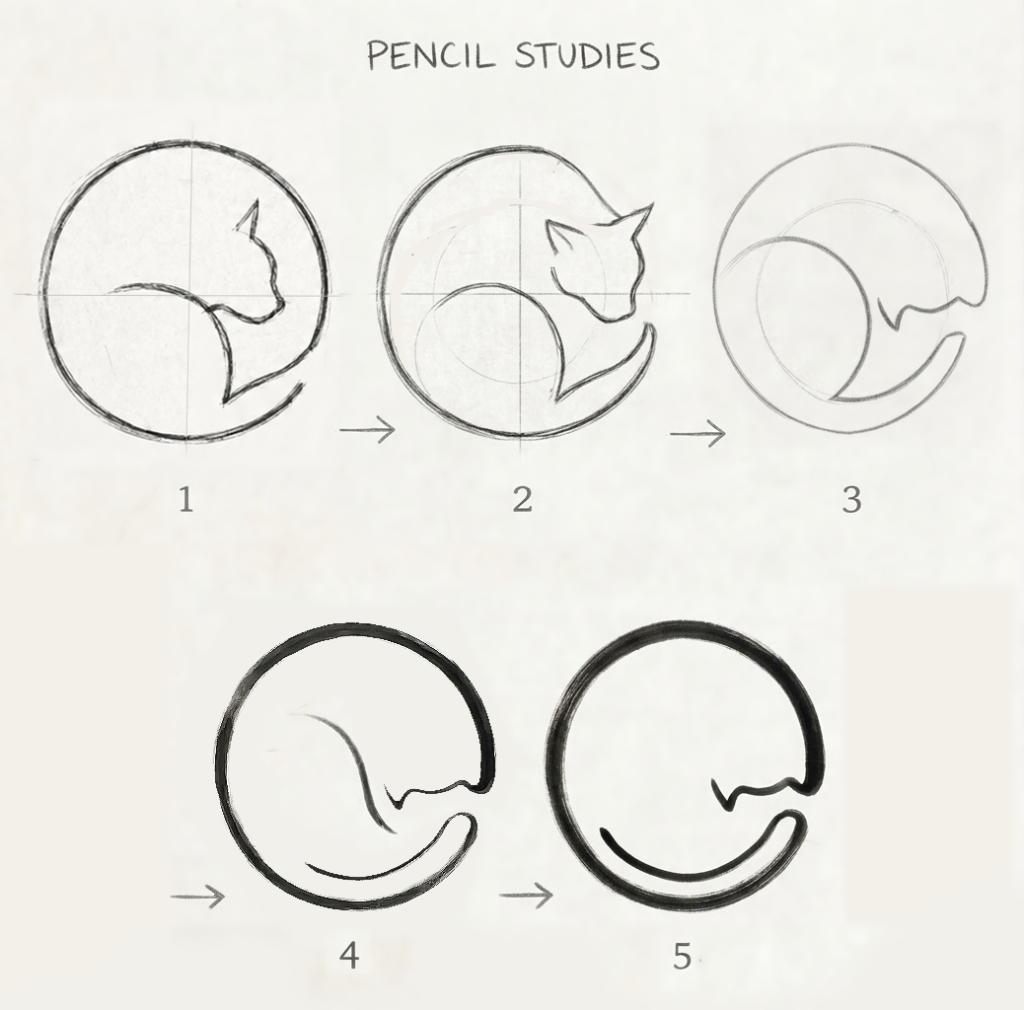
A single brushstroke, almost nothing… and yet the mind completes the rest.
This Zen-inspired sumi-e line suggests the presence of a sleeping cat, as the brain instinctively searches for form, balance, memory, and meaning within this minimal stroke. A curve becomes a back, a pause becomes a head, and empty space turns into stillness—peace, quietude itself. Strangely, this allegorical curve echoes the Japanese symbol ensō (円相; “circular form”), often drawn in calligraphy as a gesture that holds completeness and imperfection in the same breath.
Minimal drawing works because perception is never passive. We do not simply “see” the world; we continuously reconstruct it from fragments. A few essential marks are enough for the imagination to awaken and project life into absence. The unfinished image invites the viewer to participate in its creation.
This is one of the quiet powers of strict minimalism: removing detail does not always diminish reality — sometimes it amplifies it. In sumi-e, what is omitted matters as much as what is painted. The void is not empty; it breathes. Perhaps that is why a simple unicursal stroke can feel strangely alive.
Art begins precisely there: at the threshold where perception, imagination, and silence meet.
A guy walks into a bar and asks for a coffee without cream. The bartender replies, “Sorry, we’re out of cream—how about a coffee without milk instead?”
It’s a simple joke, but it highlights something curious: absence has weight. Psychologically, a coffee without cream doesn’t feel quite the same as a coffee without milk.
Now, let’s take it a step further. Is the absence of a loved one the same as the absence of a random stranger? Of course not. Absence isn’t just a void—it carries the shape of what’s missing.
The ancient Greeks had a word for this: steresis (στερήσις), the idea that everything is defined by both what is present and what is absent. Zen philosophy explores a similar concept with mu (無), suggesting that sometimes, absence is a kind of presence in itself.
So next time you order a coffee without cream, pause for a second—what is it you really don’t want to be in there?

The circle, a timeless symbol of wholeness, is found at the core of human thought. In the West, it evokes the Pythagorean harmony of the cosmos, the eternal return of Nietzsche, the indivisible unity of Being. A form without beginning or end, it embodies the perfect balance between presence and absence, the finite and the infinite.
In Eastern traditions, the ensō (円相)—literally “circular form”—is a distilled gesture of perception, a visual echo of clarity. Not merely a shape, but an experience, it is drawn in a single stroke, capturing the ephemeral moment where thought and movement dissolve into pure expression. It is said that the earliest Zen painting was an ensō, traced to offer a student something tangible yet elusive, a paradox to ponder.
A circle can be brushed on paper, traced in sand, drawn on a misted window, or merely imagined. It lacks nothing, needs nothing, yet contains all things. In its quiet completeness, it is not an answer, but an opening—an invitation to see beyond the limits of form.

The Buddhist parable of the man hanging from a cliff and the Christian legend of “Barlaam and Josaphat” both explore human vulnerability, the impermanence of life, and fleeting pleasures. Despite different contexts, they share profound philosophical insights.
The Buddhist Parable
A man chased by tigers falls off a cliff, clinging to a fragile root. Facing death above and below, he notices a ripe strawberry. Ignoring danger, he tastes it, savoring the present moment. The strawberry symbolizes mindfulness and the beauty of the present despite life’s dangers.
The Christian Legend
In the medieval Christian story, a man chased by a unicorn falls into a pit, holding onto a branch. A dragon waits below, while two mice—one black, one white, symbolizing night and day—gnaw at the root. Drawn by the sweetness of honey dripping nearby, he forgets the danger beneath. The honey represents worldly pleasures that distract from spiritual awareness.


Key Similarities
– Life’s Fragility: Both stories depict imminent danger, emphasizing life’s precariousness and impermanence.
– Fleeting Pleasures: The strawberry and honey symbolize temporary sensory pleasures.
– Impermanence: The mice in the Christian tale echo the passing of time, a theme also present in the Buddhist view.
Key Differences
– Buddhist Perspective: Focuses on mindfulness and present awareness.
– Christian Perspective: Warns against worldly distractions from spiritual truth.
Both parables emphasize life’s fragility and the tension between danger and fleeting pleasures. They offer timeless reflections on mindfulness and the importance of spiritual awareness.
But how is art connected to these stories? Both explore how perception shapes our experience of life. What we focus on—whether a ripe berry, a drop of honey, or a striking pattern—can define our reality, revealing beauty or reflecting deeper truths.
These parables also show the importance of context. In the East, strawberries symbolize sweetness, while in the West—especially during medieval times—it was honey. The sources of fear also differ: in the East, tigers have long been feared, and this legacy endures today. In the West, storytellers created mythical creatures to inspire fear, since real animals like bears and wolves, though dangerous, typically keep their distance from humans, making them seem less threatening than imagined monsters.
In this naturalistic painting, there is no human being. And yet… Even when a painting appears to be empty of human presence, there is the inescapable human presence of the one who painted it.
Your gaze on the painting merges with the artist’s gaze. You see, through the emotions and the eyes of the one who spent hours studying this landscape. Art is a gift, it’s a “present”—the word is well chosen.
The artist becomes disembodied, transcending the physical, to offer you a front-row seat on the stage of his creation, where you’re invited to immerse yourself in his illusory representation of the world.

Explore a fascinating figure/ground effect in this op art piece, where 4 black illusive bangles appear to overlap with 4 white ones. The rotating patterns create a calming and hypnotic visual experience.
This design is now available as t-shirts and posters in my online gallery.
If you’re interested in creating your own op art, I also have a tutorial available on Behance.
I hope you enjoy this design, and I’d love to hear your thoughts on it!
We are all equal, but not in the way we usually think. Imagine that we are made up of Legos, with each Lego representing a distinct experience, cultural background, or genetic component. Our entirety forms a colorful construction that reveals how we share certain Legos—in varying degrees—with others, shaping who we are. Indeed, we are “non-uniform units“, and it is in this mosaic that we find our equality.

Presenting a sneak peek of my upcoming philosophical book on perception.
In this exploration, I dissect the dynamic interplay between our “self,” the elusive “perception sphere,” and the external world. Operating independently, the perception sphere lacks self-awareness, creating a symbiotic relationship with the self, which, in turn, relies on the sphere for perceiving both itself and the external world.

Eager to discuss further with potential publishers.