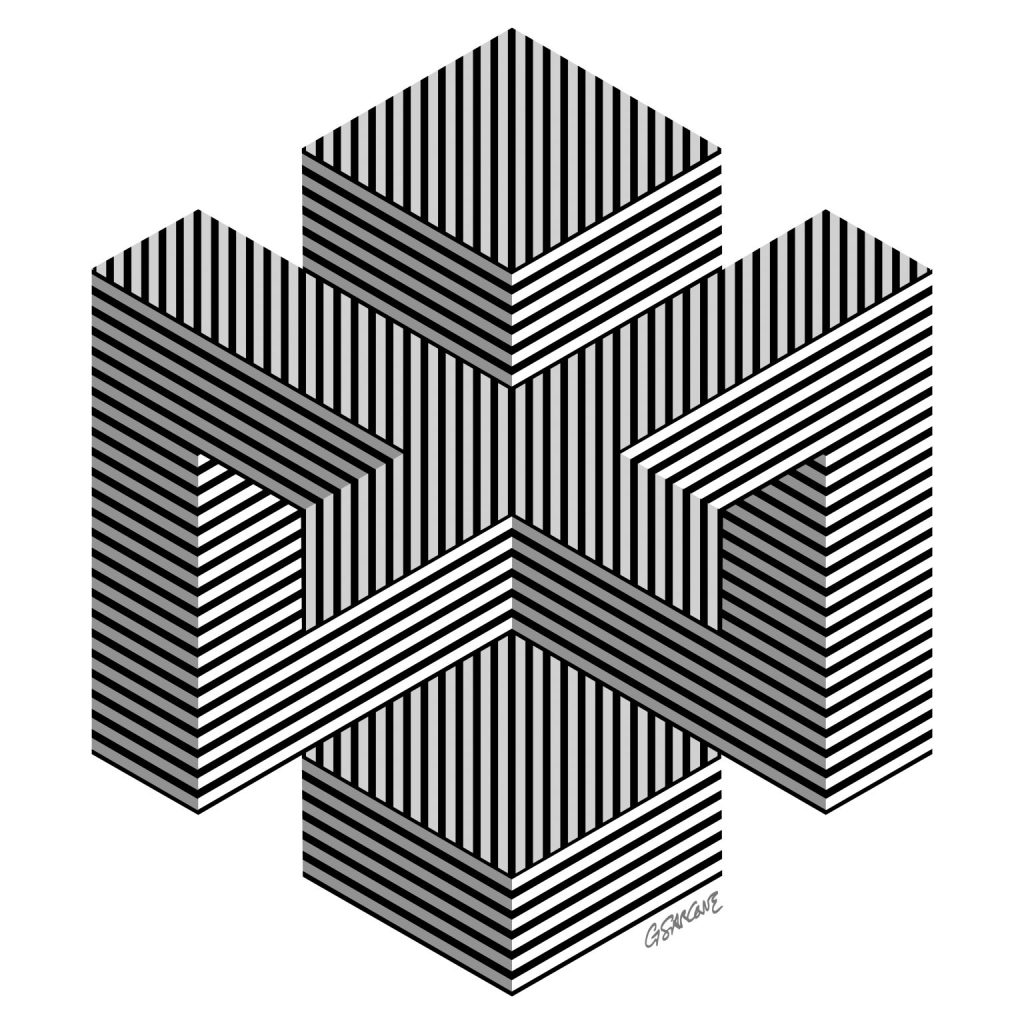
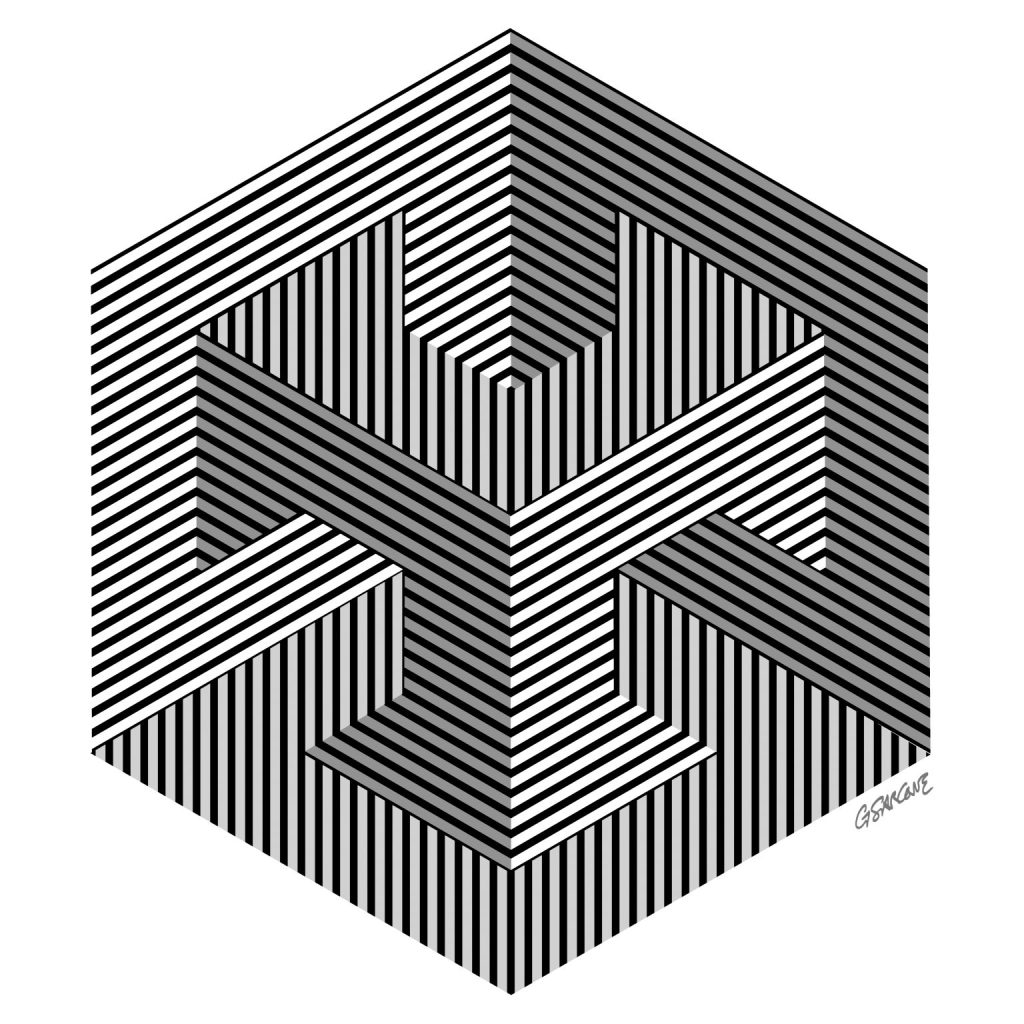
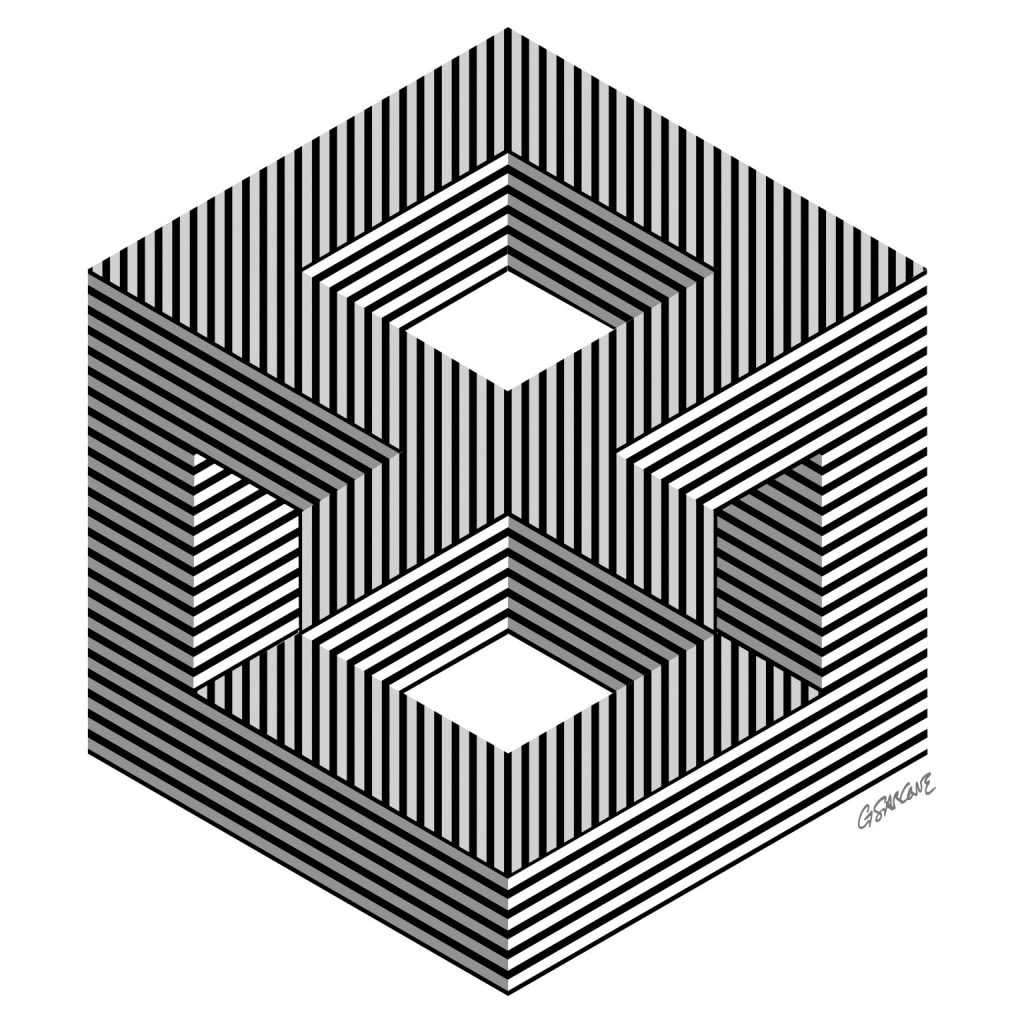
Here’s my first ambigram of the year: 32 = 99 – 1 – 66. The equality holds even when you flip the image below upside down! The next step is to do the same with the number 23 — any ideas?

⇨ More number facts.
Here’s my first ambigram of the year: 32 = 99 – 1 – 66. The equality holds even when you flip the image below upside down! The next step is to do the same with the number 23 — any ideas?

⇨ More number facts.
The Buddhist parable of the man hanging from a cliff and the Christian legend of “Barlaam and Josaphat” both explore human vulnerability, the impermanence of life, and fleeting pleasures. Despite different contexts, they share profound philosophical insights.
The Buddhist Parable
A man chased by tigers falls off a cliff, clinging to a fragile root. Facing death above and below, he notices a ripe strawberry. Ignoring danger, he tastes it, savoring the present moment. The strawberry symbolizes mindfulness and the beauty of the present despite life’s dangers.
The Christian Legend
In the medieval Christian story, a man chased by a unicorn falls into a pit, holding onto a branch. A dragon waits below, while two mice—one black, one white, symbolizing night and day—gnaw at the root. Drawn by the sweetness of honey dripping nearby, he forgets the danger beneath. The honey represents worldly pleasures that distract from spiritual awareness.


Key Similarities
– Life’s Fragility: Both stories depict imminent danger, emphasizing life’s precariousness and impermanence.
– Fleeting Pleasures: The strawberry and honey symbolize temporary sensory pleasures.
– Impermanence: The mice in the Christian tale echo the passing of time, a theme also present in the Buddhist view.
Key Differences
– Buddhist Perspective: Focuses on mindfulness and present awareness.
– Christian Perspective: Warns against worldly distractions from spiritual truth.
Both parables emphasize life’s fragility and the tension between danger and fleeting pleasures. They offer timeless reflections on mindfulness and the importance of spiritual awareness.
But how is art connected to these stories? Both explore how perception shapes our experience of life. What we focus on—whether a ripe berry, a drop of honey, or a striking pattern—can define our reality, revealing beauty or reflecting deeper truths.
These parables also show the importance of context. In the East, strawberries symbolize sweetness, while in the West—especially during medieval times—it was honey. The sources of fear also differ: in the East, tigers have long been feared, and this legacy endures today. In the West, storytellers created mythical creatures to inspire fear, since real animals like bears and wolves, though dangerous, typically keep their distance from humans, making them seem less threatening than imagined monsters.
Beauty’s been a big deal since ancient Greece, where καλὸς κἀγαθός meant more than just a pretty face. It was the ultimate combo: good looks, brains, and virtue. For the Greeks, this wasn’t just a nice idea—it was how they judged your worth.
Fast forward to now, and beauty is still treated as a golden ticket. If you’re not exactly a head-turner but you’ve made it, chances are you’re pretty smart… Sure, beauty often gets written off as superficial, but Aristotle wasn’t wrong when he said, “Beauty speaks louder than any introduction.” Let’s be honest: good looks are a serious social advantage. People treat you better, offer more opportunities, and generally give you a leg up—whether you’re in school, at work, or even in court. Plus, fairy tales and society are pretty obsessed with tying beauty to success. Studies show that attractive people even get a better deal in the justice system.

But here’s the twist: if a guy who’s no Greek god succeeds, people assume he’s smart. If it’s a woman, they’ll say she’s got “character.” Funny how that works, right?
Luckily, looks fade, and that’s when real beauty shows up in unexpected ways. As Shakespeare said in A Midsummer Night’s Dream: “Love looks not with the eyes, but with the mind.”
Beauty’s a gift you didn’t have to work for. Intelligence, though? That’s earned, much like how a pearl forms in an oyster in response to a parasitic intruder. Life’s challenges are what shape and refine your smarts, one obstacle at a time.
So, sure, beauty’s nice—but it can also be a bit of a double-edged sword. What really counts—whether you’re a looker or not—is CHARISMA. It’s not something you’re born with, but something you build over time. Only the truly determined, the ones who know what they want, actually get it.
Mystic Flying Bat is a mixed-media artwork I created back in 2010. It was the starting point for a series of pieces in a similar style, some of which I screen-printed using different color palettes. With this work, I wanted to invite viewers to think about an intriguing question: What is movement?
What makes this kinoptic artwork special is the way it creates the illusion of motion. As you look at it, the black bat seems to flutter, expand, or shift. But here’s the fascinating part—if you stare at it long enough and then close your eyes, a white bat will appear in your mind!
Kinoptic designs, like this one, play with our perception, making still images feel alive. It’s all about the clever use of contrasting colors and the precise arrangement of shapes.
Curious about how to create something like this yourself? I’ve put together a tutorial you can check out.
If you’d like to own a print or canvas of Mystic Flying Bat, you can find them here.
The compound eye is nothing like the human eye, but we often misunderstand how insects see the world. In horror movies, their vision is depicted as a chaotic kaleidoscope. In reality, it’s much more refined—like viewing the world through a crystal-clear glass paperweight.
What’s even more fascinating? Some insects have vibrant color patterns on their compound eyes that serve a purpose! These patterns act as filters, enhancing contrast to help them spot objects against colorful backgrounds or shielding their eyes from certain wavelengths of light.
Take the Deer Fly and Horse Fly, for example—both flaunt these functional designs. But the Green Lacewing (Chrysopidae) takes the crown for the wildest look. Its compound eyes create a diffraction pattern resembling a sheriff’s star, formed by the countless six-sided “ommatidia” that make up its eye structure.


The Wonders of Compound Eyes
Insect compound eyes are made up of thousands of tiny units called ‘ommatidia’, each acting like a mini-eye. This gives insects a near-panoramic view, perfect for spotting motion and environmental changes. Dragonflies, for example, have around 30,000 ommatidia per eye, making them masters of motion detection.
While human eyes, with their single lens and dense photoreceptors, excel at detail and depth, they lack the wide-field motion awareness of compound eyes. Insects also outshine us in speed, detecting rapid movements crucial for survival.
Many insects see ultraviolet light—something humans can’t. This unique vision aids in finding food, communication, and mating. Compound eyes are a brilliant mix of structure and function!
Take a moment to focus on the circular pattern. How many spirals do you see? The surprising answer is none. There are no spirals here—just alternating black and yellow discs, slightly off-center and layered to create a striking illusion of swirling depth and motion.


I began crafting pieces like this in the early ’90s, drawing inspiration from Duchamp’s Rotoreliefs. I was captivated by how simple rotation could deceive the eye, inviting the viewer into a world of optical illusions. It’s a unique experience—seeing motion and depth in something entirely flat, both puzzling and mesmerizing.
This op art pattern comes to life across various mediums and transforms into artistic expressions on different objects. In my online gallery, you’ll find art prints and everyday items featuring this work, all available for purchase.


Let your gaze wander across the image below. Do the shapes in the first and third rows seem to subtly shift leftward, while the second and fourth rows appear to glide rightward?
Now, let your gaze wander across the image below. Do the concentric circles appear to subtly counter-rotate?
Why do these static images appear to move? This perceptual phenomenon, known as “anomalous motion” or “peripheral drift illusion”, results from the interplay of color contrast, luminance, and eye movements. It occurs due to a sawtooth luminance grating in the visual periphery, where a sequence of contrasting colors transitions from light to dark. The speed of the perceived motion is influenced by the frequency of microsaccadic eye movements.
In the 1990s, I began creating many of these fascinating images, experimenting with patterns and contrasts to bring this mesmerizing effect to life.


Fine art prints and merchandise of these mesmerizing pieces are available in my online gallery—a perfect addition to any space!
Caroline Rivière, a French girl immortalized in Jean-Auguste-Dominique Ingres’ 1806 masterpiece “Portrait of Caroline Rivière”, remains a striking figure in art history. This iconic painting frequently graces book covers, thanks to its timeless and deeply evocative qualities. Caroline is depicted as a delicate young woman in a serene, contemplative pose, her gaze imbued with an air of mystery and quiet melancholy. Tragically, she passed away at just 15 years old, shortly after Ingres completed the portrait.


This poignant backstory heightens the emotional resonance of her image, symbolizing the fragility of youth and the transient nature of beauty. It’s this haunting combination of innocence and impermanence that makes the portrait so appealing to publishers and audiences alike. Whether adorning the covers of literary classics, historical novels, or introspective works, Caroline Rivière’s likeness evokes themes of nostalgia, identity, and human vulnerability, bridging the gap between art and storytelling. Her enduring presence on bookshelves speaks to the universal, timeless appeal of Ingres’ artistry.
Even Lady Gaga was moved by this iconic painting, as she posed for filmmaker Robert Wilson, who created a strikingly similar piece—a close video replica of Ingres’ portrait, reinterpreted in his own unique style, incorporating subtle movements and nuanced expressions that added a dynamic dimension to its timeless stillness.

After the world lost its mind over a duct-taped banana selling for over $6 million, I present to you: the duct-taped Italian sausage. Stylishly Italian, delightfully produit du terroir, and—let’s be honest—way more practical. I’m aiming for at least $66 million at auction because, unlike a banana that turns into compost in a week, a fermented sausage can outlive your art collection.

Sure, the banana sparked debates and grabbed international headlines since its debut at Art Basel Miami Beach in 2019. And hey, I’m all for a good debate—it keeps things interesting. But let’s be real: the world is full of rich fools willing to throw stupid money at stupid things just because everyone’s talking about them. So, here’s hoping my sausage can inspire the same level of ridiculous hype. Fingers crossed!
The lowercase ‘g’ is one of the most distinctive letters in the Latin alphabet, showcasing a variety of shapes across different styles.
The Latin alphabet, created around 753 BC, originated from the Etruscan alphabet, itself derived from Greek. Its earliest known inscription is on the ‘Praeneste Fibula’, a 7th-century BC cloak pin, reading “Manios med fhefhaked numasioi” (Classical Latin: “Manius me fecit Numerio” or “Manius made me for Numerius”).
Since Etruscan lacked the voiced plosive G, the letter G was introduced around 230 BC by Spurius Carvilius Ruga as a modified version of C.


As the Roman Empire expanded, the Latin alphabet spread throughout Europe, leading to its adoption in many languages. Today, it serves as the foundation for numerous writing systems worldwide, illustrating its lasting impact on global communication.