
My surname Sarcone, attested as early as circa 1150, may reflect a phytotoponym derived from the Latin salix, salĭcis, “willow,” with the collective or augmentative suffix -ōne. A possible evolution is salicōne → salicone → sar(i)cone, through the phonetic changes that shaped the name over time.
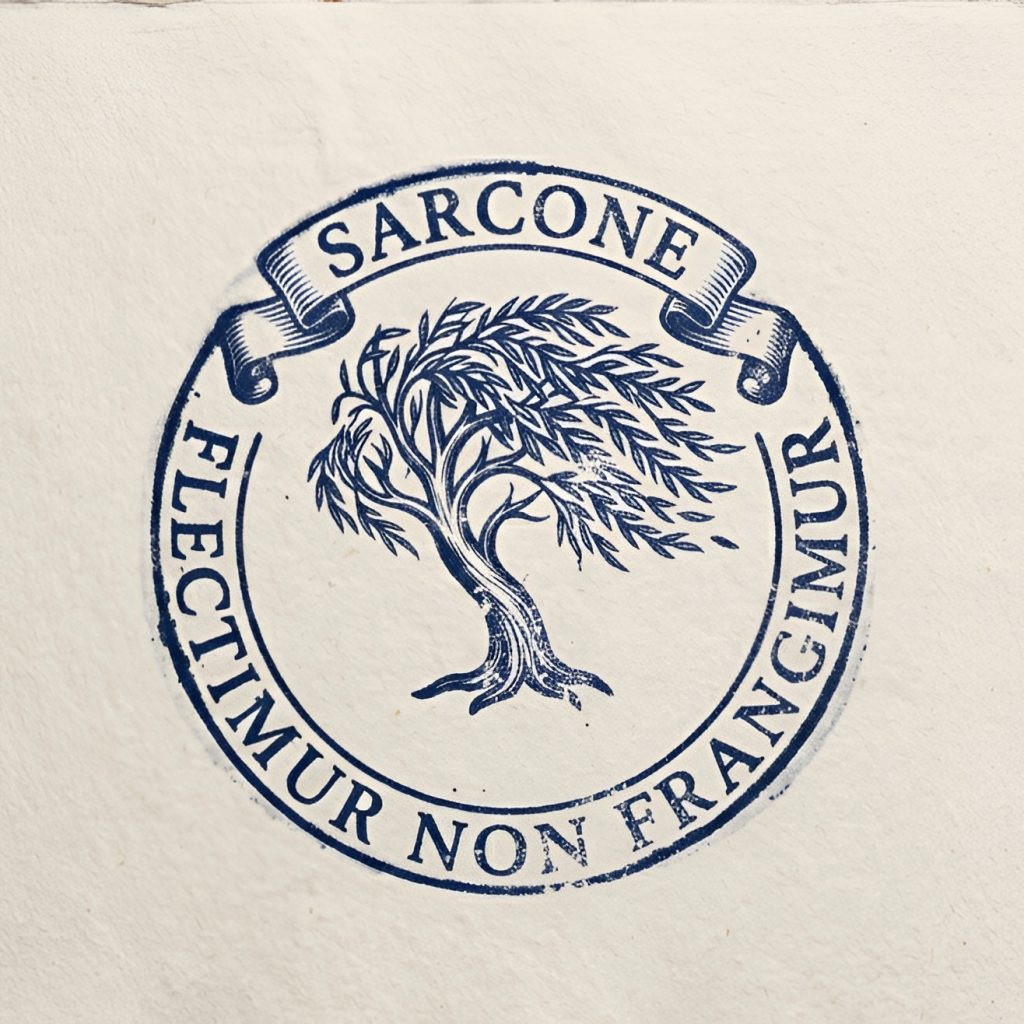
I like to think that my name is connected to nature, and especially to this magnificent tree: the willow. The willow has always fascinated me for its resilience, flexibility, and capacity for renewal. It bends without breaking, withstands the wind, and grows back vigorously after being cut. Its strength comes from its flexibility.
That symbolism speaks to me. Life constantly changes, and resisting every change is not necessarily a sign of strength. Sometimes you have to bend, adapt, and keep going without losing your roots.
The willow is also traditionally associated with the cycles of the Moon, imagination, dreams, intuition, and flexibility of mind. I find these associations particularly fitting, since much of my work concerns perception, imagination, and the strange ways in which the mind constructs what we call reality.
My name also has an ancient Indo-European root. Salix is related to the Indo-European root *səlik, with cognates such as Greek helíkē and related forms in Celtic and Germanic languages.
I like the idea that a surname can carry such a long memory. A few letters inherited from the past can still evoke a tree, its roots, its branches, its movement in the wind—and, in some small way, the person who carries its name.
Sarcone: the willow. Rooted, flexible, resilient, and always capable of growing again.

