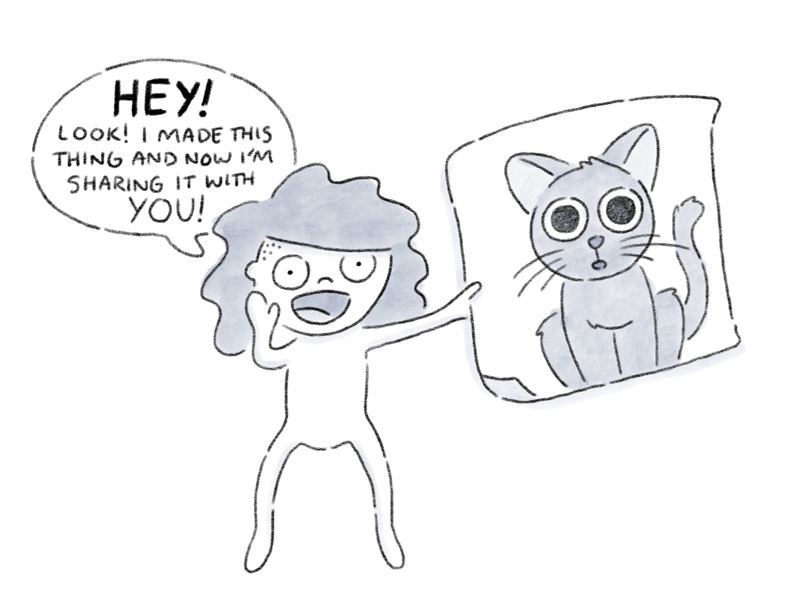
Art is sharing—an offering from the artist to the audience. Every audience calls for its own officiant.
In technological terms, a work of art is an output searching for an input. Without that exchange, it remains only a possibility. It comes into existence through its encounter with another mind, where it can generate emotion, doubt, rejection, or wonder. A work is born once in the artist’s mind, and then again in the mind of the person who experiences it.
The artist is a translator between an inner vision and the outside world. They offer a fragment of themselves, without ever being able to control how that offering will be interpreted. Every audience recognizes the artists who resonate with its own sensibility, its questions, and its time. Every audience calls for its own officiant.
But does an art exist that cannot be shared?
If we define art not as the final object—the painting, the book, the symphony—but as the state of consciousness and the act of creation itself, then that art is fundamentally impossible to communicate. The finished work is only a trace, the imprint of an inner experience that no one else can truly access. What the audience receives is never the act of creation itself, but its remainder: its echo, its shadow, and sometimes even its misunderstanding.