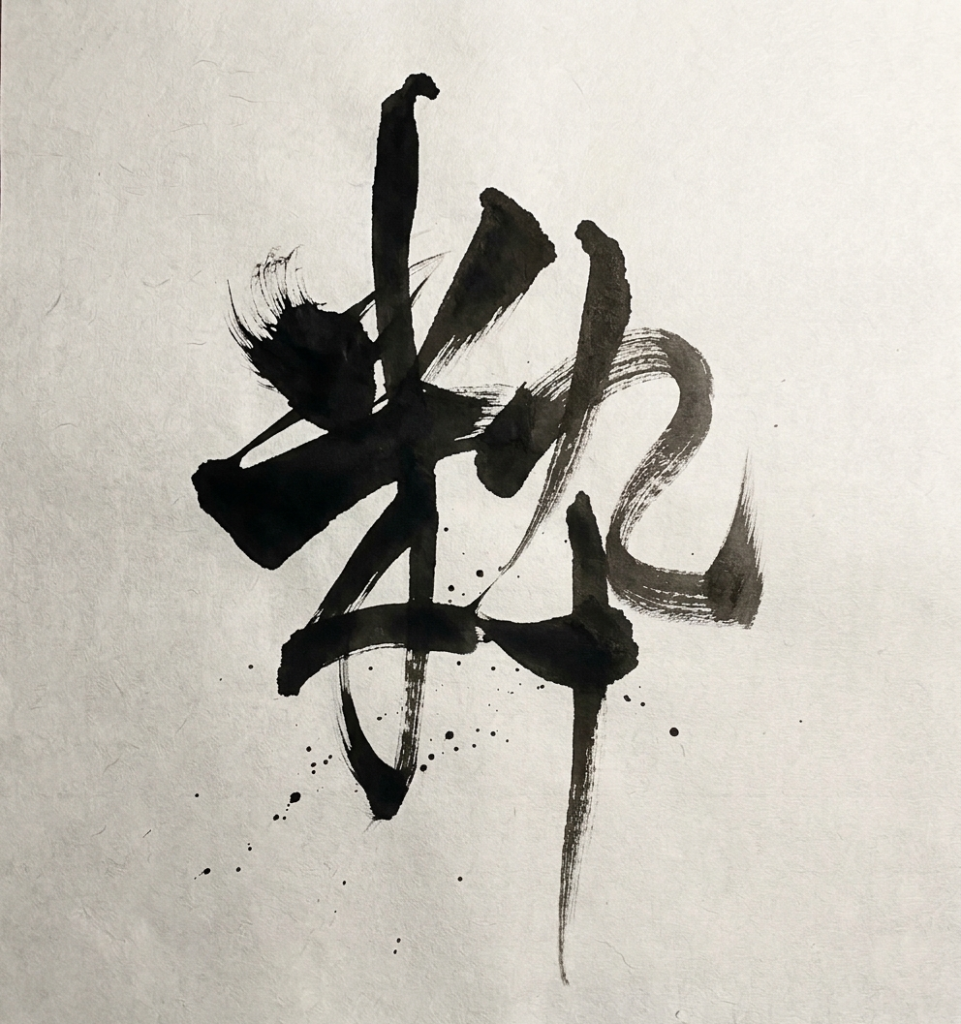
I am iki from birth.
But what is iki (粋)?
Edo, under the Tokugawa shogunate. Merchants wealthy enough to unsettle the hierarchy, yet still ranked below the samurai. Power without status—watched closely, dressed carefully.
Sumptuary laws did the rest: no gold, no loud silk, no bright declarations. Only browns, greys, indigo. A forced muting of visibility.
Constraint rarely suppresses imagination. It concentrates it.
From this narrow register emerged a refined spectrum known as Shijuhattcha Hyakunezumi (四十八茶百鼠)—“48 browns, 100 greys.” Not literal numbers, but a cultural way of naming excess within restraint: an almost infinite sensitivity to difference inside what first appears uniform.
Fashion became a coded language. Subtle shifts in tone, legible only to trained eyes. Outside, discipline. Inside, excess held in reserve. A lining of rare fabric. A color hidden against the skin. A private flash revealed only when a sleeve turns in the wind.
This is iki: elegance that refuses emphasis. Presence without display. A form of refinement that collapses the moment it is named.
Its opposite is yabo (野暮): excess, insistence, the compulsion to be seen. Not morality—measure. Or the lack of it.
Today, the direction has inverted. Visibility has become currency. Those who do not perform disappear; those who do not declare are not counted. What was once failure has become strategy.
And yet the counter-move remains simple.
Lower the volume. Leave gaps. Let meaning breathe in what is not shown.
And become something worth looking at twice.