Visual symbols shaped human communication long before written language, conveying ideas, values, and aspirations. As communication evolved, images became a universal language, capable of expressing complex ideas and deep emotions beyond the reach of words. A picture is worth a thousand words—but some images reveal more about humanity than we care to admit. Iconic photographs bear witness to history, yet witnessing is not the same as learning from it. Generation after generation, we keep repeating what they warned us against.
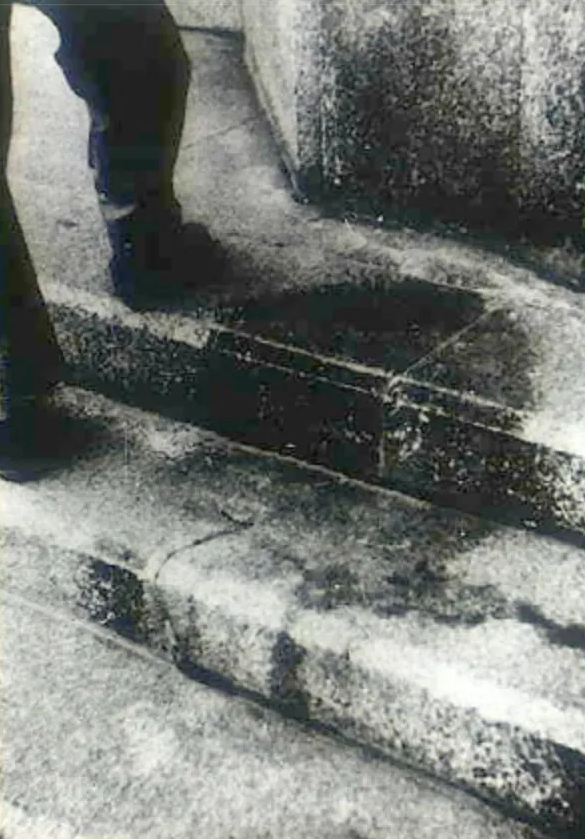
Now look at this photograph. That shadow on the steps seems harmless enough, doesn’t it? But what does it really tell us?
Known as the Human Shadow of Hiroshima (人影の石), it was left on the steps of the Sumitomo Bank, about 250 meters from the hypocenter of the atomic bombing on August 6, 1945. The person sitting there acted as a shield, protecting the stone beneath their body from the intense heat and light that bleached the surrounding surface, leaving a permanent silhouette.
That shadow tells a story: the trace of a human life swallowed by history. According to the Hiroshima Peace Memorial Museum, where the stone is displayed, the person was reportedly identified as Mitsuno Ochi, born in 1903. Her descendants are still alive today.
A shadow is all that remains. History leaves its marks on stone; humanity writes its own story in sand. What, then, does it mean to leave a mark on the world when human life itself is so fragile?