Klein quartic has 24 symmetries forming a group isomorphic to the rotation/reflection symmetry group of a tetrahedron. Algebraically speaking, this group is S4: the permutations of 4 things.

Klein quartic has 24 symmetries forming a group isomorphic to the rotation/reflection symmetry group of a tetrahedron. Algebraically speaking, this group is S4: the permutations of 4 things.

1 in 12 people have some sort of color blindness that makes them unable to distinguish certain colors or shades of colors from others. Color blindness is, however, an inaccurate term to describe a lack of perceptual sensitivity to certain colors; a more precise term is: Color Vision Deficiency (CVD). Color blindness is the most commonly used term though it is misleading if taken literally, because colorblind people CAN see colors, albeit they cannot make out the difference between some couples of complementary colors. Color vision deficiency is not related to visual acuity at all and is most commonly due to an inherited condition. Red/Green color vision deficiency is by far the most common form, about 99%, and causes problems in distinguishing reds and greens. There is no treatment for color vision deficiency, nor is it usually the cause of any significant disability.
The most commonly used test to detect color vision deficiencies is the Ishihara Color Test.
Color vision deficient people have a tendency to better night vision and, in some situations, they can perceive variations in luminosity that color-sighted people could not. In fact, most color blind people can easily read what is written in the dotted pattern below… If you fail the test, that means you probably have the full range of color sensitivity that is attributed to color-sighted people.
[Highlight the blank space to see the answer: NO]

In my book “Hidden Picture Puzzles“, I treat of hidden things in plain sight.
“Steganography” is the art and science of hiding a secret message within a larger one, in such a way that no one suspects its presence. The old Swiss banknotes offer some interesting examples of steganography. In the picture below you can see the back of a Swiss ten-franc bill. The small part surrounded by the blue square contains a microtext, if we strongly enlarge it we may read a short bio of the Swiss architect Le Corbusier both in German and in Romansch:
Le Corbusier hat als Architekt Urbanist maler und Theoretiker Bahnbrechende und Visionäre Anwendungen für den Wohn- und Städtebau verwirklicht…
The human being is a sponge who absorbs the changes of the physical world surrounding him. Actually, if the physical world had been unchanging, we wouldn’t need to receive sensations on the world that surrounds us since all would be static and everything would definitely have its final place!
Our sense organs continuously check, then, the changes of our immediate environment to allow us to act and react in keeping with it. If we see a wall in front of us, for example, we won’t charge into it, of course, but try to avoid it! Our senses however detect only a part of the reality – the most useful for us – and translate it in an ‘analogical’ way. Yes, our senses work analogically… For instance, it’s difficult to consider a single color in a distinct way, but always in relation to others. The same red color will be perceived differently according to the content or the context where it lies within.
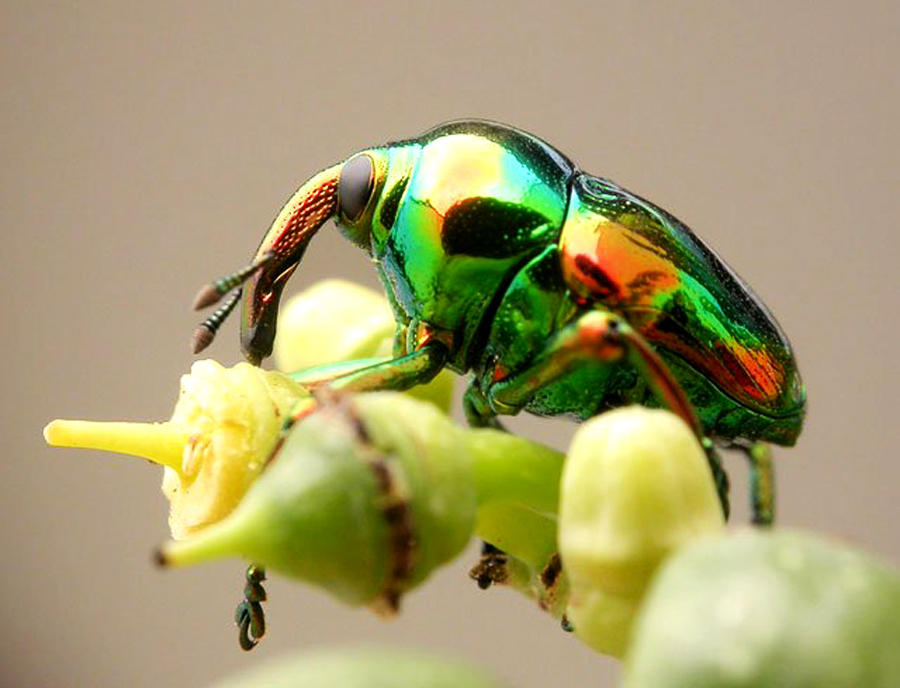
Every living being has a ‘repertoire’ of sense organs which is peculiar to him, with a particular predilection for one or two sense organs: the human being favors sight; the dog, smell; for bats, it’s hearing… Concerning the color’s perception, animals do not all see in the same way because they aren’t perceptive to the same part of the luminous spectrum. Here are two extreme cases: insects, for example, see the ultraviolet rays, while on the other hand, some snakes can perceive infrared rays.
It happens sometimes to read on a snack the following notice: “with chocolate taste”, written in uppercase. This statement tricks our mind! In fact, the vast majority of us think that such a snack MUST contain chocolate, no one thought however that a flavor is not a substance and most probably the snack we bit into contains only an ‘illusion’ of chocolate.
The same occurs with colors, our brain is easily tricked by them. Colors are just like ‘flavors’, they may smell, pardon… look like a specific color, but they are just an illusory subjective sensation, not an ‘external’ reality. Colors undoubtedly change depending on their surrounding or the context in which they are viewed. More mind-blowing still is the fact that colors that are identical may appear to be different under certain conditions, and colors that are different may look the same. Such a curious effect is called “color induction”. Continue Reading