
“The Lawyer and the Client” (1790), an etching by John Kay, is a clever visual joke—and a rather pointed one about the legal profession.
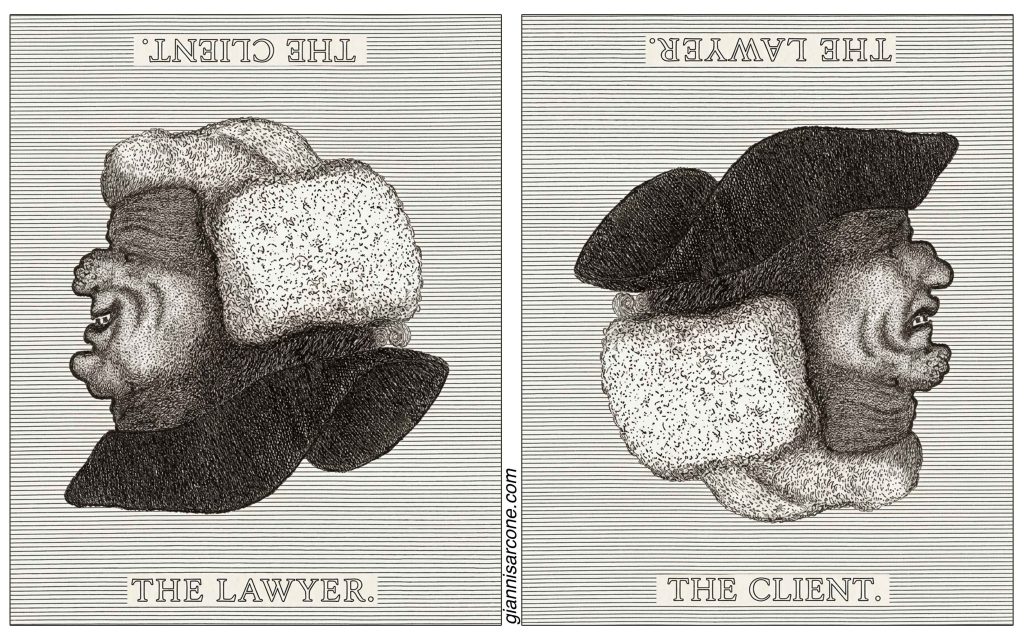
Look at it one way and you see a smug lawyer. Turn it upside down and the same face becomes a worried client. A simple rotation changes the character completely, showing how appearances—and perhaps even justice—can depend on the point of view.
Below, another of Kay’s reversible caricatures: “Before and After Marriage.”
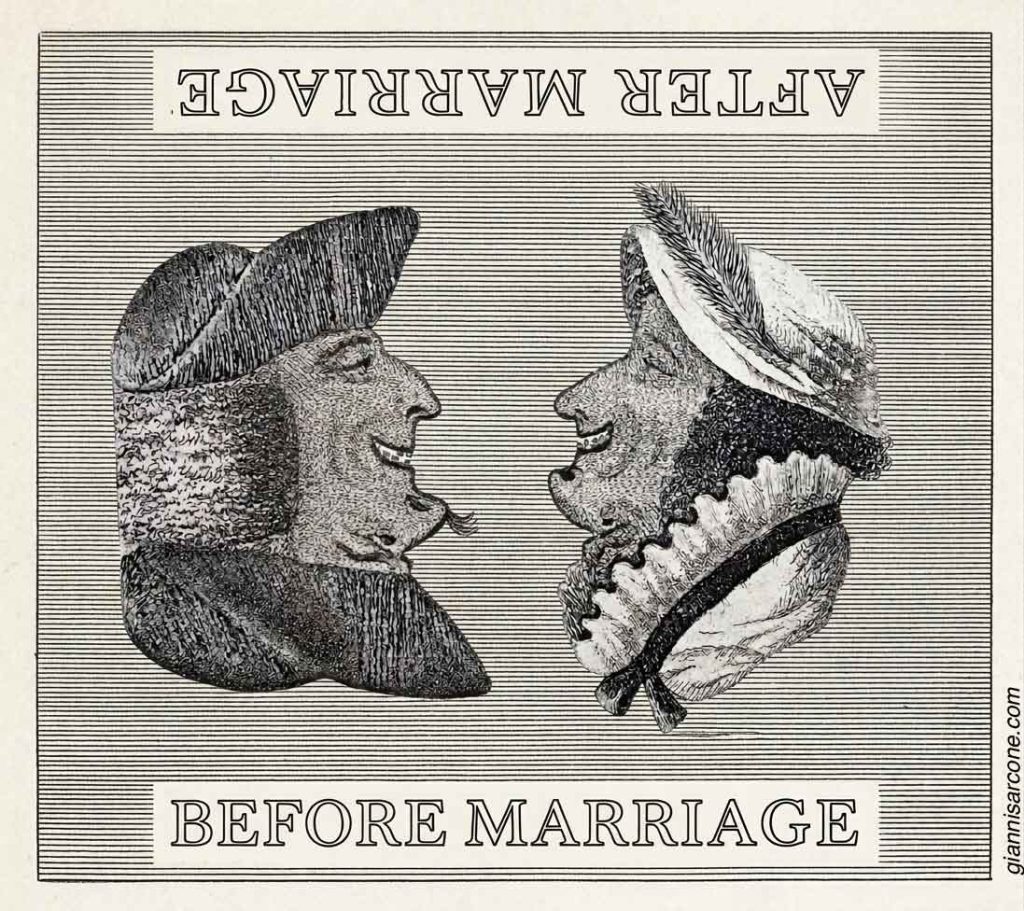
John Kay (1742–1826) was a Scottish caricaturist and etcher known for his satirical portraits of Edinburgh society. Topsy-turvy caricatures were popular in the 18th and 19th centuries because they combined visual wit with social criticism, hiding two meanings in a single image.
