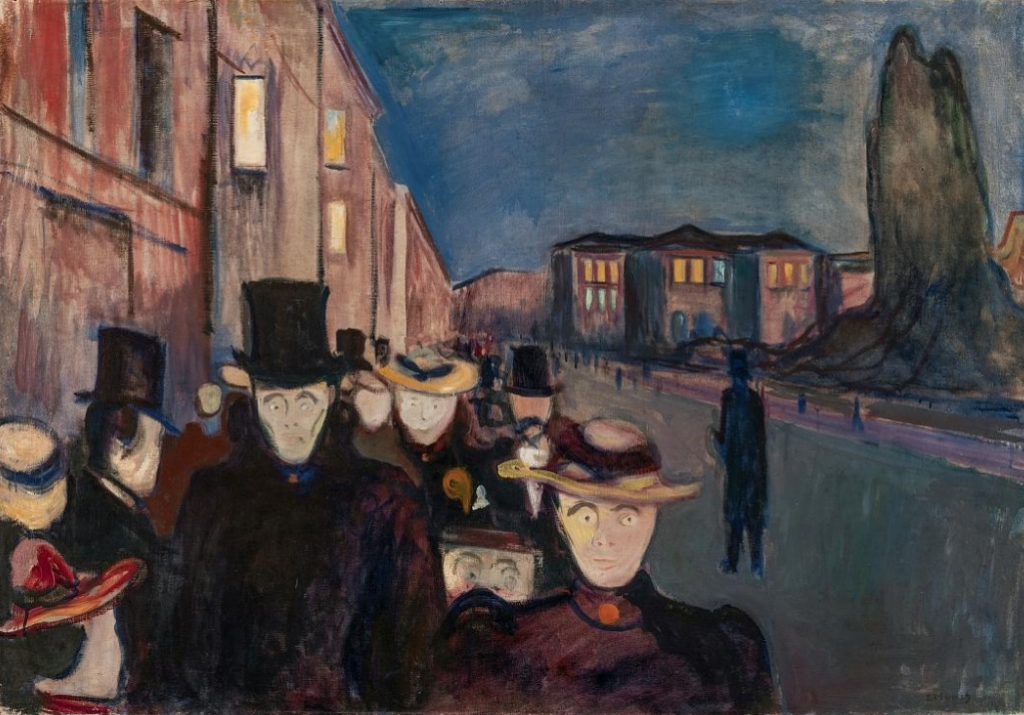
No, I’ve never liked the masses. A die-hard lone wolf since birth, I consider two people a group and three a crowd. Four? A public gathering. Five? Time to leave.
My aversion to crowds could raise a philosophical dilemma as old as Eubulides of Miletus and his famous Sorites paradox: at what point does a group become a mass? But I have no intention of intellectualizing my dislike of the multitude.
Most of humanity’s genuine progress has come from individuals, not crowds. Copernicus didn’t need a popular vote to move the Earth away from the center of the universe. Galileo didn’t conduct an opinion poll to establish that it revolved around the Sun. Darwin didn’t ask the public to approve evolution. Newton didn’t need a committee to formulate gravity. Einstein didn’t take a poll before challenging Newtonian physics. Semmelweis didn’t wait for a majority vote to insist that doctors wash their hands. And Rosa Parks certainly didn’t ask permission from the crowd before refusing to give up her seat.
History tends to be made by those who dare to think differently, not by those who simply think alike.
The masses, on the other hand, are remarkably easy to manipulate. Give them a slogan, a common enemy and someone to cheer for, and they’ll happily march wherever they’re pointed. Politicians know this perfectly well. They flatter the crowd, exploit its fears, sell it dreams and call it democracy. Their ultimate ambition, however, is considerably less noble: keeping their asses comfortably planted in a warm parliamentary seat for as long as humanly possible.
Of course, individuals can be fools, too. But at least they can be fools independently.
Personally, I distrust anything that requires people to think in unison. Intelligence has never needed a uniform, a megaphone, or a collective choreography. And if I have to choose between the solitude of a free mind and the warmth of a crowd thinking as one, I’d rather catch a cold.