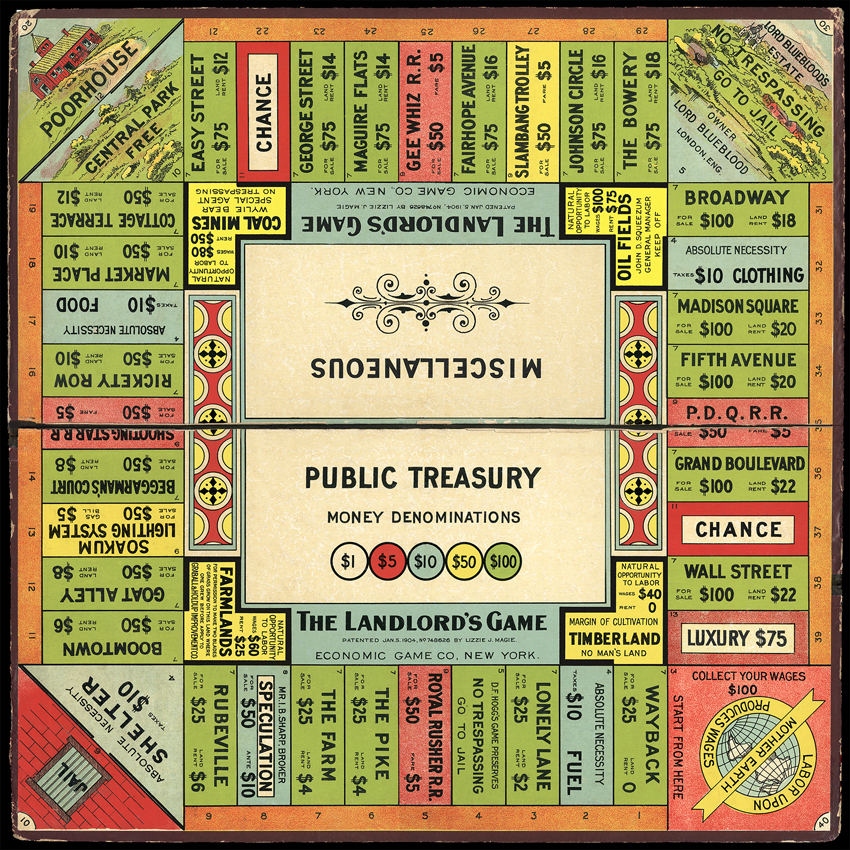
Few stories of creative and intellectual theft are as striking—or ironic—as the origins of the billion-dollar phenomenon known as Monopoly. It all began with Elizabeth “Lizzie” Magie, a brilliant economist and game designer, who in 1904 created The Landlord’s Game to illustrate the dangers of property monopolies and rent-seeking. Her game included two rule sets: one showing how wealth concentrates under monopolies, and another promoting shared prosperity—a subtle critique of unrestrained capitalism.
Over the decades, her game spread informally, with players adapting it to local streets and rules. In the early 1930s, Charles B. Darrow encountered a variant, tweaked it, and sold it as Monopoly. Parker Brothers bought the rights in 1935, marketed it as Darrow’s invention, and turned it into the family-friendly capitalist pastime we know today—while Magie received a mere $500 for her patent and vanished from the mainstream narrative.
The irony is bitter: a game designed to expose the dangers of monopolies became one of the most lucrative symbols of them. And the woman who invented it? Forgotten, while the world continues to pass “Go” and collect $200.